Botanical Overview
Phyllanthus reticulatus belongs to the Euphorbiaceae family. Limited but reliable traditional records indicate this plant has recognized medicinal applications in one or more healing traditions. The spurge family (Euphorbiaceae) includes an extremely diverse group of plants ranging from small herbs to large trees, many with milky sap that can be irritating or toxic. The flowers are typically small and unisexual, often arranged in distinctive inflorescences. Many species contain diterpene esters and other bioactive compounds.
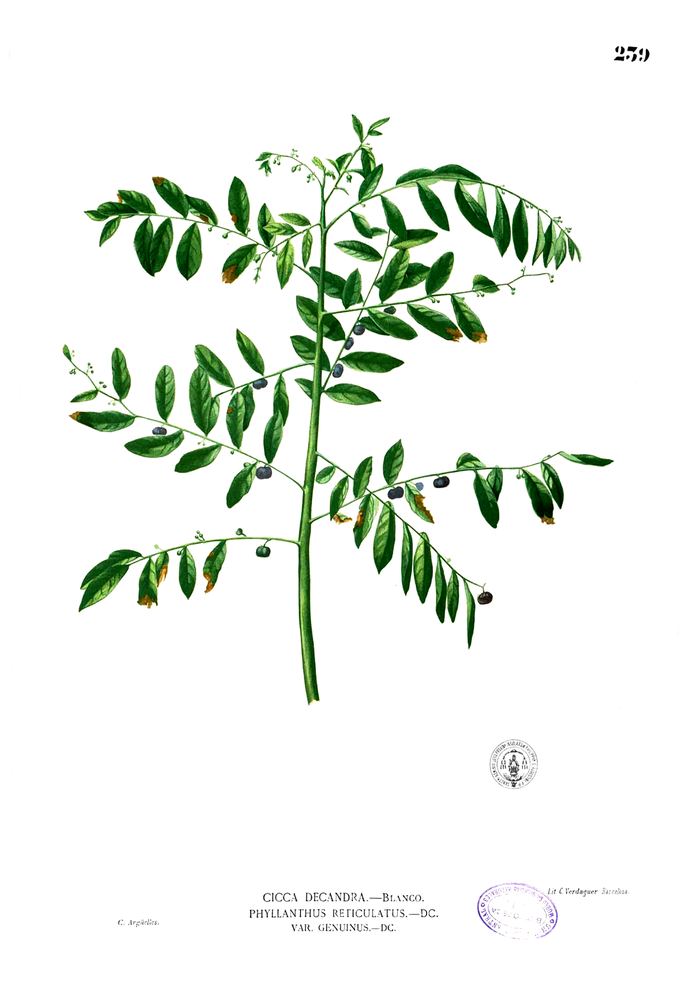
General Description
Phyllanthus reticulatus is a plant species described Jean Louis Marie Poiret; it is included in the family Phyllanthaceae.
Family Context
The Euphorbiaceae family is large and globally distributed. Notable medicinal members include:
- Castorbean — 105 documented uses
- Physic Nut — 95 documented uses
- Queensland Asthma Herb — 53 documented uses
- Spanish Physic Nut — 45 documented uses
Geographic Distribution
Phyllanthus reticulatus has been recorded in 10 countries and territories worldwide, including Benin, China, Indonesia, India, Mozambique, and others.
Traditional Uses
Phyllanthus reticulatus has been traditionally used for respiratory conditions, urinary tract health, and metabolic and nutritional health.
Respiratory conditions.
- Asthma
Respiratory conditions are addressed through steam inhalation of the herb’s vapors or internal use as a warm tea. The hot infusion acts as an expectorant, helping to loosen phlegm and clear congestion. Some traditions combine it with honey for coughs.
Urinary tract health.
- Diuretic
Urinary tract applications typically involve drinking the herb as a mild tea, which increases urine production and helps flush the urinary system. It may be combined with other demulcent herbs to soothe irritated tissues.
Metabolic and nutritional health.
- Refrigerant
Metabolic applications include consuming the plant as a food, fresh juice, or herbal infusion. Regular use supports the body’s natural metabolic processes and nutritional status.
Active Compounds
Phytochemical research has identified 2 compounds in this species: betulin, betulinic-acid.