Botanical Overview
Eastern Mistletoe (Phoradendron serotinum) belongs to the Viscaceae family. Limited but reliable traditional records indicate this plant has recognized medicinal applications in one or more healing traditions. This species belongs to the Viscaceae family, a group of flowering plants.
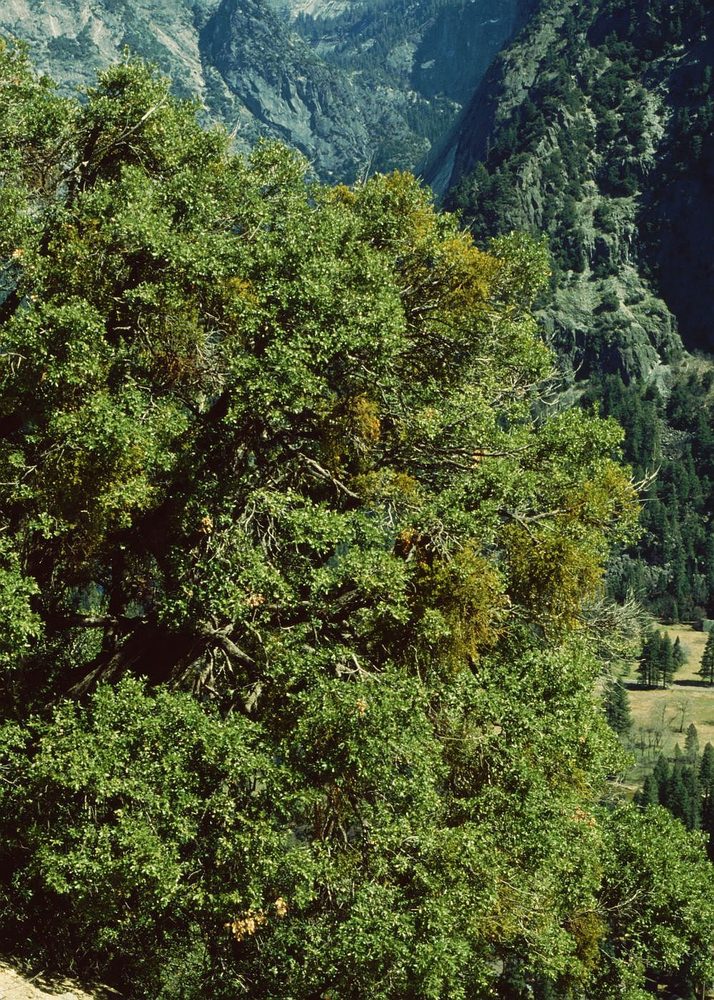
General Description
Its common names include American mistletoe, eastern mistletoe, hairy mistletoe and oak mistletoe. It is native to Mexico and the continental United States. It is hemiparasitic, living in the branches of trees. The berries are white and 3–6 millimeters (0. 12–0. 24 in). It has opposite leaves that are leathery and thick. Ingesting the berries can cause “stomach and intestinal irritation with diarrhea, lowered blood pressure, and slow pulse”. This shrub can grow to 1 meter (3. 3 ft) by 1 meter (3. 3 ft).
Family Context
The Viscaceae family is widely distributed. Notable medicinal members include:
- European Mistletoe — 33 documented uses
- Viscum articulatum — 9 documented uses
- Phoradendron juniperinum — 2 documented uses
Geographic Distribution
Eastern Mistletoe has been recorded in 6 countries and territories worldwide, including Brazil, Colombia, Mexico, Peru, Taiwan, and others.
Traditional Uses
Eastern Mistletoe has been traditionally used for fever management.
Fever management.
- Fever
Febrifuge preparations are typically administered as hot teas to induce perspiration, which helps the body regulate temperature. The patient is kept warm and encouraged to rest while the herb promotes sweating.
Active Compounds
Phytochemical research has identified 8 compounds in this species, including a diverse array of phytochemical classes (see the Complete Chemical Inventory below for the full list).
The identified compounds include the following categories:
- Alkaloid: nitrogenous compounds with diverse pharmacological activities