Butterbur

Botanical Overview

Butterbur (Petasites japonicus) belongs to the Asteraceae family. While not among the most extensively documented medicinal plants, this species has recorded uses that warrant attention from researchers and practitioners. The daisy family (Asteraceae) is one of the largest plant families, characterized by composite flower heads (capitula) that contain many small florets surrounded by bracts. Plants range from tiny alpine herbs to large tropical trees. The family includes many medicinally important species with bitter compounds and essential oils.
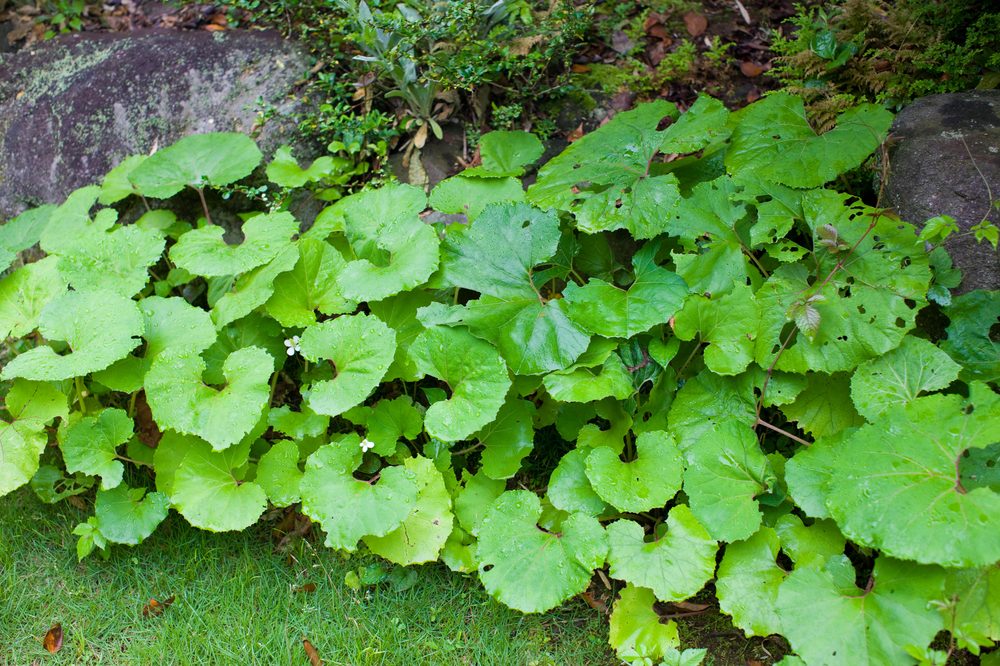
General Description

It is native to China, Japan, Korea and Sakhalin and introduced in Europe and North America. It was introduced to southern British Columbia in Canada by Japanese migrants. It is dioecious, with male and female flowers produced on separate individuals. Occasionally, morphologically hermaphroditic (but functionally sterile) flowers exist.

ⓘ Information
Description adapted from Wikipedia (CC BY-SA 4.0).

Family Context

The Asteraceae family is extremely large and diverse. Notable medicinal members include:

Geographic Distribution

Butterbur has been recorded in 10 countries and territories worldwide, including Canada, Denmark, Finland, France, United Kingdom, and others.

Traditional Uses

Butterbur has been traditionally used for respiratory conditions.

Respiratory conditions.

  • Expectorant

Respiratory conditions are addressed through steam inhalation of the herb’s vapors or internal use as a warm tea. The hot infusion acts as an expectorant, helping to loosen phlegm and clear congestion. Some traditions combine it with honey for coughs.

Active Compounds

Phytochemical research has identified 30 compounds in this species, including a diverse array of phytochemical classes (see the Complete Chemical Inventory below for the full list).

ⓘ Information
Information on this page is compiled from Dr. Duke’s Phytochemical and Ethnobotanical Databases (USDA ARS), a public domain resource. Consult a healthcare professional before using any herbal preparation.

Distribution and Conservation

Reported distribution: Canada, Denmark, Finland, France, United Kingdom, Japan, South Korea, Netherlands, Sweden, United States.

Complete Use Records

CategoryCultural Context
ExpectorantChina, Elsewhere
AntitussiveElsewhere
DyspneaChina
SpiceJapan
TuberculosisChina

Complete Chemical Inventory

CompoundFormulaMW
2-BETA-HYDROXYEREMOPHIL-7(11)-EN-8-BETA-12-OLIDE
3-BETA-6-BETA-DIHYDROXYEREMOPHIL-7(11)-EN-12,8-ALPHA-OLIDE
3-BETA-8-ALPHA-DIHYDROXY-6-BETA-METHOXYEREMOPHIL-7(11)-EN-8-BETA-12-OLIDE
3-BETA-8-ALPHA-DIHYDROXY-6-BETA-TIGLOYL-OXYEREMOPHIL-7(11)-EN-12,8-BETA-OLIDE
3-BETA-8-BETA-DIHYDROXY-6-BETA-TIGLOYL-OXYEREMOPHIL-7(11)-EN-12,8-BETA-OLIDE
3-BETA-HYDROXY-6-ALPHA-METHOXYEREMOPHIL-7(11)-EN-12,8-BETA-OLIDE
3-BETA-HYDROXY-6-BETA-8-ALPHA-DIMETHOXYEREMOPHIL-7(11)-EN-12,8-BETA-OLIDE
3-BETA-HYDROXY-6-BETA-METHOXYEREMOPHIL-7(11)-EN-12,8-BETA-OLIDE
3-BETA-HYDROXY-6-BETA-TIGLOYL-OXYEREMOPHIL-7(11)-EN-8-BETA-12-OLIDE
3-BETA-HYDROXY-EREMOPHIL-7(11)-EN-12,8-BETA-OLIDE
6-ACETYLFURANOFUKINOLC₁₇H₂₄O₄292.4 Da
6-ANGELYLFURANOFUKINOL
6-BETA-(3'-CHLORO-2'-HYDROXY-2'-METHYL-BUTYROYL-OXY)-3-BETA-8-BETA-DIHYDROXYEREMOPHIL-7(11)-EN-12,8-ALPHA-OLIDE
6-BETA-8-BETA-DIHYDROXYEREMOPHIL-7(11)-EN-12,8-ALPHA-OLIDE
6-BETA-ANGELOYL-OXY-3-BETA-15-EPOXY-9-BETA-15(R)-DIHYDROXYEREMOPHIL-7(11)-EN-12,8-ALPHA-OLIDE
6-BETA-ANGELOYL-OXY-3-BETA-8-ALPHA-DIHYDROXYEREMOPHILENOLIDE
6-BETA-ANGELOYL-OXY-3-BETA-8-BETA-9-BETA-TRIHYDROXYEREMOPHIL-7(11)-EN-12,8-BETA-OLIDE
6-BETA-ANGELOYL-OXY-3-BETA-8-DIHYDROXYEREMOPHILENOLIDE
6-BETA-ANGELOYL-OXY-3-BETA-9-ALPHA-DIHYDROXYEREMOPHIL-7(11)-EN-12,8-BETA-OLIDE
6-BETA-ANGELOYL-OXY-3-BETA-9-BETA-DIHYDROXYEREMOPHIL-7(11)-EN-12,8-BETA-OLIDE
6-BETA-ANGELOYL-OXY-8-BETA-HYDROXY-3-OXOEREMOPHIL-7(11)-EN-12,8-ALPHA-OLIDE
6-BETA-EPOXY-ANGELOYL-OXY-3-BETA-HYDROXYEREMOPHIL-7(11)-EN-12,8-BETA-OLIDE
6-HYDROXYEREMOPHILENOLIDE
8-BETA-HYDROXY-3-OXOEREMOPHIL-7(11)-EN-12,8-BETA-OLIDE
9-ACETOXYFUKINANOLIDEC₁₇H₂₄O₄292.4 Da
ALBOPETASIN
ALPHA-SANTALENEC₁₅H₂₄204.35 Da
ANGELIC-ACIDC₅H₈O₂100.12 Da
ARSENICAs74.92159 Da
ASCORBIC-ACIDC₆H₈O₆176.12 Da

Data from PubChem (NIH/NLM, public domain).


References & Further Reading

External Research Links

Data Sources