Botanical Overview
Yohimbe (Pausinystalia johimbe) belongs to the Rubiaceae family. Limited but reliable traditional records indicate this plant has recognized medicinal applications in one or more healing traditions. The coffee family (Rubiaceae) includes trees, shrubs, and herbs with opposite leaves and interpetiolar stipules. The flowers are typically tubular with four or five petals. The family includes coffee (Coffea), quinine-producing Cinchona, and numerous other medicinal species with alkaloid constituents.
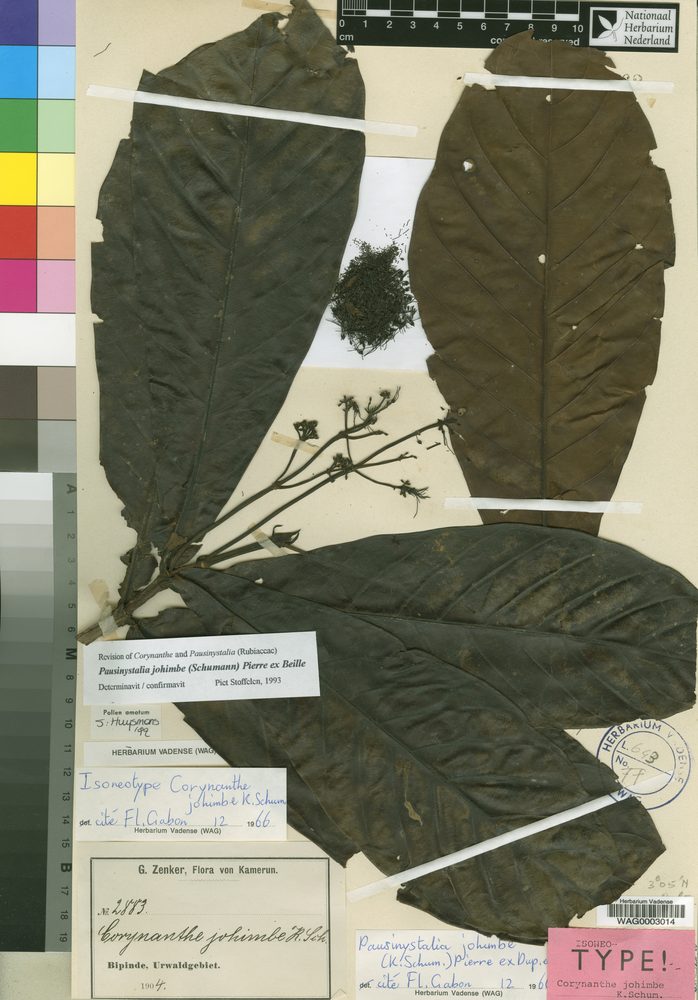
General Description
Corynanthe johimbe, synonym Pausinystalia johimbe, common name yohimbe, is a plant species in the family Rubiaceae native to western and central Africa.
Family Context
The Rubiaceae family is large and primarily tropical. Notable medicinal members include:
- Indian Mulberry — 56 documented uses
- Madder — 41 documented uses
- Gardenia — 34 documented uses
- Lojabark — 32 documented uses
Geographic Distribution
Yohimbe has been recorded in 9 countries and territories worldwide, including Angola, Congo (DRC), Central African Republic, Congo, Cameroon, and others.
Traditional Uses
Yohimbe has been traditionally used for fever management and reproductive health.
Fever management.
- Fever
Febrifuge preparations are typically administered as hot teas to induce perspiration, which helps the body regulate temperature. The patient is kept warm and encouraged to rest while the herb promotes sweating.
Reproductive health.
- Aphrodisiac
In traditional contexts, reproductive health applications typically involve internal preparations such as teas or decoctions. The herb may be taken at specific times during the menstrual cycle.
Active Compounds
Phytochemical research has identified 13 compounds in this species, including a diverse array of phytochemical classes (see the Complete Chemical Inventory below for the full list).
The identified compounds include the following categories:
- Alkaloid: nitrogenous compounds with diverse pharmacological activities
- Tannin: astringent compounds that tighten tissues and resist infection