Botanical Overview
Herb Paris (Paris quadrifolia) is a flowering plant in the Liliaceae family. The traditional uses of this species reflect its genuine medicinal value, validated by generations of practical experience. The lily family (Liliaceae) includes bulbous herbs with erect stems, alternate leaves, and showy six-parted flowers with prominent stamens. The underground bulbs serve as storage organs rich in carbohydrates. Many species contain steroidal saponins and alkaloids with medicinal properties.
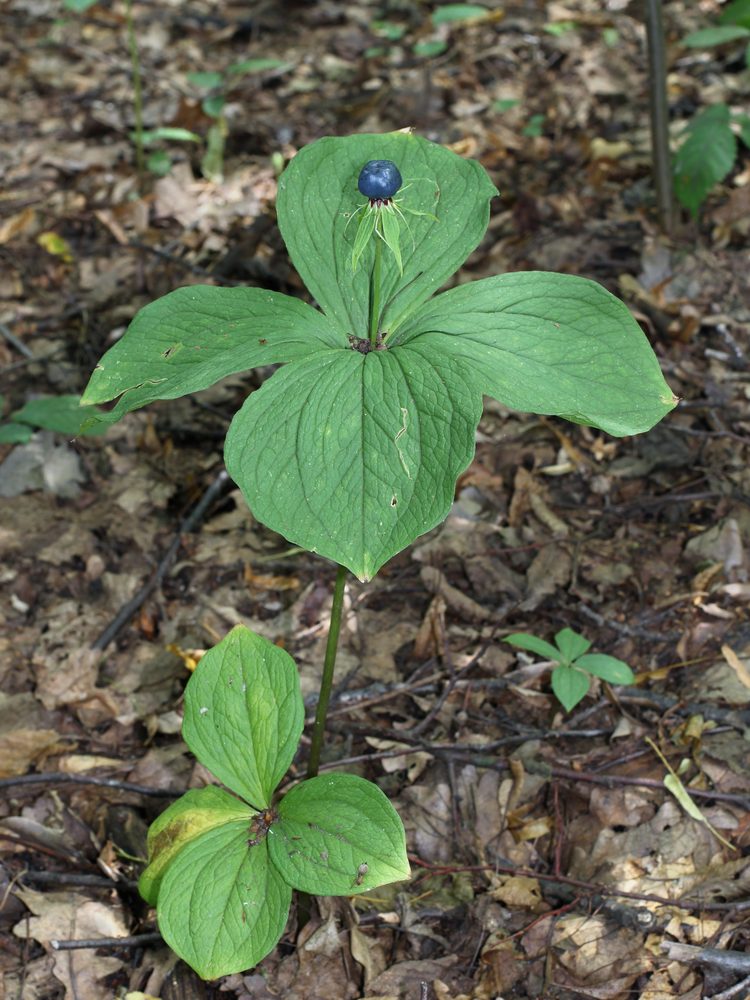
General Description
It occurs in temperate and cool areas throughout Eurasia, from Spain to Yakutia, and from Iceland to Mongolia. It prefers calcareous soils and lives in damp and shady places, especially old established woods and stream banks. P. quadrifolia is in decline in Europe due to loss of habitat. In Iceland, for example, it is on the red list.
Family Context
The Liliaceae family is widely distributed in temperate regions. Notable medicinal members include:
- Onion — 72 documented uses
- American Hellebore — 52 documented uses
- Glory Lily — 36 documented uses
- Asparagus — 31 documented uses
Geographic Distribution
Herb Paris has been recorded in 10 countries and territories worldwide, including Austria, Switzerland, Germany, Finland, France, and others.
Traditional Uses
Herb Paris has been traditionally used for digestive health, pain and inflammation, and nervous system disorders.
Digestive health.
- Purgative
For digestive complaints, the herb is typically prepared as a tea or decoction taken before meals. The bitter compounds stimulate digestive secretions and improve nutrient absorption. Some traditions use the powdered root or leaves in small doses as a stomachic tonic.
Pain and inflammation.
- Rheumatism
- Ache(Head)
- Neuralgia
- Gout
For pain and inflammation, preparations are applied both topically as compresses and taken internally. A warm poultice draws blood to the area and promotes healing, while internal preparations address systemic inflammation.
Nervous system disorders.
- Narcotic
- Spasm
Nervous system support involves taking the herb as a warm tea, often in the evening or before bed. The calming compounds interact with neurotransmitter systems to promote relaxation and restful sleep.
Active Compounds
Phytochemical research has identified 10 compounds in this species, including a diverse array of phytochemical classes (see the Complete Chemical Inventory below for the full list).
The identified compounds include the following categories:
- Alkaloid: nitrogenous compounds with diverse pharmacological activities