Botanical Overview
American Ginseng (Panax quinquefolius) is a flowering plant in the Araliaceae family. Traditional medicine systems have documented several valuable applications for this species, supported by its observed therapeutic effects. The ivy family (Araliaceae) includes trees, shrubs, and climbers with alternate, often compound leaves and small flowers arranged in umbels. The fruits are typically fleshy berries. Many species produce triterpenoid saponins with adaptogenic and anti-inflammatory properties.
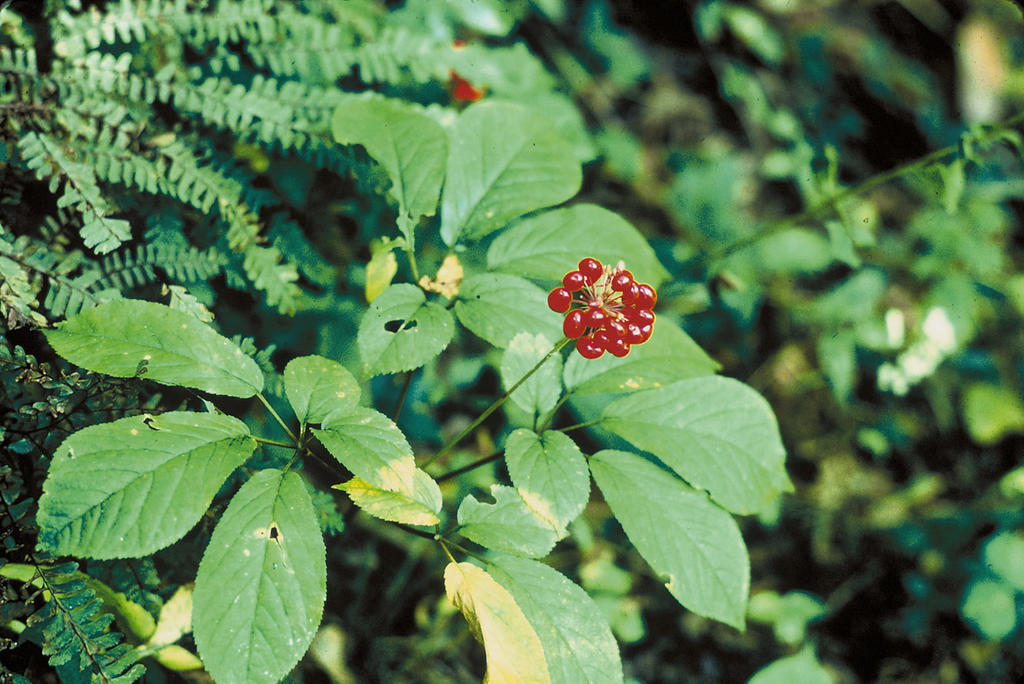
General Description
It is native to eastern North America although its cultivation was successfully introduced to China in 1975. The specific epithet quinquefolius means “five-leaved”, which refers to the typical number of leaflets per leaf. It is one of a group of taxa known as “ginseng”.
Family Context
The Araliaceae family is widely distributed. Notable medicinal members include:
- Chinese Ginseng — 51 documented uses
- Ivy — 28 documented uses
- Panax pseudoginseng — 26 documented uses
- Devil’s Walking Stick — 11 documented uses
Geographic Distribution
American Ginseng has been recorded in 10 countries and territories worldwide, including Belgium, Brazil, Canada, China, Germany, and others.
Traditional Uses
American Ginseng has been traditionally used for pain and inflammation, nervous system disorders, and fever management, among other applications.
Pain and inflammation.
- Rheumatism
For pain and inflammation, preparations are applied both topically as compresses and taken internally. A warm poultice draws blood to the area and promotes healing, while internal preparations address systemic inflammation.
Nervous system disorders.
- Insomnia
- Sedative
Nervous system support involves taking the herb as a warm tea, often in the evening or before bed. The calming compounds interact with neurotransmitter systems to promote relaxation and restful sleep.
Fever management.
- Fever
Febrifuge preparations are typically administered as hot teas to induce perspiration, which helps the body regulate temperature. The patient is kept warm and encouraged to rest while the herb promotes sweating.
Active Compounds
Phytochemical research has identified 30 compounds in this species, including a diverse array of phytochemical classes (see the Complete Chemical Inventory below for the full list).
The identified compounds include the following categories:
- Sterol: cholesterol-like compounds with anti-inflammatory properties
- Alkaloid: nitrogenous compounds with diverse pharmacological activities