Botanical Overview
Sanchi Ginseng (Panax notoginseng) is a species in the Araliaceae family. The ivy family (Araliaceae) includes trees, shrubs, and climbers with alternate, often compound leaves and small flowers arranged in umbels. The fruits are typically fleshy berries. Many species produce triterpenoid saponins with adaptogenic and anti-inflammatory properties. Although comprehensive ethnobotanical records are limited, phytochemical studies have identified 15 compounds in this species, suggesting potential medicinal value.
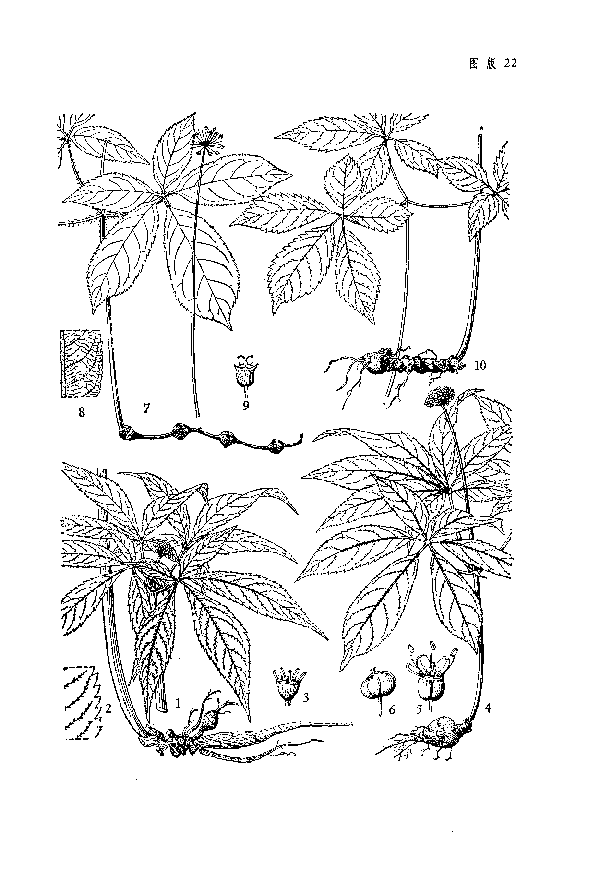
General Description
In Chinese it is called tiánqī (田七), tienchi ginseng, sānqī (三七) or sanchi, three-seven root, and mountain plant. P. notoginseng belongs to the same scientific genus as Panax ginseng. In Latin, the word panax means “cure-all”, and the family of ginseng plants is one of the best-known herbs. Panax notoginseng grows naturally in China. The herb is a perennial with dark green leaves branching from a stem with a red cluster of berries in the middle. It is both cultivated and gathered from wild forests, with wild plants being the most valuable. The Chinese refer to it as three-seven root because the plant has three petioles with seven leaflets each. It is also said that the root should be harvested between three and seven years after planting it.
Family Context
The Araliaceae family is widely distributed. Notable medicinal members include:
- Chinese Ginseng — 51 documented uses
- Ivy — 28 documented uses
- Panax pseudoginseng — 26 documented uses
- American Ginseng — 21 documented uses
Geographic Distribution
Sanchi Ginseng has been recorded in , and China.
Active Compounds
Phytochemical research has identified 15 compounds in this species, including a diverse array of phytochemical classes (see the Complete Chemical Inventory below for the full list).
The identified compounds include the following categories:
- Flavonoid: antioxidant compounds that protect cells from oxidative damage
- Sterol: cholesterol-like compounds with anti-inflammatory properties
Research Status
Although this species has documented phytochemical constituents, its ethnobotanical and clinical documentation remains incomplete. The limited documentation available for this species represents an opportunity for ethnobotanical research.