Botanical Overview
Japanese Ginseng (Panax japonicus) is a species in the Araliaceae family. The ivy family (Araliaceae) includes trees, shrubs, and climbers with alternate, often compound leaves and small flowers arranged in umbels. The fruits are typically fleshy berries. Many species produce triterpenoid saponins with adaptogenic and anti-inflammatory properties. Although comprehensive ethnobotanical records are limited, phytochemical studies have identified 30 compounds in this species, suggesting potential medicinal value.
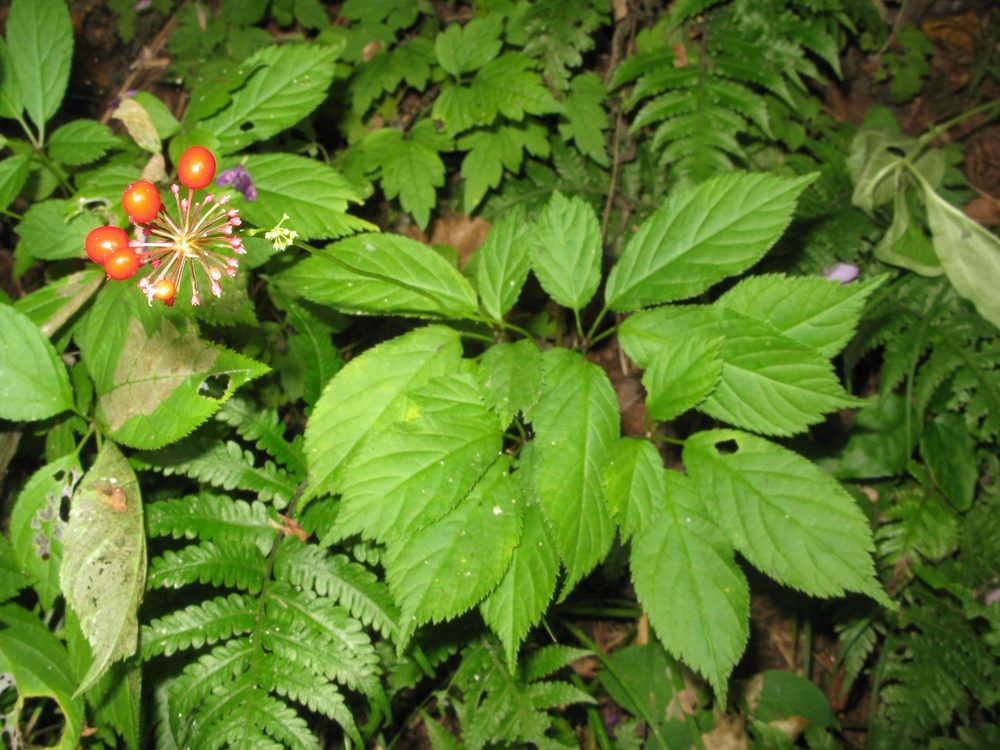
General Description
It is found throughout Japan and Korea, and is also said to be endangered in China. Panax japonicus sees some use in Japanese Kampo medicine and traditional Chinese medicine. Like other ginsengs, it contains a number of ginsenosides. There is no English-language literature on its cultivation, though Baeg et al. (2013) lists it among cultivated ginseng species. There is, however, a considerable volume of Chinese literature on its cultivation under the name Zhújiéshēn.
Family Context
The Araliaceae family is widely distributed. Notable medicinal members include:
- Chinese Ginseng — 51 documented uses
- Ivy — 28 documented uses
- Panax pseudoginseng — 26 documented uses
- American Ginseng — 21 documented uses
Geographic Distribution
Japanese Ginseng has been recorded in 10 countries and territories worldwide, including Australia, China, Japan, South Korea, Myanmar, and others.
Active Compounds
Phytochemical research has identified 30 compounds in this species, including a diverse array of phytochemical classes (see the Complete Chemical Inventory below for the full list).
The identified compounds include the following categories:
- Flavonoid: antioxidant compounds that protect cells from oxidative damage
- Sterol: cholesterol-like compounds with anti-inflammatory properties
- Saponin: soap-like compounds with immune-modulating activity
Research Status
Although this species has documented phytochemical constituents, its ethnobotanical and clinical documentation remains incomplete. Systematic pharmacological studies are needed to validate the traditional uses attributed to this species.