Botanical Overview
Large-Fruited Provision Tree (Pachira macrocarpa) belongs to the Bombacaceae family. Limited but reliable traditional records indicate this plant has recognized medicinal applications in one or more healing traditions. This species belongs to the Bombacaceae family, a group of flowering plants.
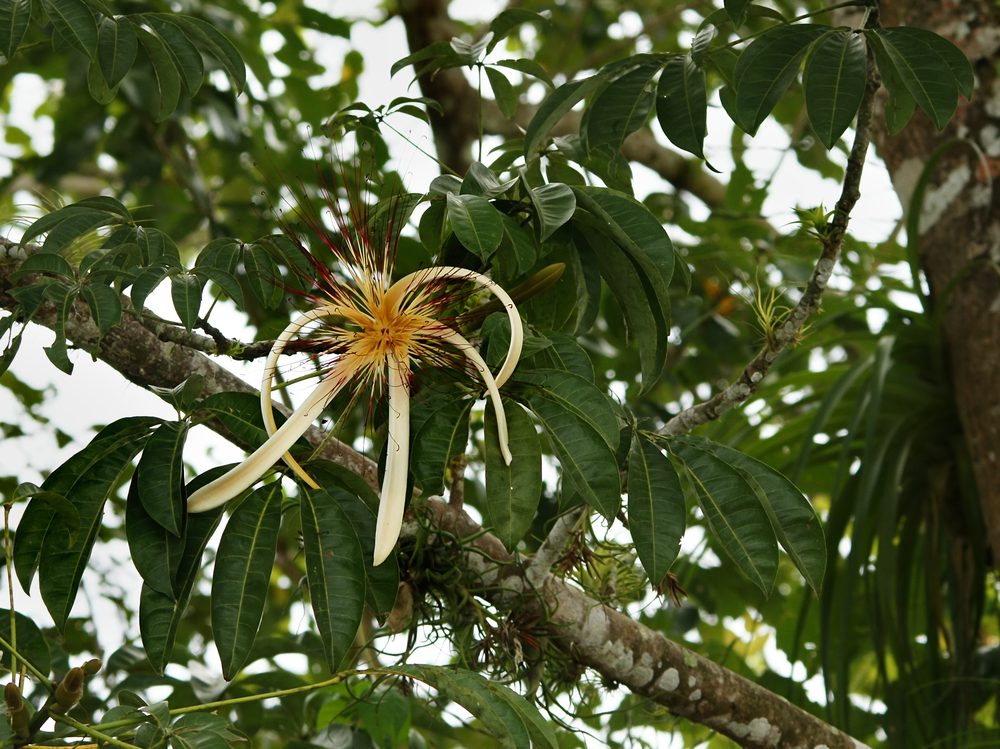
General Description
It is known by its common names Malabar chestnut, French peanut, Guiana chestnut, provision tree, Saba nut, Monguba (Brazil), Pumpo (Guatemala) and Jelinjoche and is commercially sold under the names money tree and money plant. This tree is sometimes sold with a braided trunk and is commonly grown as a houseplant, although more commonly what is sold as a “Pachira aquatica” houseplant is in fact a similar species, Pachira glabra.
Family Context
The Bombacaceae family is widely distributed. Notable medicinal members include:
- Kapok — 34 documented uses
- Adansonia digitata — 15 documented uses
- Durian — 6 documented uses
- Provision Tree — 2 documented uses
Geographic Distribution
Large-Fruited Provision Tree has been recorded in 10 countries and territories worldwide, including Congo (DRC), China, United Kingdom, Mexico, Nigeria, and others.
Traditional Uses
Large-Fruited Provision Tree has been traditionally used for pain and inflammation.
Pain and inflammation.
- Inflammation
For pain and inflammation, preparations are applied both topically as compresses and taken internally. A warm poultice draws blood to the area and promotes healing, while internal preparations address systemic inflammation.
Active Compounds
Phytochemical research has identified 17 compounds in this species, including a diverse array of phytochemical classes (see the Complete Chemical Inventory below for the full list).
The identified compounds include the following categories:
- Alkaloid: nitrogenous compounds with diverse pharmacological activities