Botanical Overview
Star Of Bethlehem (Ornithogalum umbellatum) belongs to the Liliaceae family. Limited but reliable traditional records indicate this plant has recognized medicinal applications in one or more healing traditions. The lily family (Liliaceae) includes bulbous herbs with erect stems, alternate leaves, and showy six-parted flowers with prominent stamens. The underground bulbs serve as storage organs rich in carbohydrates. Many species contain steroidal saponins and alkaloids with medicinal properties.
General Description
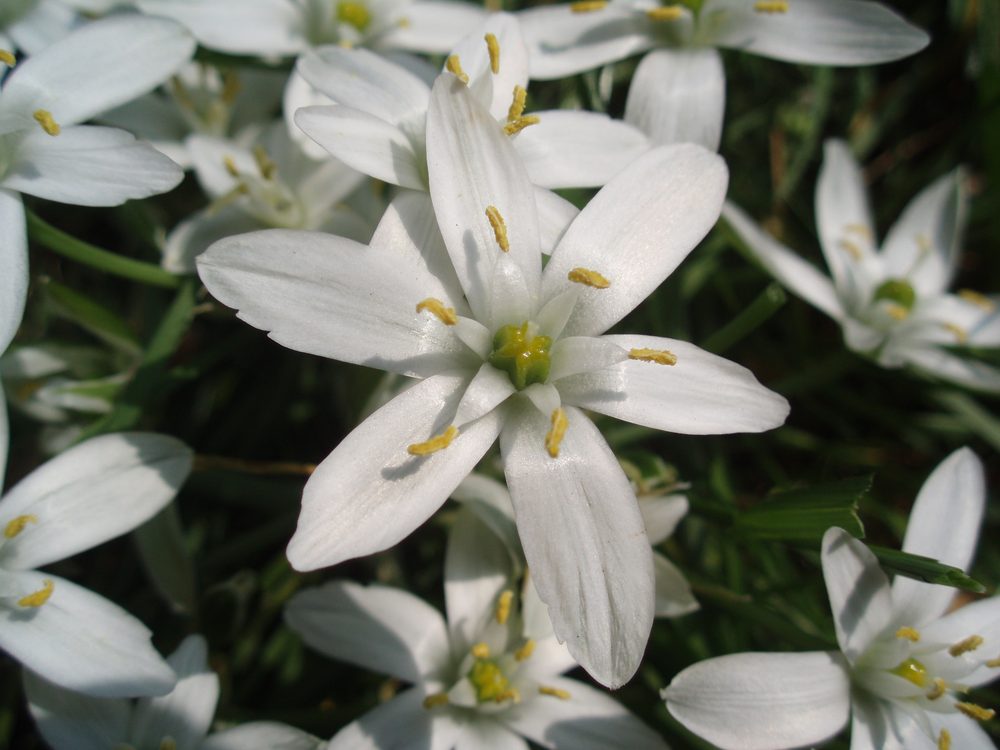
O. umbellatum is a relatively short plant, occurring in tufts of basal linear leaves, producing conspicuous white flowers, in a stellate pattern, in mid to late spring. The flowers open late in the day (hence some of its common names), but when closed have a green stripe on the outside. It is native throughout southern and central Europe, and north-western Africa. O. umbellatum is often grown as a garden ornamental, but in North America and other areas it has escaped cultivation and can be found in many areas, where it may be considered an invasive weed. Parts of the plant are considered poisonous, but are used in some regional cuisines. Essences are also sold as patent remedies. O. umbellatum has been depicted in art by artists such as Leonardo da Vinci, and folklore has suggested it originally grew from fragments of the star of Bethlehem, hence its horticultural name.
Family Context
The Liliaceae family is widely distributed in temperate regions. Notable medicinal members include:
- Onion — 72 documented uses
- American Hellebore — 52 documented uses
- Glory Lily — 36 documented uses
- Asparagus — 31 documented uses
Geographic Distribution
Star Of Bethlehem has been recorded in 10 countries and territories worldwide, including Belgium, Switzerland, Germany, Denmark, Spain, and others.
Traditional Uses
Star Of Bethlehem has been traditionally used for urinary tract health.
Urinary tract health.
- Diuretic
Urinary tract applications typically involve drinking the herb as a mild tea, which increases urine production and helps flush the urinary system. It may be combined with other demulcent herbs to soothe irritated tissues.
Active Compounds
Phytochemical research has identified 5 compounds in this species, including a diverse array of phytochemical classes (see the Complete Chemical Inventory below for the full list).
The identified compounds include the following categories:
- Flavonoid: antioxidant compounds that protect cells from oxidative damage