Botanical Overview
Tree Tobacco (Nicotiana glauca) belongs to the Solanaceae family. Limited but reliable traditional records indicate this plant has recognized medicinal applications in one or more healing traditions. The nightshade family (Solanaceae) includes herbs, shrubs, and small trees with alternate leaves and star-shaped or trumpet-shaped flowers. The fruits are typically berries or capsules. Many species produce potent alkaloids including tropanes, solanines, and nicotine, making this family both medicinally valuable and potentially toxic.
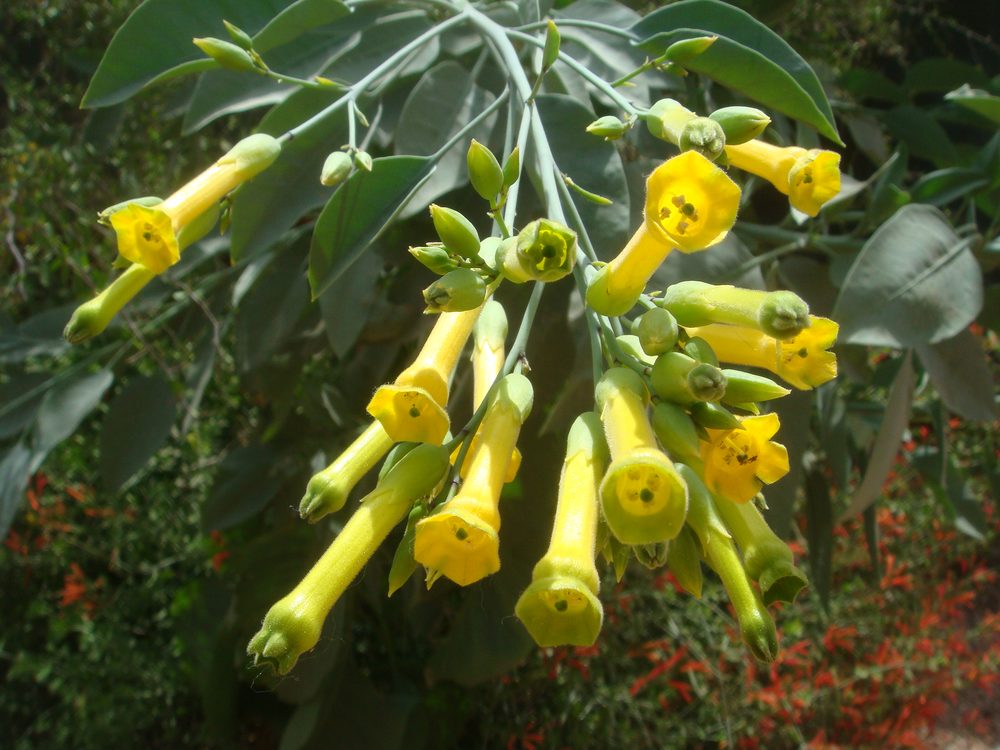
General Description
It is known by the common name tree tobacco. Its leaves are attached to the stalk by petioles (many other Nicotiana species have sessile leaves), and its leaves and stems are neither pubescent nor sticky like Nicotiana tabacum. It resembles Cestrum parqui but differs in the form of leaves and fusion of the outer floral parts. It grows to heights of more than two meters. Tree tobacco is native to South America but it is now widespread as an introduced species on other continents. It is a common roadside weed in the southwestern United States, and an invasive plant species in California native plant habitats.
Family Context
The Solanaceae family is widely distributed worldwide. Notable medicinal members include:
- Black Nightshade — 100 documented uses
- Tobacco — 80 documented uses
- Jimsonweed — 66 documented uses
- Hindu Datura — 65 documented uses
Geographic Distribution
Tree Tobacco has been recorded in 10 countries and territories worldwide, including Argentina, Australia, Bolivia, Brazil, Spain, and others.
Traditional Uses
Tree Tobacco has been traditionally used for skin and wound care and pain and inflammation.
Skin and wound care.
- Boil
- Wound
- Sore
For skin conditions, the fresh or dried plant is applied topically as a poultice, wash, or compress. A strong decoction can be used to clean wounds and sores. The antimicrobial properties help prevent infection while promoting tissue repair.
Pain and inflammation.
- Ache(Head)
- Anodyne
For pain and inflammation, preparations are applied both topically as compresses and taken internally. A warm poultice draws blood to the area and promotes healing, while internal preparations address systemic inflammation.
Active Compounds
Phytochemical research has identified 5 compounds in this species, including a diverse array of phytochemical classes (see the Complete Chemical Inventory below for the full list).
The identified compounds include the following categories:
- Alkaloid: nitrogenous compounds with diverse pharmacological activities