Botanical Overview
Catmint (Nepeta racemosa) is a species in the Lamiaceae family. The mint family (Lamiaceae) includes aromatic herbs and shrubs with square stems, opposite leaves, and two-lipped flowers. Many species produce essential oils in glandular trichomes on their leaves and stems. This family is one of the most important sources of culinary and medicinal herbs worldwide. Although comprehensive ethnobotanical records are limited, phytochemical studies have identified 30 compounds in this species, suggesting potential medicinal value.
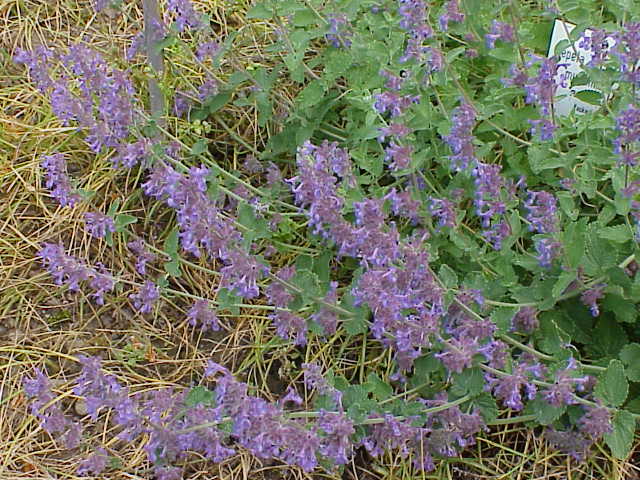
General Description
N. mussiniii, is a species of flowering plant in the mint family Lamiaceae, native to the Caucasus, Turkey and northern Iran. Growing to 30 cm (12 in) tall by 45 cm (18 in) wide, it is a herbaceous perennial with aromatic leaves and violet or lilac-blue flowers in summer. This plant is one of several Nepeta species to be cultivated as an ornamental. It is particularly suitable for the front of a flower border or as groundcover. It has gained the Royal Horticultural Society’s Award of Garden Merit, as has the cultivar ‘Walker’s Low’ Nepetas are notable for their euphoric effect on some domestic cats. It is thought to be caused by the chemical nepetalactone which also has effects on some insects, repelling cockroaches and mosquitoes.
Family Context
The Lamiaceae family is large and widely distributed. Notable medicinal members include:
- Basil — 86 documented uses
- Rosemary — 60 documented uses
- Agbo — 54 documented uses
- Sage — 49 documented uses
Geographic Distribution
Catmint has been recorded in 10 countries and territories worldwide, including Armenia, Austria, Belgium, Switzerland, Czech Republic, and others.
Active Compounds
Phytochemical research has identified 30 compounds in this species, including a diverse array of phytochemical classes (see the Complete Chemical Inventory below for the full list).
The identified compounds include the following categories:
- Terpene: aromatic compounds with anti-inflammatory and antimicrobial properties
- Alkaloid: nitrogenous compounds with diverse pharmacological activities
Research Status
Although this species has documented phytochemical constituents, its ethnobotanical and clinical documentation remains incomplete. Further ethnobotanical and pharmacological research may reveal additional therapeutic applications for this species.