Bayberry

Also known as: Wax Myrtle, Southern Bayberry, Candle-Berry

Botanical Overview

Bayberry (Myrica cerifera) is a flowering plant in the Myricaceae family. This plant has earned a place in traditional medicine through its consistent therapeutic benefits, recorded across multiple cultures. This species belongs to the Myricaceae family, a group of flowering plants.
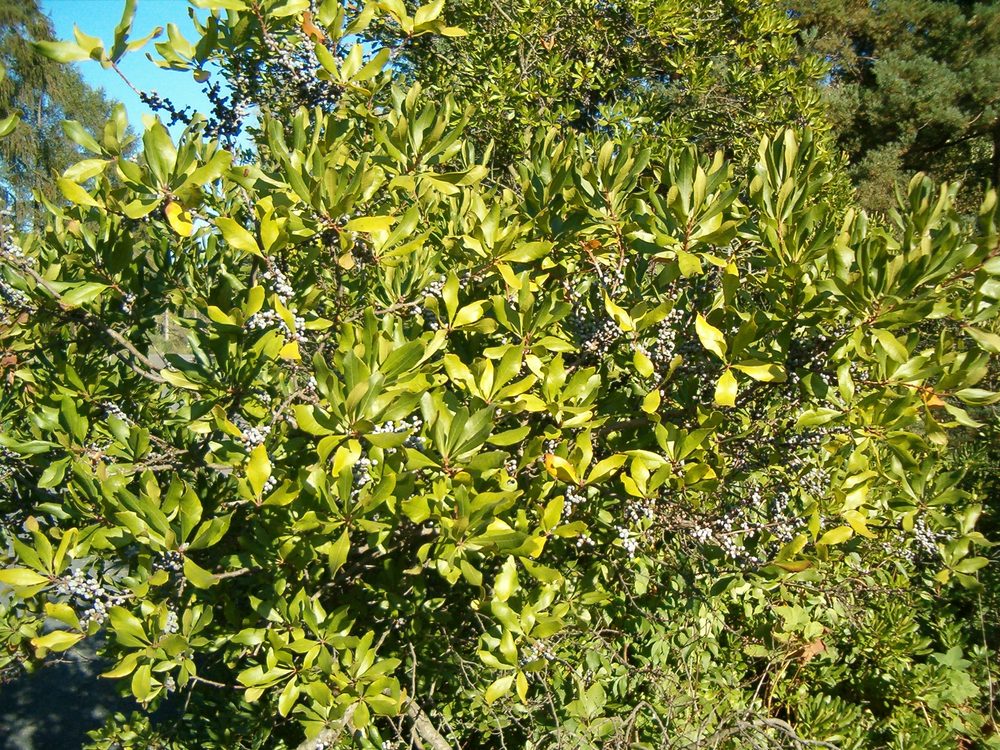
General Description

Its common names include southern wax myrtle, southern bayberry, candleberry, bayberry tree, and tallow shrub. It has uses in the garden and for candlemaking, as well as a medicinal plant.

ⓘ Information
Description adapted from Wikipedia (CC BY-SA 4.0).

Family Context

The Myricaceae family is widely distributed. Notable medicinal members include:

Traditional Uses

Bayberry has been traditionally used for digestive health, fever management, and cardiovascular health, among other applications.

Digestive health.

  • Diarrhea
  • Dysentery
  • Laxative
  • Vermifuge
  • Stomachic

For digestive complaints, the herb is typically prepared as a tea or decoction taken before meals. The bitter compounds stimulate digestive secretions and improve nutrient absorption. Some traditions use the powdered root or leaves in small doses as a stomachic tonic.

Fever management.

  • Fever

Febrifuge preparations are typically administered as hot teas to induce perspiration, which helps the body regulate temperature. The patient is kept warm and encouraged to rest while the herb promotes sweating.

Cardiovascular health.

  • Hemorrhage

Active Compounds

Phytochemical research has identified 30 compounds in this species, including a diverse array of phytochemical classes (see the Complete Chemical Inventory below for the full list).

The identified compounds include the following categories:

  • Alkaloid: nitrogenous compounds with diverse pharmacological activities
ⓘ Information
Information on this page is compiled from Dr. Duke’s Phytochemical and Ethnobotanical Databases (USDA ARS), a public domain resource. Consult a healthcare professional before using any herbal preparation.
⚠ Caution
Traditional records: This plant has documented uses including Emetic. Self-medication with herbs carries risks including allergic reactions, drug interactions, and toxicity. Only use under the supervision of a qualified healthcare professional.

Complete Use Records

CategoryCultural Context
AstringentMexico, Turkey, US
EmeticMexico, Turkey
JaundiceMexico, US
TonicTurkey, US
CankerUS
CordialTurkey
DiarrheaMexico
DysenteryUS
FeverUS
HemorrhageUS
LaxativeTurkey
MedicineUS(Appalachia)
MouthUS
Polyp(Nose)US
SoapGuatemala
SudorificTurkey
ThroatUS
UterusUS
VermifugeUS
DeobstruentTurkey
ScrofulaTurkey
TeaUS(SC)
AlterativeTurkey
StimulantTurkey
StomachicTurkey

Complete Chemical Inventory

CompoundFormulaMW
11-O-METHYL-(+,-)-MYRICANOL
5,11,17-TRI-O-ACETYL-(+,-)-MYRICANOL
ALPHA-AMYRINC₃₀H₅₀O426.7 Da
ALPHA-PINENEC₁₀H₁₆136.23 Da
ALUMINUMAl26.981538 Da
ASCORBIC-ACIDC₆H₈O₆176.12 Da
ASH
BETA-AMYRINC₃₀H₅₀O426.7 Da
BETA-CAROTENEC₄₀H₅₆536.9 Da
BETULINC₃₀H₅₀O₂442.7 Da
CALCIUMCa40.08 Da
CARBOHYDRATES
CHROMIUMCr51.996 Da
COBALTCo58.93319 Da
FATC₁₆H₃₂O₂256.42 Da
FIBER
FIBER(CRUDE)
FIBER(DIETARY)
GALLIC-ACIDC₇H₆O₅170.12 Da
GAMMA-TERPINENEC₁₀H₁₆136.23 Da
GLUTAMIC-ACIDC₅H₉NO₄147.13 Da
GUM
IRONFe55.84 Da
KILOCALORIES
LAURIC-ACIDC₁₂H₂₄O₂200.32 Da
LIMONENEC₁₀H₁₆136.23 Da
LINALOOLC₁₀H₁₈O154.25 Da
LUPEOLC₃₀H₅₀O426.7 Da
MAGNESIUMMg24.305 Da
MANGANESEMn54.93804 Da

Data from PubChem (NIH/NLM, public domain).


References & Further Reading

External Research Links

Data Sources