Bogbean

Also known as: Buckbean, Bog Myrtle, Marsh Clover, Marsh Trefoil, Water Trefoil

Botanical Overview

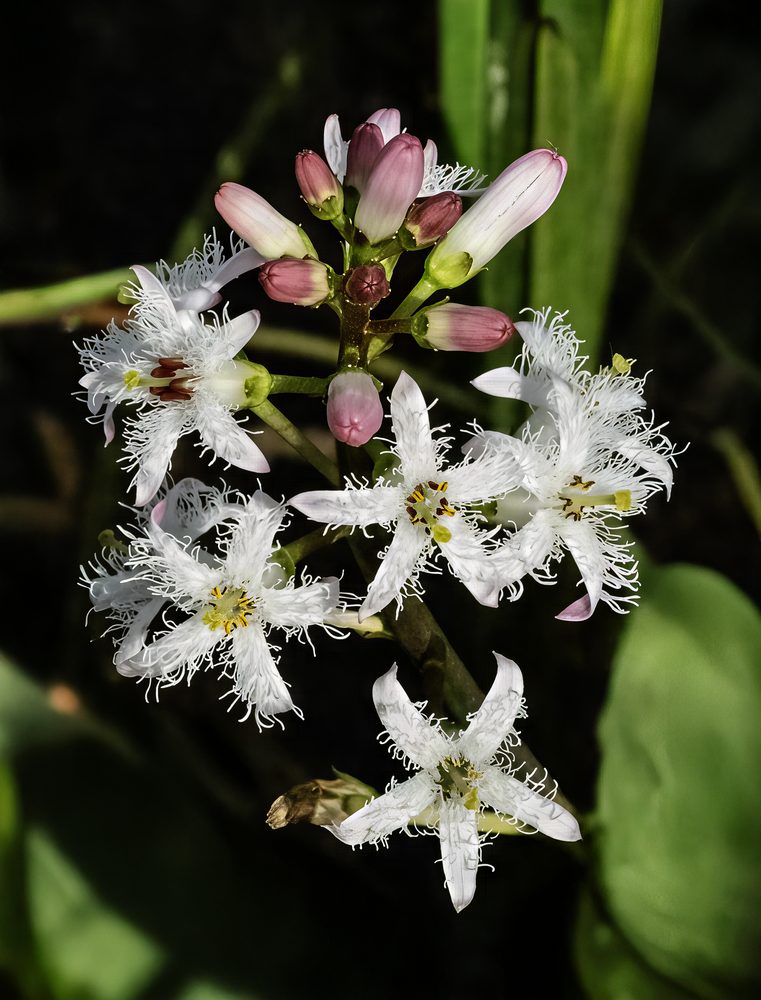
Bogbean (Menyanthes trifoliata) is a flowering plant in the Menyanthaceae family. This plant has earned a place in traditional medicine through its consistent therapeutic benefits, recorded across multiple cultures. This species belongs to the Menyanthaceae family, a group of flowering plants.
Geographic Distribution

Bogbean has been recorded in 10 countries and territories worldwide, including Switzerland, Germany, Denmark, Finland, France, and others.

Traditional Uses

Bogbean has been traditionally used for digestive health, skin and wound care, and urinary tract health, among other applications.

Digestive health.

  • Dyspepsia
  • Stomachic
  • Laxative
  • Vermifuge

For digestive complaints, the herb is typically prepared as a tea or decoction taken before meals. The bitter compounds stimulate digestive secretions and improve nutrient absorption. Some traditions use the powdered root or leaves in small doses as a stomachic tonic.

Skin and wound care.

  • Skin
  • Eruption

For skin conditions, the fresh or dried plant is applied topically as a poultice, wash, or compress. A strong decoction can be used to clean wounds and sores. The antimicrobial properties help prevent infection while promoting tissue repair.

Urinary tract health.

  • Diuretic

Urinary tract applications typically involve drinking the herb as a mild tea, which increases urine production and helps flush the urinary system. It may be combined with other demulcent herbs to soothe irritated tissues.

Active Compounds

Phytochemical research has identified 30 compounds in this species, including a diverse array of phytochemical classes (see the Complete Chemical Inventory below for the full list).

The identified compounds include the following categories:

  • Phenolic: antioxidant compounds that neutralize free radicals
  • Sterol: cholesterol-like compounds with anti-inflammatory properties
  • Alkaloid: nitrogenous compounds with diverse pharmacological activities
ⓘ Information
Information on this page is compiled from Dr. Duke’s Phytochemical and Ethnobotanical Databases (USDA ARS), a public domain resource. Consult a healthcare professional before using any herbal preparation.
⚠ Caution
Traditional records: This plant has documented uses including Emetic, Narcotic. Self-medication with herbs carries risks including allergic reactions, drug interactions, and toxicity. Only use under the supervision of a qualified healthcare professional.

Distribution and Conservation

Reported distribution: Switzerland, Germany, Denmark, Finland, France, United Kingdom, Netherlands, Norway, Sweden, United States.

Complete Use Records

CategoryCultural Context
FeverChina, Elsewhere, Europe, Turkey
RheumatismElsewhere, Turkey, US
ScurvyElsewhere, Turkey, US
TonicElsewhere, Europe, Turkey
ApertifTurkey, US
Cancer(Skin)France, US(DC)
CatharticElsewhere, Turkey
DeobstruentElsewhere, Turkey
DyspepsiaSpain, US
EmeticElsewhere, Turkey
GoutElsewhere, US
HypnoticChina, Turkey
NarcoticChina, Turkey
SedativeChina, Turkey
SkinElsewhere, US
StomachicElsewhere, Turkey
TeaElsewhere, Europe
Bitter-PrincipleElsewhere
CholagogueTurkey
DepurativeTurkey
DiaphoreticElsewhere
DiureticTurkey
DropsyElsewhere
EruptionUS
FluCanada(Kwakiutl)
HemoptysisCanada(Kwakiutl)
LaxativeUS
NervineTurkey
VermifugeUS
IntoxicantScandinavia

Complete Chemical Inventory

CompoundFormulaMW
7',8'-DIHYDROFOLIAMENTHIN
ACETIC-ACIDC₂H₄O₂60.05 Da
ALPHA-SPINASTEROLC₂₉H₄₈O412.7 Da
ASCORBIC-ACIDC₆H₈O₆176.12 Da
BENZYL-ALCOHOLC₇H₈O108.14 Da
BETA-AMYRENOLC₃₀H₅₀O426.7 Da
BETA-CAROTENEC₄₀H₅₆536.9 Da
BETULINC₃₀H₅₀O₂442.7 Da
BETULINIC-ACIDC₃₀H₄₈O₃456.7 Da
BRAYLINC₁₅H₁₄O₄258.27 Da
BUTYRIC-ACIDC₄H₈O₂88.11 Da
CAFFEIC-ACIDC₉H₈O₄180.16 Da
CATECHIN-TANNINS
CERYL-ALCOHOLC₂₆H₅₄O382.7 Da
CERYL-ALCOHOL-ESTERS
CHLOROGENIC-ACIDC₁₆H₁₈O₉354.31 Da
CHOLINEC₅H₁₄NO+104.17 Da
DEOXYLOGANINC₁₇H₂₆O₉374.4 Da
EMULSIN
FERULIC-ACIDC₁₀H₁₀O₄194.18 Da
FOLACINC₁₉H₁₉N₇O₆441.4 Da
FOLIAMENTHINC₂₆H₃₆O₁₂540.6 Da
FOLIC-ACIDC₁₉H₁₉N₇O₆441.4 Da
FORMIC-ACIDCH₂O₂46.025 Da
GENTIALUTINEC₉H₁₁NO149.19 Da
GENTIANIDINEC₉H₉NO₂163.17 Da
GENTIANINEC₁₀H₉NO₂175.18 Da
GENTIANINE-E
GENTIATIBETINEC₉H₁₁NO₂165.19 Da
HYPERINC₂₁H₂₀O₁₂464.4 Da

Data from PubChem (NIH/NLM, public domain).


References & Further Reading

External Research Links

Data Sources