Botanical Overview
Broad-Leaf Tea-Tree (Melaleuca viridiflora) belongs to the Myrtaceae family. Limited but reliable traditional records indicate this plant has recognized medicinal applications in one or more healing traditions. The myrtle family (Myrtaceae) includes trees and shrubs with opposite leaves that contain aromatic oil glands. The flowers are showy with numerous stamens, and the fruits are often fleshy berries or capsules. Many species produce essential oils with antiseptic and antimicrobial properties.
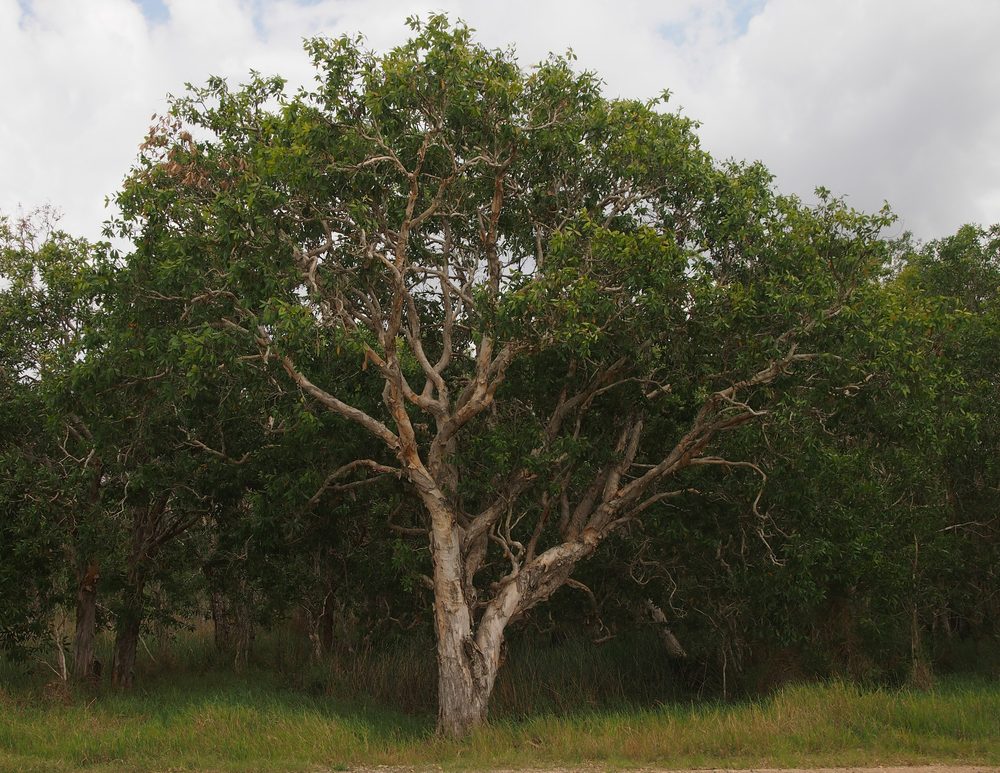
General Description
It is usually a small tree with an open canopy, papery bark and spikes of cream, yellow, green or red flowers.
Family Context
The Myrtaceae family is primarily tropical and subtropical. Notable medicinal members include:
- Guava — 57 documented uses
- Melaleuca leucadendron — 49 documented uses
- Clove — 45 documented uses
- Blue Gum — 44 documented uses
Geographic Distribution
Broad-Leaf Tea-Tree has been recorded in 10 countries and territories worldwide, including Australia, Brazil, French Guiana, Indonesia, Madagascar, and others.
Traditional Uses
Broad-Leaf Tea-Tree has been traditionally used for respiratory conditions, pain and inflammation, and immune system support.
Respiratory conditions.
- Cough
Respiratory conditions are addressed through steam inhalation of the herb’s vapors or internal use as a warm tea. The hot infusion acts as an expectorant, helping to loosen phlegm and clear congestion. Some traditions combine it with honey for coughs.
Pain and inflammation.
- Neuralgia
- Rheumatism
For pain and inflammation, preparations are applied both topically as compresses and taken internally. A warm poultice draws blood to the area and promotes healing, while internal preparations address systemic inflammation.
Immune system support.
- Antiseptic
Immune support involves taking the herb as a decoction or tincture over extended periods. The active compounds stimulate immune cell activity and provide antimicrobial protection.
Active Compounds
Phytochemical research has identified 14 compounds in this species, including a diverse array of phytochemical classes (see the Complete Chemical Inventory below for the full list).
The identified compounds include the following categories:
- Terpene: aromatic compounds with anti-inflammatory and antimicrobial properties
- Alkaloid: nitrogenous compounds with diverse pharmacological activities