Botanical Overview
Maytenus senegalensis is a flowering plant in the Celastraceae family. Traditional medicine systems have documented several valuable applications for this species, supported by its observed therapeutic effects. The staff-vine family (Celastraceae) includes shrubs, trees, and vines with simple, opposite or alternate leaves and small flowers. The fruits are often brightly colored capsules that split open to reveal seeds with fleshy arils. Many species produce alkaloids and terpenoids with insecticidal and medicinal properties.
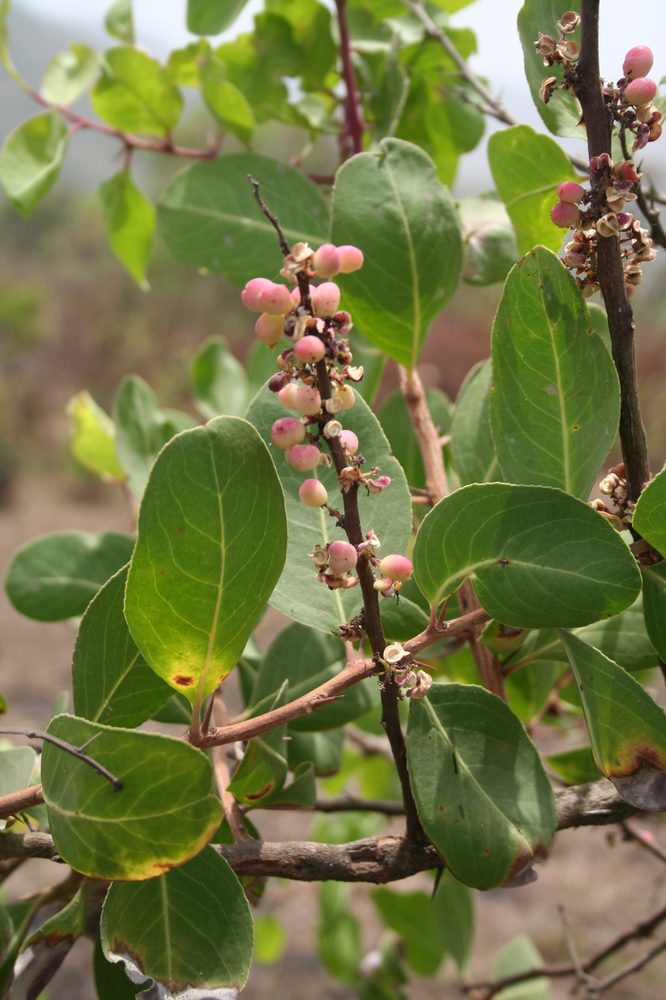
General Description
Endemic to Ibero-Africa, it is an endangered species and listed as vulnerable. It contains cathinone and cathine. In The Plant List it is considered a synonym of Gymnosporia senegalensis. Two subspecies of Maytenus senegalensis are recognized: Maytenus senegalensis subsp. europaea (Spain and North Africa). Maytenus senegalensis subsp. senegalensis (tropical Africa and Asia).
Family Context
The Celastraceae family is widely distributed. Notable medicinal members include:
- Burning Bush — 18 documented uses
- Khat — 17 documented uses
- Maytenus boaria — 1 documented uses
Geographic Distribution
Maytenus senegalensis has been recorded in 10 countries and territories worldwide, including Burkina Faso, Benin, Botswana, Cameroon, Spain, and others.
Traditional Uses
Maytenus senegalensis has been traditionally used for digestive health, skin and wound care, and urinary tract health, among other applications.
Digestive health.
- Colic
- Diarrhea
- Dysentery
- Laxative
- Vermifuge
For digestive complaints, the herb is typically prepared as a tea or decoction taken before meals. The bitter compounds stimulate digestive secretions and improve nutrient absorption. Some traditions use the powdered root or leaves in small doses as a stomachic tonic.
Skin and wound care.
- Boil
- Sore
- Wound
For skin conditions, the fresh or dried plant is applied topically as a poultice, wash, or compress. A strong decoction can be used to clean wounds and sores. The antimicrobial properties help prevent infection while promoting tissue repair.
Urinary tract health.
- Diuretic
- Edema
Urinary tract applications typically involve drinking the herb as a mild tea, which increases urine production and helps flush the urinary system. It may be combined with other demulcent herbs to soothe irritated tissues.
Active Compounds
Phytochemical research has identified 1 compound in this species: betulin.