Botanical Overview
Maytenus boaria belongs to the Celastraceae family. Limited but reliable traditional records indicate this plant has recognized medicinal applications in one or more healing traditions. The staff-vine family (Celastraceae) includes shrubs, trees, and vines with simple, opposite or alternate leaves and small flowers. The fruits are often brightly colored capsules that split open to reveal seeds with fleshy arils. Many species produce alkaloids and terpenoids with insecticidal and medicinal properties.
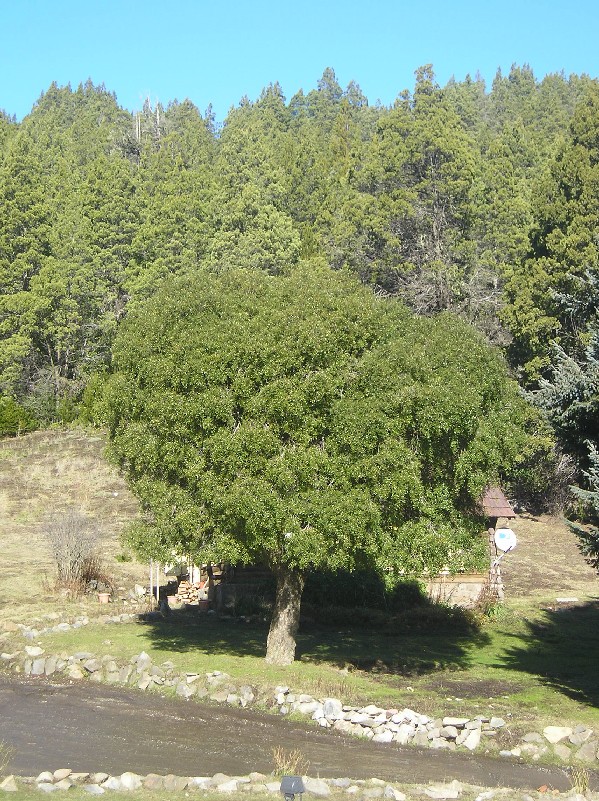
General Description
It is native to southern South America (Chile, Argentina, Bolivia and southern Brazil). In Chile, it occurs approximately from 30 to 50°S. It can reach dimensions up to 20 m (66 ft) high and 80 cm (31 in) diameter, with a straight trunk.
Family Context
The Celastraceae family is widely distributed. Notable medicinal members include:
- Maytenus senegalensis — 24 documented uses
- Burning Bush — 18 documented uses
- Khat — 17 documented uses
Geographic Distribution
Maytenus boaria has been recorded in 10 countries and territories worldwide, including Argentina, Australia, Bolivia, Brazil, Chile, and others.
Traditional Uses
Maytenus boaria has been traditionally used for fever management.
Fever management.
- Fever
Febrifuge preparations are typically administered as hot teas to induce perspiration, which helps the body regulate temperature. The patient is kept warm and encouraged to rest while the herb promotes sweating.
Active Compounds
Phytochemical research has identified 1 compound in this species: betulin.