Botanical Overview
Maackia amurensis is a species in the Fabaceae family. The legume family (Fabaceae) includes trees, shrubs, and herbs that produce pods (legumes) and form nitrogen-fixing root nodules through symbiosis with bacteria. The flowers are typically pea-shaped with five petals. This large family provides food staples, timber, and numerous medicinal species. Phytochemical data for this species are limited at present.
General Description
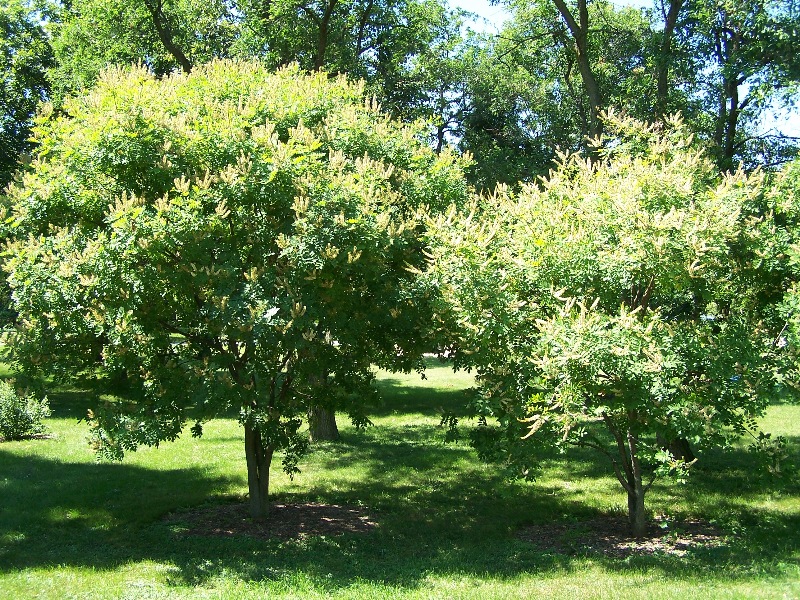
The species epithet and common names are from the Amur River region, where the tree originated; it occurs in northeastern China, Korea, and Russia. Amur maackia tolerates severe dryness, cold and heavy soils. More interesting than the summer flowers are the unfolding buds in spring which appear silvery and showy like flowers with frost on them. Named for Richard Otto Karlovich Maack (Richard Maack), a 19th-century Siberian explorer who discovered the tree in the Amur River region on the border between Siberia and China.
Family Context
The Fabaceae family is large and globally distributed. Notable medicinal members include:
- Soybean — 76 documented uses
- Crab’s Eye — 73 documented uses
- Tamarind — 59 documented uses
- Common Indigo — 51 documented uses
Geographic Distribution
Maackia amurensis has been recorded in 10 countries and territories worldwide, including China, Estonia, Japan, North Korea, South Korea, and others.
Active Compounds
Phytochemical research has identified 1 compound in this species: genistein.
Research Status
Although this species has documented phytochemical constituents, its ethnobotanical and clinical documentation remains incomplete. Further ethnobotanical and pharmacological research may reveal additional therapeutic applications for this species.