Botanical Overview
Lycopus lucidus is a flowering plant in the Lamiaceae family. The traditional uses of this species reflect its genuine medicinal value, validated by generations of practical experience. The mint family (Lamiaceae) includes aromatic herbs and shrubs with square stems, opposite leaves, and two-lipped flowers. Many species produce essential oils in glandular trichomes on their leaves and stems. This family is one of the most important sources of culinary and medicinal herbs worldwide.
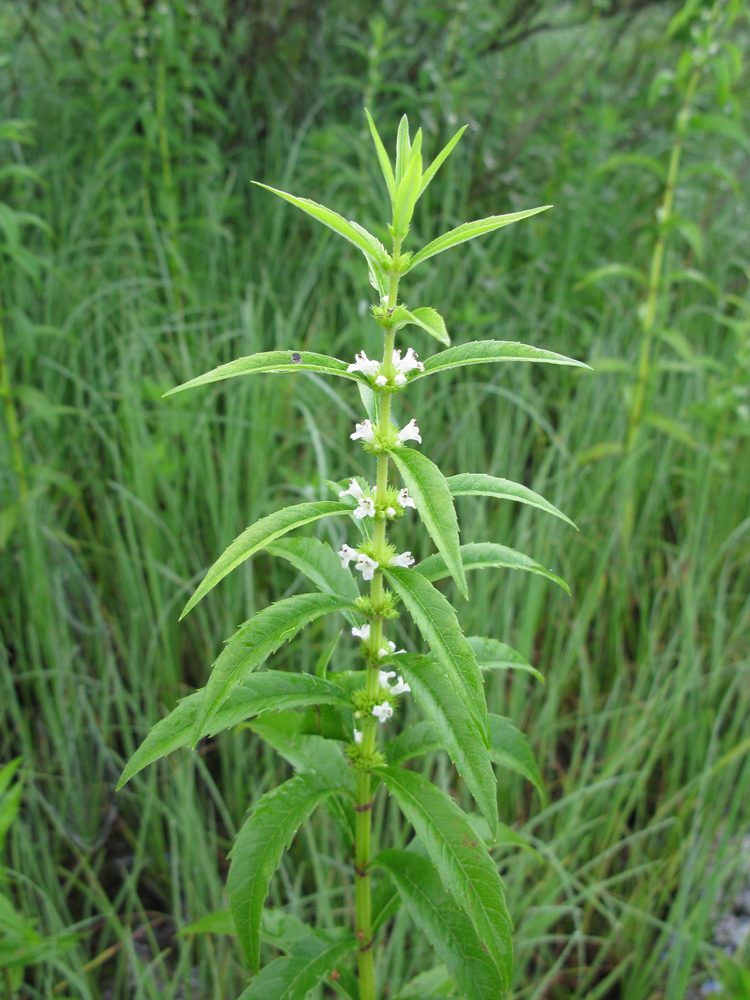
General Description
The aerial parts (澤蘭, 泽兰 zélán) and the dried rhizomes (地筍, 地笋 dìsǔn) are used in traditional Chinese medicine, have a reputation for promoting blood circulation and energy (qi), and preventing water retention. They are said to have a “warming” property, and have a mild bittersweet flavor.
Family Context
The Lamiaceae family is large and widely distributed. Notable medicinal members include:
- Basil — 86 documented uses
- Rosemary — 60 documented uses
- Agbo — 54 documented uses
- Sage — 49 documented uses
Geographic Distribution
Lycopus lucidus has been recorded in 10 countries and territories worldwide, including Canada, China, Japan, North Korea, South Korea, and others.
Traditional Uses
Lycopus lucidus has been traditionally used for skin and wound care, urinary tract health, and pain and inflammation, among other applications.
Skin and wound care.
- Abscess
For skin conditions, the fresh or dried plant is applied topically as a poultice, wash, or compress. A strong decoction can be used to clean wounds and sores. The antimicrobial properties help prevent infection while promoting tissue repair.
Urinary tract health.
- Diuretic
- Edema
Urinary tract applications typically involve drinking the herb as a mild tea, which increases urine production and helps flush the urinary system. It may be combined with other demulcent herbs to soothe irritated tissues.
Pain and inflammation.
- Swelling
For pain and inflammation, preparations are applied both topically as compresses and taken internally. A warm poultice draws blood to the area and promotes healing, while internal preparations address systemic inflammation.
Active Compounds
Phytochemical research has identified 1 compound in this species: betulinic-acid.