Botanical Overview
Barbary Matrimony Vine (Lycium barbarum) belongs to the Solanaceae family. While not among the most extensively documented medicinal plants, this species has recorded uses that warrant attention from researchers and practitioners. The nightshade family (Solanaceae) includes herbs, shrubs, and small trees with alternate leaves and star-shaped or trumpet-shaped flowers. The fruits are typically berries or capsules. Many species produce potent alkaloids including tropanes, solanines, and nicotine, making this family both medicinally valuable and potentially toxic.
General Description
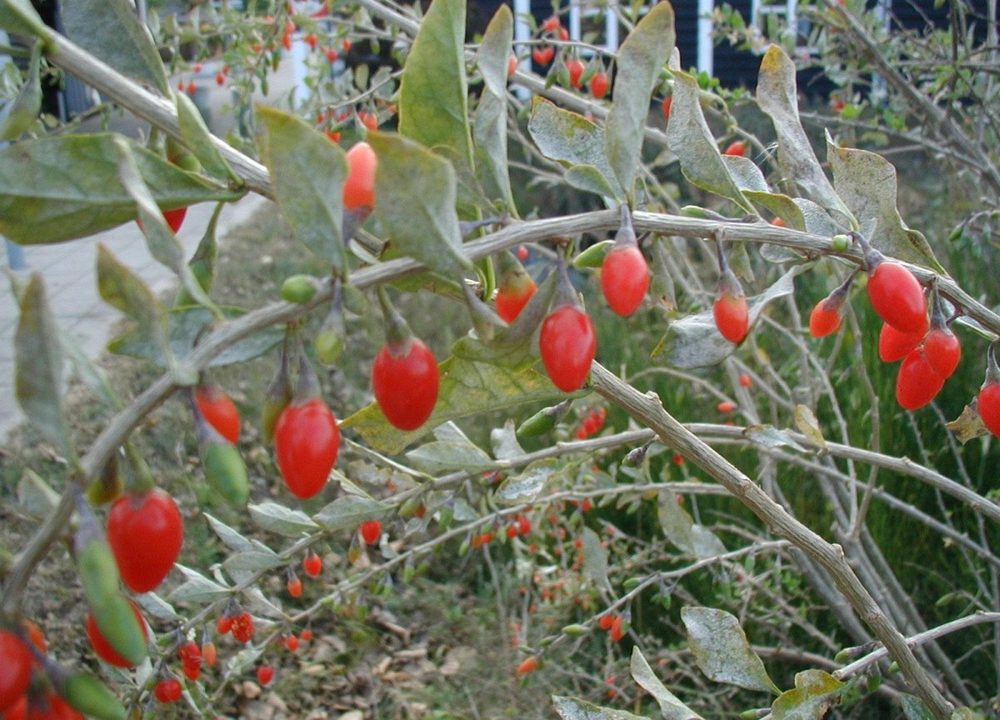
It is one of two species of boxthorn in the family Solanaceae from which the goji berry or wolfberry is harvested, the other being Lycium chinense. Common names of the plant in English include Chinese wolfberry, barbary matrimony vine, red medlar or matrimony vine. In the United Kingdom it is also known as Duke of Argyll’s tea tree after Archibald Campbell, 3rd Duke of Argyll who introduced it in the country in the 1730s. The shrub is an important commercial crop in northern China, especially in the Ningxia Hui Autonomous Region. Its Chinese name is Ningxia gǒuqǐ.
Family Context
The Solanaceae family is widely distributed worldwide. Notable medicinal members include:
- Black Nightshade — 100 documented uses
- Tobacco — 80 documented uses
- Jimsonweed — 66 documented uses
- Hindu Datura — 65 documented uses
Geographic Distribution
Barbary Matrimony Vine has been recorded in 10 countries and territories worldwide, including Belgium, Germany, Denmark, France, United Kingdom, and others.
Traditional Uses
Barbary Matrimony Vine has been traditionally used for digestive health, urinary tract health, and nervous system disorders, among other applications.
Digestive health.
- Laxative
For digestive complaints, the herb is typically prepared as a tea or decoction taken before meals. The bitter compounds stimulate digestive secretions and improve nutrient absorption. Some traditions use the powdered root or leaves in small doses as a stomachic tonic.
Urinary tract health.
- Diuretic
Urinary tract applications typically involve drinking the herb as a mild tea, which increases urine production and helps flush the urinary system. It may be combined with other demulcent herbs to soothe irritated tissues.
Nervous system disorders.
- Spasm
- Vertigo
Nervous system support involves taking the herb as a warm tea, often in the evening or before bed. The calming compounds interact with neurotransmitter systems to promote relaxation and restful sleep.
Active Compounds
Phytochemical research has identified 27 compounds in this species, including a diverse array of phytochemical classes (see the Complete Chemical Inventory below for the full list).
The identified compounds include the following categories:
- Alkaloid: nitrogenous compounds with diverse pharmacological activities