Botanical Overview
Lupinus luteus belongs to the Fabaceae family. Limited but reliable traditional records indicate this plant has recognized medicinal applications in one or more healing traditions. The legume family (Fabaceae) includes trees, shrubs, and herbs that produce pods (legumes) and form nitrogen-fixing root nodules through symbiosis with bacteria. The flowers are typically pea-shaped with five petals. This large family provides food staples, timber, and numerous medicinal species.
General Description
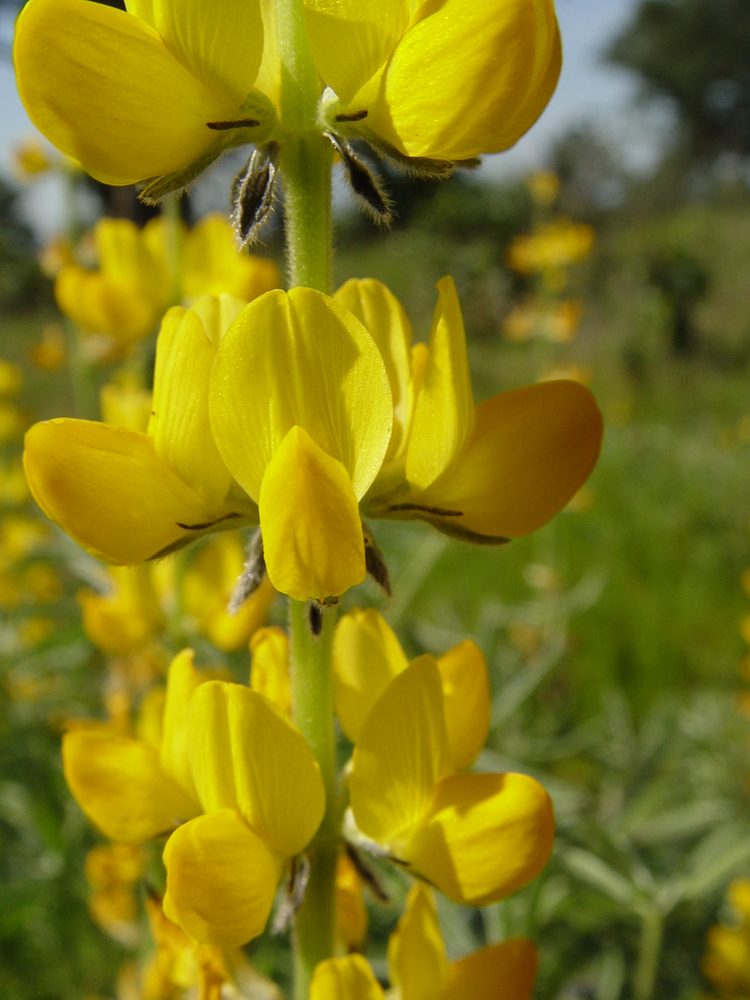
It is native to the western Mediterranean region from Portugal east to Italy. It is an annual plant growing to around 80 cm tall with hairy stems. The leaves are palmately compound, with 7–11 leaflets, the leaflets 6 cm long by 12 mm broad. The flower are bright yellow, 13–16 mm long, borne on spikes are not continuous, but in regularly spaced verticillasters on the stem.
Family Context
The Fabaceae family is large and globally distributed. Notable medicinal members include:
- Soybean — 76 documented uses
- Crab’s Eye — 73 documented uses
- Tamarind — 59 documented uses
- Common Indigo — 51 documented uses
Geographic Distribution
Lupinus luteus has been recorded in 10 countries and territories worldwide, including Afghanistan, Belarus, Germany, Spain, Israel, and others.
Active Compounds
Phytochemical research has identified 4 compounds in this species, including a diverse array of phytochemical classes (see the Complete Chemical Inventory below for the full list).
The identified compounds include the following categories:
- Flavonoid: antioxidant compounds that protect cells from oxidative damage