Botanical Overview
Ascending ludwigia (Ludwigia adscendens) belongs to the Onagraceae family. While not among the most extensively documented medicinal plants, this species has recorded uses that warrant attention from researchers and practitioners. This species belongs to the Onagraceae family, a group of flowering plants.
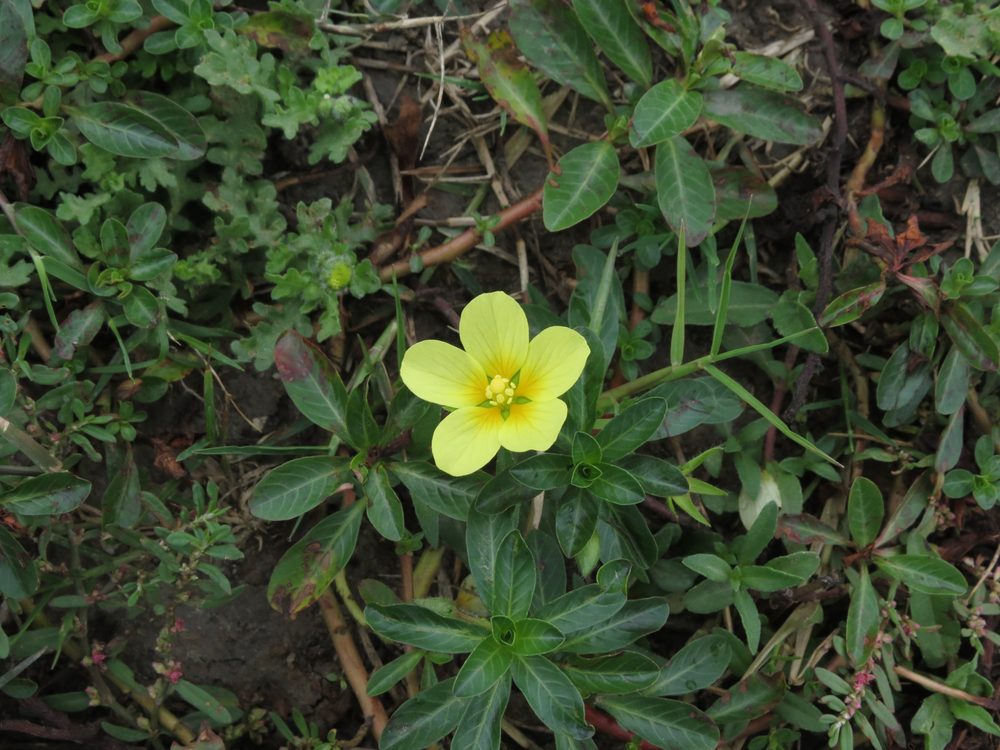
General Description
Its native distribution is unclear. It is now a common weed of rice paddies in Asia and occurs also in Australia and Africa, but may have originated in South America. This plant is a perennial floating herb with white spongy buoys, and can float on water surface as well as creep over the surface of wetlands. The plant has simple leaves with elliptic blades, which are 0. 4–7 cm long and 0. 7–3 cm wide. Its petioles are 0. 5–1. 0 cm short. Its cream flowers emerge singly at axils, and each have 5 sepals, 5 petals, and 10 stamens.
Family Context
The Onagraceae family is widely distributed. Notable medicinal members include:
- Jussiaea suffruticosa — 21 documented uses
- Jussiaeae Herba — 10 documented uses
- Evening-Primrose — 7 documented uses
- Perennial ludwigia — 1 documented uses
Geographic Distribution
Ascending ludwigia has been recorded in 10 countries and territories worldwide, including Australia, Benin, Botswana, Congo (DRC), China, and others.
Traditional Uses
Ascending ludwigia has been traditionally used for skin and wound care.
Skin and wound care.
- Sore
- Skin
For skin conditions, the fresh or dried plant is applied topically as a poultice, wash, or compress. A strong decoction can be used to clean wounds and sores. The antimicrobial properties help prevent infection while promoting tissue repair.
Active Compounds
Phytochemical research has identified 6 compounds in this species, including a diverse array of phytochemical classes (see the Complete Chemical Inventory below for the full list).
The identified compounds include the following categories:
- Flavonoid: antioxidant compounds that protect cells from oxidative damage