Botanical Overview
Darnel (Lolium temulentum) belongs to the Poaceae family. Limited but reliable traditional records indicate this plant has recognized medicinal applications in one or more healing traditions. The grass family (Poaceae) includes annual and perennial herbs with hollow, jointed stems and narrow leaves with parallel venation. The flowers are reduced and arranged in spikelets, and the fruits are grains (caryopses). This family provides the majority of the world’s food calories through cereals.
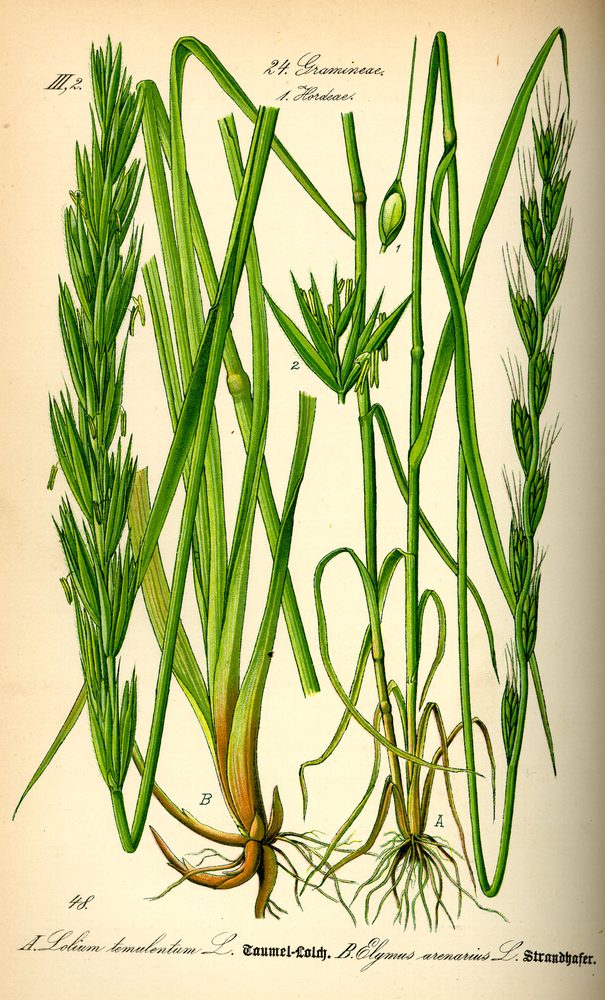
General Description
The plant stem can grow up to one meter tall, with inflorescence in the ears and purple grain. It has a cosmopolitan distribution.
Family Context
The Poaceae family is very large and globally distributed. Notable medicinal members include:
- Adlay — 54 documented uses
- Corn — 51 documented uses
- Rice — 47 documented uses
- West Indian Lemongrass — 43 documented uses
Geographic Distribution
Darnel has been recorded in 10 countries and territories worldwide, including Australia, Switzerland, Germany, Spain, France, and others.
Traditional Uses
Darnel has been traditionally used for pain and inflammation and nervous system disorders.
Pain and inflammation.
- Anodyne
- Neuralgia
- Rheumatism
For pain and inflammation, preparations are applied both topically as compresses and taken internally. A warm poultice draws blood to the area and promotes healing, while internal preparations address systemic inflammation.
Nervous system disorders.
- Narcotic
Nervous system support involves taking the herb as a warm tea, often in the evening or before bed. The calming compounds interact with neurotransmitter systems to promote relaxation and restful sleep.
Active Compounds
Phytochemical research has identified 10 compounds in this species, including a diverse array of phytochemical classes (see the Complete Chemical Inventory below for the full list).
The identified compounds include the following categories:
- Alkaloid: nitrogenous compounds with diverse pharmacological activities