Botanical Overview
Devil’s Tobacco (Lobelia tupa) is a species in the Campanulaceae family. This species belongs to the Campanulaceae family, a group of flowering plants. Phytochemical data for this species are limited at present.
General Description
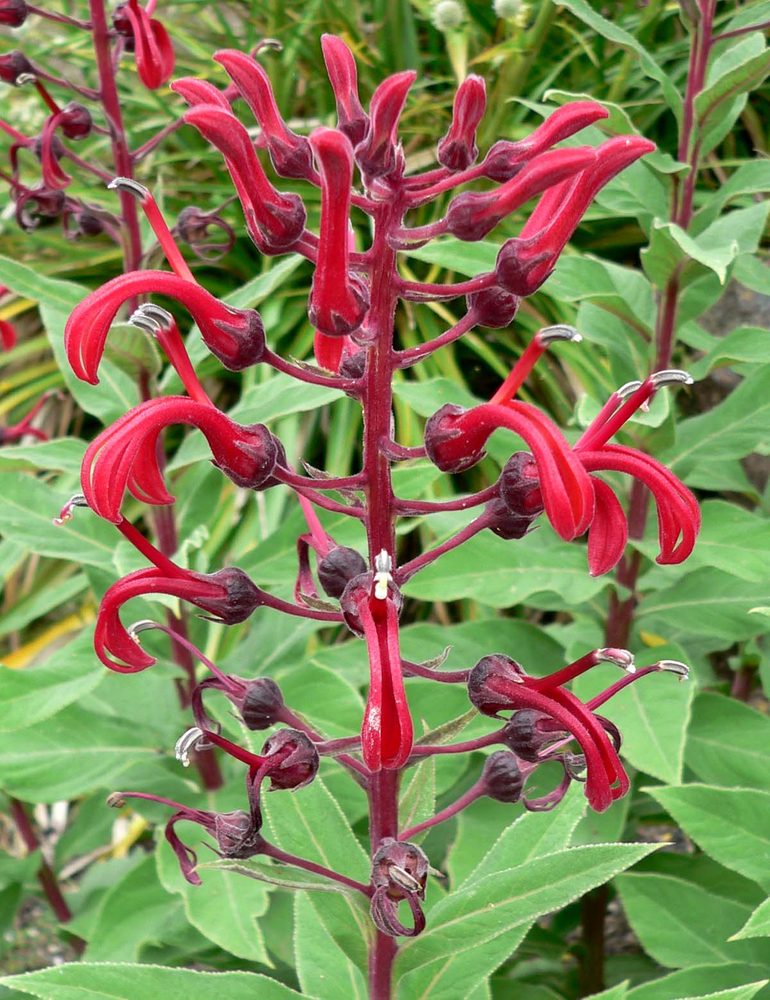
Lobelia tupa is an evergreen perennial plant which grows up to 4 m tall and thrives in dry soils. The foliage is grey-green, with felty elliptical leaves 10–15 cm long. The flowers are red, tubular and 2-lipped and are produced in a sympodium pattern. The plant has numerous ethnobotanical uses due to its pharmaceutically active alkaloids. The latex is used as an abortifacient, and the large, felty leaves are smoked as a narcotic with possible hallucinogenic effects - whence one of its common names, Tabaco del Diablo (Devil’s tobacco). Ironically, this plant has been used to treat nicotine addiction because it contains the nicotine-related alkaloid Lobeline (a mixed agonist–antagonist at nicotinic acetylcholine receptors). The Mapuche of Southern Chile consider it a sacred plant. Tupa leaves have also been found to contain chemicals that act as a respiratory stimulant.
Family Context
The Campanulaceae family is widely distributed. Notable medicinal members include:
- Balloon Flower — 32 documented uses
- Indian Tobacco — 21 documented uses
Geographic Distribution
Devil’s Tobacco has been recorded in 10 countries and territories worldwide, including Belgium, Canada, Chile, Germany, Falkland Islands, and others.
Active Compounds
Phytochemical research has identified 3 compounds in this species: lobelamidine, lobeline, neolobelamidine.
The identified compounds include the following categories:
- Alkaloid: nitrogenous compounds with diverse pharmacological activities
Research Status
Although this species has documented phytochemical constituents, its ethnobotanical and clinical documentation remains incomplete. Systematic pharmacological studies are needed to validate the traditional uses attributed to this species.