Manuka

Also known as: Broom Teatree

Botanical Overview

Manuka (Leptospermum scoparium) is a species in the Myrtaceae family. The myrtle family (Myrtaceae) includes trees and shrubs with opposite leaves that contain aromatic oil glands. The flowers are showy with numerous stamens, and the fruits are often fleshy berries or capsules. Many species produce essential oils with antiseptic and antimicrobial properties. Although comprehensive ethnobotanical records are limited, phytochemical studies have identified 30 compounds in this species, suggesting potential medicinal value.
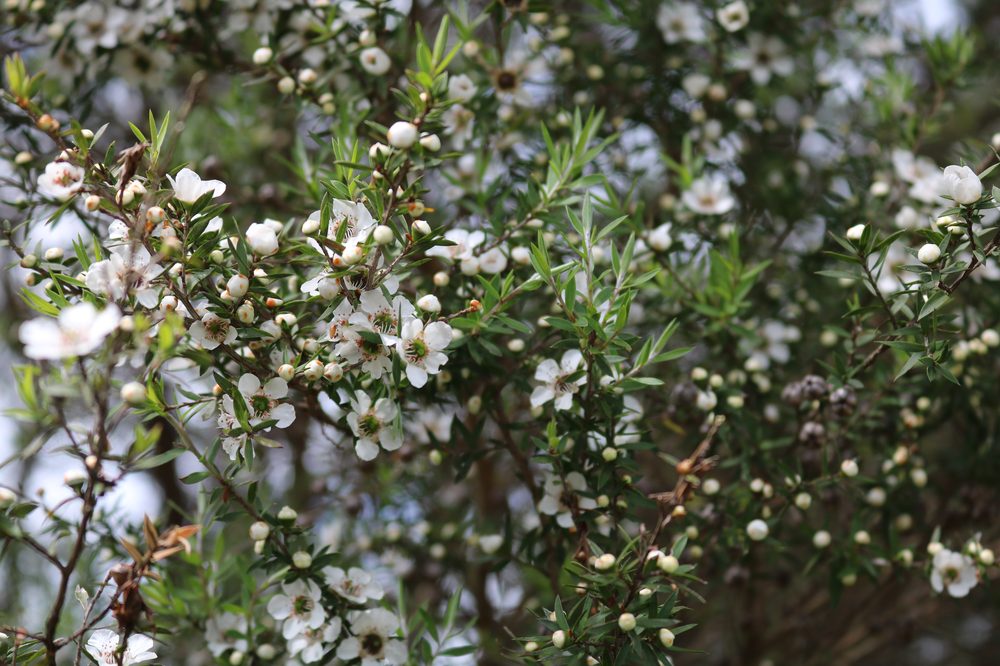
General Description

Bees produce mānuka honey from its nectar.

ⓘ Information
Description adapted from Wikipedia (CC BY-SA 4.0).

Family Context

The Myrtaceae family is primarily tropical and subtropical. Notable medicinal members include:

Geographic Distribution

Manuka has been recorded in 10 countries and territories worldwide, including Australia, Brazil, Colombia, Spain, United Kingdom, and others.

Active Compounds

Phytochemical research has identified 30 compounds in this species, including a diverse array of phytochemical classes (see the Complete Chemical Inventory below for the full list).

The identified compounds include the following categories:

  • Flavonoid: antioxidant compounds that protect cells from oxidative damage
  • Alkaloid: nitrogenous compounds with diverse pharmacological activities

Research Status

Although this species has documented phytochemical constituents, its ethnobotanical and clinical documentation remains incomplete. Systematic pharmacological studies are needed to validate the traditional uses attributed to this species.

ⓘ Information
Information on this page is compiled from Dr. Duke’s Phytochemical and Ethnobotanical Databases (USDA ARS), a public domain resource. Consult a healthcare professional before using any herbal preparation.

Distribution and Conservation

Reported distribution: Australia, Brazil, Colombia, Spain, United Kingdom, New Zealand, Portugal, United States, South Africa, Unknown.

Complete Chemical Inventory

CompoundFormulaMW
(-)-BICYCLOSESQUIPHELLANDRENEC₁₅H₂₄204.35 Da
(-)-CADINA-1(6),4-DIENEC₁₅H₂₄204.35 Da
(-)-CADINA-3,5-DIENEC₁₅H₂₄204.35 Da
(-)-TRANS-CALAMENENEC₁₅H₂₂202.33 Da
(-)-ZONARENEC₁₅H₂₄204.35 Da
2'-BETA-DIHYDROXY-3'-METHYL-4',6'-DIMETHOXYCHALCONE
2,5-DIHYDROXY-7-METHOXY-6,8-DIMETHYLFLAVAN-3-ONE
3'-O-METHYL-3-4-METHYLENEDIOXY-ELLAGIC ACID
3,3',4-TRI-O-METHYL-ELLAGIC-ACID
3,3'-DI-O-METHYL-ELLAGIC-ACID
3,4,5-TRIMETHOXYBENZOIC-ACIDC₁₀H₁₂O₅212.20 Da
3,4,5-TRIMETHOXYBENZOIC-ACID-METHYL-ESTERC₁₁H₁₄O₅226.23 Da
3-BETA-30-DIHYDROXYLUP-20(29)-EN-28-OIC-ACID
3-BETA-O-CIS-P-COUMAROYL-MASLINIC-ACID
3-BETA-O-TRANS-P-COUMAROYL-MASLINIC-ACID
3-O-METHYL-ELLAGIC-ACID
5,7-DIMETHOXY-6-METHYLFLAVANONEC₁₈H₁₈O₄298.3 Da
5,7-DIMETHOXYFLAVANONEC₁₇H₁₆O₄284.31 Da
5,7-DIMETHOXYFLAVONEC₁₇H₁₄O₄282.29 Da
5-HYDROXY-7-METHOXY-6,8-DIMETHYLFLAVAN-3-ONE
5-HYDROXY-7-METHOXY-6,8-DIMETHYLFLAVANONEC₁₈H₁₈O₄298.3 Da
5-HYDROXY-7-METHOXY-6,8-DIMETHYLFLAVONEC₁₈H₁₆O₄296.3 Da
5-HYDROXY-7-METHOXY-6-METHYLFLAVANONE
5-HYDROXY-7-METHOXY-6-METHYLFLAVONEC₁₇H₁₄O₄282.29 Da
ALLO-AROMADENDRENEC₁₅H₂₄204.35 Da
ALPHA-COPAENEC₁₅H₂₄204.35 Da
ALPHA-CUBEBENEC₁₅H₂₄204.35 Da
ALPHA-GURJUNENEC₁₅H₂₄204.35 Da
ALPHA-HUMULENEC₁₅H₂₄204.35 Da
ALPHA-SELINENEC₁₅H₂₄204.35 Da

Data from PubChem (NIH/NLM, public domain).


References & Further Reading

External Research Links

Data Sources