Botanical Overview
Maca (Lepidium meyenii) is a species in the Brassicaceae family. The mustard family (Brassicaceae) includes herbs with alternate leaves and four-petaled flowers arranged in cross-like clusters. The fruits are typically elongated capsules called siliques. Most species produce glucosinolates and isothiocyanates, pungent sulfur-containing compounds with anticancer and antimicrobial properties. Although comprehensive ethnobotanical records are limited, phytochemical studies have identified 30 compounds in this species, suggesting potential medicinal value.
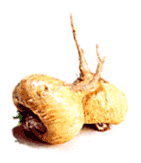
General Description
It was rediscovered for commercial purposes at the Meseta de Bombón plateau close to Lake Junin in the late 1980s. It is grown for its fleshy hypocotyl that is fused with a taproot, which is typically dried but may also be freshly cooked as a root vegetable. As a cash crop, it is primarily exported as a powder that may be raw or processed further as a gelatinized starch or as an extract. If dried, it may be processed into a flour for baking or as a dietary supplement. Its Spanish and Quechua names include maca-maca, maino, ayak chichira, and ayak willku.
Family Context
The Brassicaceae family is widely distributed in temperate regions. Notable medicinal members include:
- Radish — 63 documented uses
- Shepherd’s Purse — 49 documented uses
- Berro — 45 documented uses
- Garden Cress — 39 documented uses
Geographic Distribution
Maca has been recorded in 9 countries and territories worldwide, including Argentina, Bolivia, Chile, China, Spain, and others.
Active Compounds
Phytochemical research has identified 30 compounds in this species, including a diverse array of phytochemical classes (see the Complete Chemical Inventory below for the full list).
The identified compounds include the following categories:
- Sterol: cholesterol-like compounds with anti-inflammatory properties
- Alkaloid: nitrogenous compounds with diverse pharmacological activities
Research Status
Although this species has documented phytochemical constituents, its ethnobotanical and clinical documentation remains incomplete. Systematic pharmacological studies are needed to validate the traditional uses attributed to this species.