Botanical Overview
Lemaireocereus thurberi belongs to the Cactaceae family. Limited but reliable traditional records indicate this plant has recognized medicinal applications in one or more healing traditions. The cactus family (Cactaceae) includes succulent plants with thick, fleshy stems modified for water storage and spines instead of leaves. The flowers are typically large, showy, and short-lived with numerous petals and stamens. Many species produce alkaloids and have traditional medicinal uses.
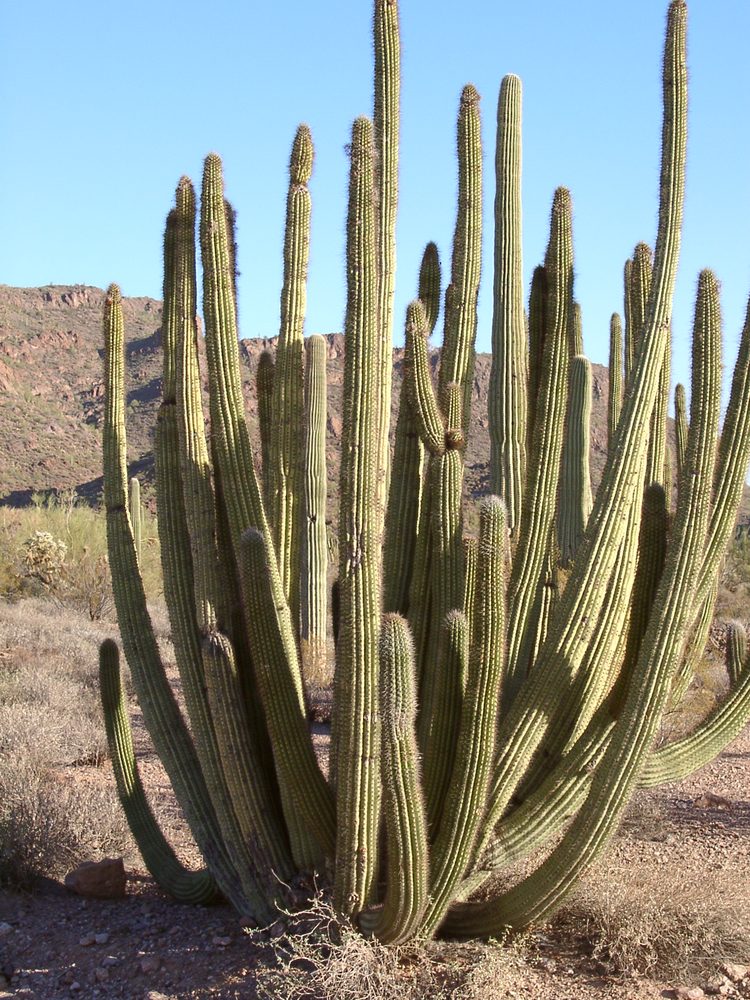
General Description
The species is found in rocky desert. Two subspecies are recognized based on their distribution and height. The Organ Pipe Cactus National Monument is named for the species. Cacti are minimally adapted to particular thermal niches, and are tremendously vulnerable to seasonal precipitation.
Family Context
The Cactaceae family is widely distributed. Notable medicinal members include:
- Peyote — 19 documented uses
- Indian Fig — 19 documented uses
- Night-Blooming Cereus — 9 documented uses
- Night-Blooming Cereus — 3 documented uses
Geographic Distribution
Lemaireocereus thurberi has been recorded in AS, Mexico, United States, and ZZ.
Traditional Uses
Lemaireocereus thurberi has been traditionally used for pain and inflammation.
Pain and inflammation.
- Rheumatism
For pain and inflammation, preparations are applied both topically as compresses and taken internally. A warm poultice draws blood to the area and promotes healing, while internal preparations address systemic inflammation.
Active Compounds
Phytochemical research has identified 1 compound in this species: betulin.