Botanical Overview
Marsh Tea (Ledum palustre) belongs to the Ericaceae family. While not among the most extensively documented medicinal plants, this species has recorded uses that warrant attention from researchers and practitioners. The heath family (Ericaceae) includes shrubs and small trees with simple, often evergreen leaves that are typically thick and leathery. The flowers are urn-shaped or bell-shaped with fused petals. Many species grow in acidic soils and form mycorrhizal associations, and several produce berries used in traditional medicine.
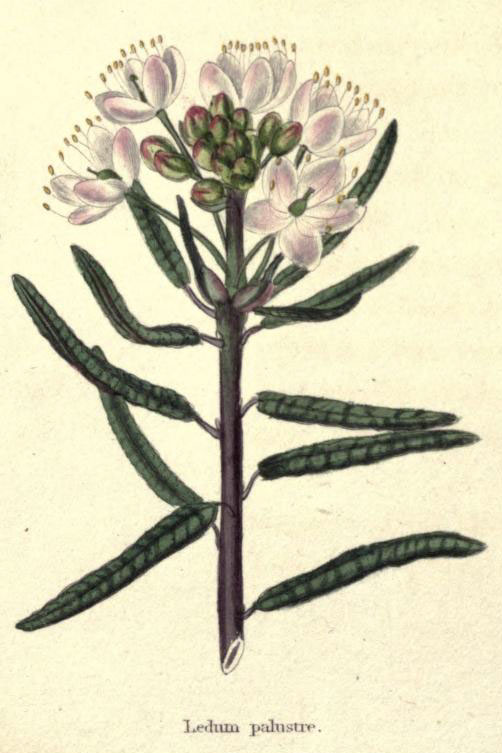
General Description
Rhododendron tomentosum, commonly known as marsh Labrador tea, northern Labrador tea, marsh rosemary or wild rosemary, is a flowering plant in the subsection Ledum of the large genus Rhododendron in the family Ericaceae.
Family Context
The Ericaceae family is widely distributed worldwide. Notable medicinal members include:
- King’s Cure — 24 documented uses
- Mountain Laurel — 18 documented uses
- Bearberry — 15 documented uses
- Indian Wintergreen — 15 documented uses
Geographic Distribution
Marsh Tea has been recorded in 10 countries and territories worldwide, including Canada, Germany, Estonia, Finland, Latvia, and others.
Traditional Uses
Marsh Tea has been traditionally used for respiratory conditions, urinary tract health, and nervous system disorders, among other applications.
Respiratory conditions.
- Expectorant
- Pectoral
- Bronchitis
- Cold
- Cough
Respiratory conditions are addressed through steam inhalation of the herb’s vapors or internal use as a warm tea. The hot infusion acts as an expectorant, helping to loosen phlegm and clear congestion. Some traditions combine it with honey for coughs.
Urinary tract health.
- Diuretic
Urinary tract applications typically involve drinking the herb as a mild tea, which increases urine production and helps flush the urinary system. It may be combined with other demulcent herbs to soothe irritated tissues.
Nervous system disorders.
- Narcotic
Nervous system support involves taking the herb as a warm tea, often in the evening or before bed. The calming compounds interact with neurotransmitter systems to promote relaxation and restful sleep.
Active Compounds
Phytochemical research has identified 17 compounds in this species, including a diverse array of phytochemical classes (see the Complete Chemical Inventory below for the full list).
The identified compounds include the following categories:
- Flavonoid: antioxidant compounds that protect cells from oxidative damage
- Phenolic: antioxidant compounds that neutralize free radicals
- Tannin: astringent compounds that tighten tissues and resist infection