Botanical Overview
Larix laricina belongs to the Pinaceae family. Limited but reliable traditional records indicate this plant has recognized medicinal applications in one or more healing traditions. The pine family (Pinaceae) includes coniferous trees with needle-like leaves arranged in bundles or spirally along the branches. They produce male and female cones and are wind-pollinated. The resin contains turpentine and other terpenes with traditional medicinal uses for respiratory conditions.
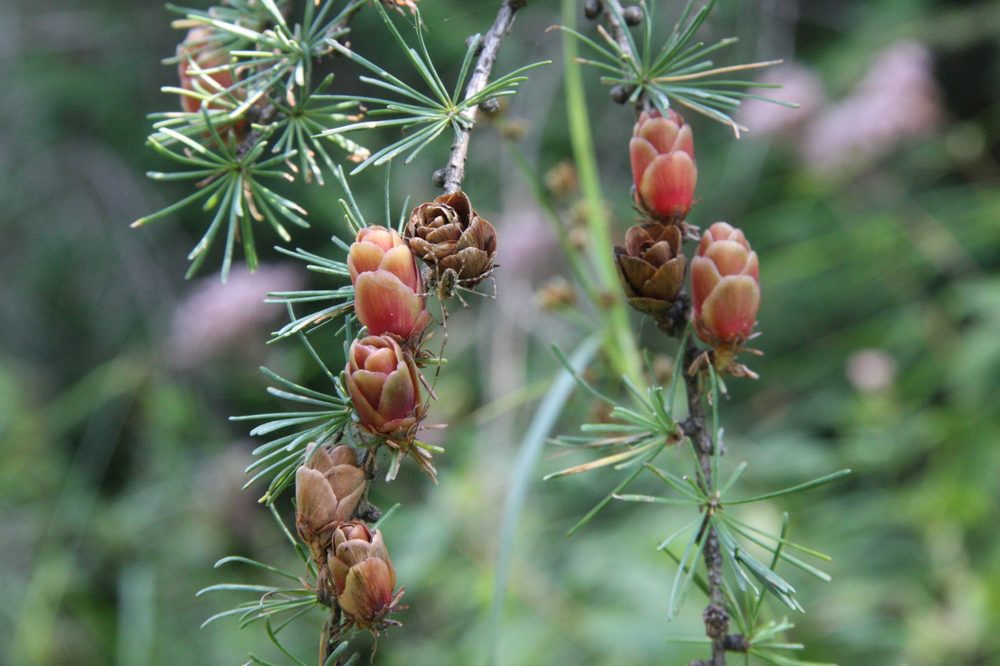
General Description
Larix laricina, commonly known as the tamarack, hackmatack, eastern larch, black larch, red larch, or American larch, is a species of larch native to Canada, from eastern Yukon and Inuvik, Northwest Territories east to Newfoundland, and also south into the upper northeastern United States from Minnesota to Cranesville Swamp, West Virginia; there is also an isolated population in central Alaska.
Family Context
The Pinaceae family is widely distributed in the Northern Hemisphere. Notable medicinal members include:
- Longleaf Pine — 29 documented uses
- Chir Pine — 27 documented uses
- Silver-Fir — 20 documented uses
- Pinyon Pine — 15 documented uses
Geographic Distribution
Larix laricina has been recorded in 10 countries and territories worldwide, including Canada, Estonia, United Kingdom, Latvia, Netherlands, and others.
Traditional Uses
Larix laricina has been traditionally used for digestive health, skin and wound care, and pain and inflammation, among other applications.
Digestive health.
- Laxative
- Dyspepsia
For digestive complaints, the herb is typically prepared as a tea or decoction taken before meals. The bitter compounds stimulate digestive secretions and improve nutrient absorption. Some traditions use the powdered root or leaves in small doses as a stomachic tonic.
Skin and wound care.
- Wound
For skin conditions, the fresh or dried plant is applied topically as a poultice, wash, or compress. A strong decoction can be used to clean wounds and sores. The antimicrobial properties help prevent infection while promoting tissue repair.
Pain and inflammation.
- Anodyne
- Rheumatism
For pain and inflammation, preparations are applied both topically as compresses and taken internally. A warm poultice draws blood to the area and promotes healing, while internal preparations address systemic inflammation.
Active Compounds
Phytochemical research has identified 1 compound in this species: betulin.