Botanical Overview
Kleinhovia hospita belongs to the Sterculiaceae family. Limited but reliable traditional records indicate this plant has recognized medicinal applications in one or more healing traditions. The sterculia family (Sterculiaceae) includes trees and shrubs with alternate leaves, often with stellate hairs. The flowers have five sepals and petals, and the fruits are typically capsules or follicles. Many species produce mucilaginous substances and have traditional uses as demulcents.
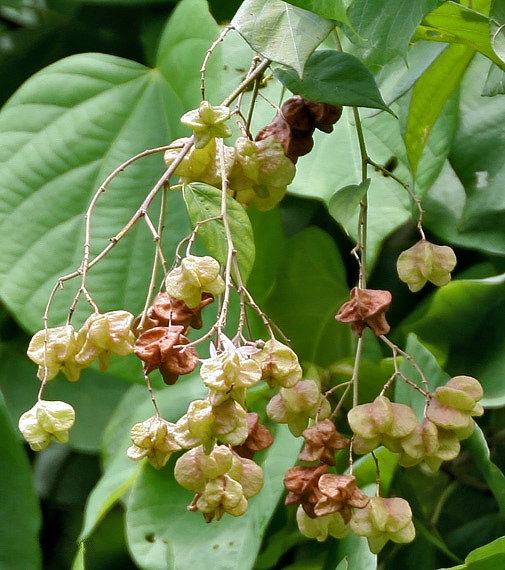
General Description
The sole species in the genus is Kleinhovia hospita, commonly known as guest tree, an evergreen tree native to Indonesia, Malaysia and other parts of tropical Asia and the Pacific.
Family Context
The Sterculiaceae family is widely distributed. Notable medicinal members include:
- Bay Cedar — 30 documented uses
- Cacao — 22 documented uses
- Raichie — 16 documented uses
- Pterospermum acerifolium — 14 documented uses
Geographic Distribution
Kleinhovia hospita has been recorded in 10 countries and territories worldwide, including China, Indonesia, India, Malaysia, Papua New Guinea, and others.
Traditional Uses
Kleinhovia hospita has been traditionally used for skin and wound care.
Skin and wound care.
- Eruption
- Scabies
- Skin
For skin conditions, the fresh or dried plant is applied topically as a poultice, wash, or compress. A strong decoction can be used to clean wounds and sores. The antimicrobial properties help prevent infection while promoting tissue repair.
Active Compounds
Phytochemical research has identified 1 compound in this species: betulin.