Botanical Overview
Black Walnut (Juglans nigra) belongs to the Juglandaceae family. Limited but reliable traditional records indicate this plant has recognized medicinal applications in one or more healing traditions. This species belongs to the Juglandaceae family, a group of flowering plants.
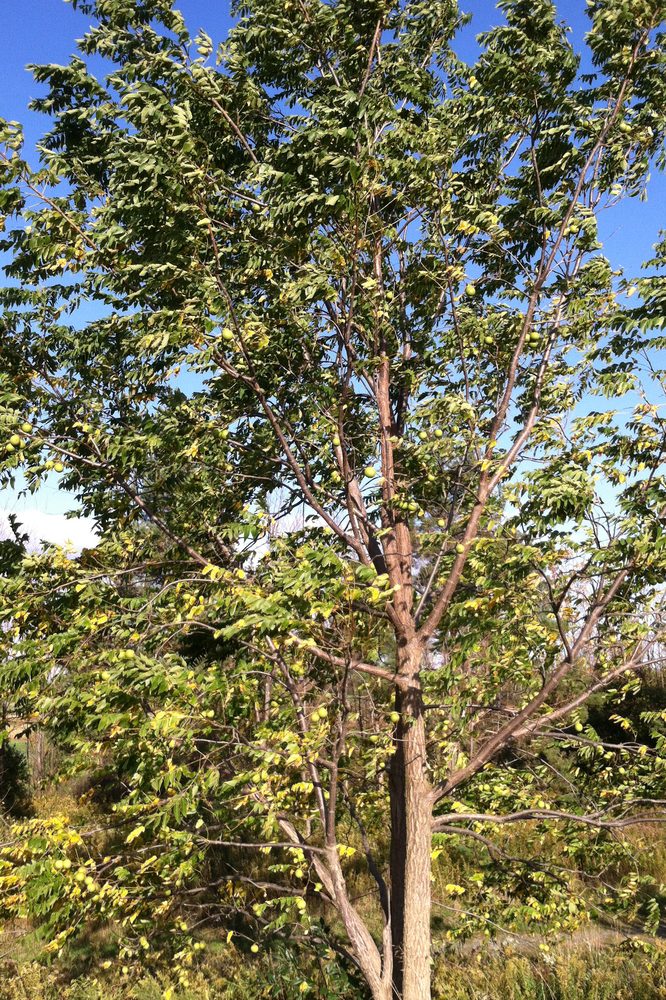
General Description
Black walnut is susceptible to thousand cankers disease, which provoked a decline of walnut trees in some regions. Black walnut is allelopathic, releasing chemicals from its roots and other tissues that may harm other organisms and give the tree a competitive advantage, but there is no scientific consensus that this is a primary competitive factor. Black walnut is an important tree commercially, as the wood is a deep brown color and easily worked. Walnut seeds (nuts) are cultivated for their distinctive and desirable taste. Walnut trees are grown for lumber and food, and processors have found additional markets for even the tough outer hulls by finely grinding them for use in products such as abrasive cleansers. Many cultivars have been developed for improved quality wood or nuts. In 2017, the United States Department of Agriculture valued U. S. walnut timber at $530 billion. A significant amount is grown in Missouri.
Family Context
The Juglandaceae family is widely distributed. Notable medicinal members include:
- English Walnut — 53 documented uses
- Butternut — 14 documented uses
- Pecan — 4 documented uses
- Shagbark Hickory — 1 documented uses
Geographic Distribution
Black Walnut has been recorded in 10 countries and territories worldwide, including Austria, Belgium, Canada, Czech Republic, Germany, and others.
Traditional Uses
Black Walnut has been traditionally used for digestive health, skin and wound care, and reproductive health.
Digestive health.
- Vermifuge
For digestive complaints, the herb is typically prepared as a tea or decoction taken before meals. The bitter compounds stimulate digestive secretions and improve nutrient absorption. Some traditions use the powdered root or leaves in small doses as a stomachic tonic.
Skin and wound care.
- Sore
For skin conditions, the fresh or dried plant is applied topically as a poultice, wash, or compress. A strong decoction can be used to clean wounds and sores. The antimicrobial properties help prevent infection while promoting tissue repair.
Reproductive health.
- Syphilis
In traditional contexts, reproductive health applications typically involve internal preparations such as teas or decoctions. The herb may be taken at specific times during the menstrual cycle.
Active Compounds
Phytochemical research has identified 30 compounds in this species, including a diverse array of phytochemical classes (see the Complete Chemical Inventory below for the full list).
The identified compounds include the following categories:
- Flavonoid: antioxidant compounds that protect cells from oxidative damage
- Alkaloid: nitrogenous compounds with diverse pharmacological activities