Botanical Overview
Spanish Physic Nut (Jatropha gossypifolia) is a flowering plant in the Euphorbiaceae family. This plant has earned a place in traditional medicine through its consistent therapeutic benefits, recorded across multiple cultures. The spurge family (Euphorbiaceae) includes an extremely diverse group of plants ranging from small herbs to large trees, many with milky sap that can be irritating or toxic. The flowers are typically small and unisexual, often arranged in distinctive inflorescences. Many species contain diterpene esters and other bioactive compounds.
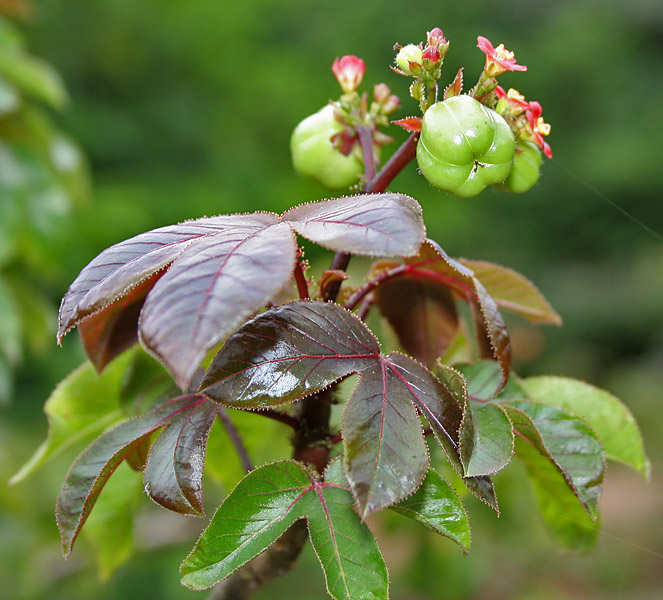
General Description
The species is native to Mexico, South America, and the Caribbean islands, but is currently spread throughout the tropics. It is declared noxious weed in Puerto Rico and is naturalised in northern Australia, including Queensland where it is listed as a Class 2 declared pest plant. It grows to 2. 5–4 m (8. 2–13. 1 ft) high. The three lobed leaves are purple and sticky when young and become bright green with age. The small red flowers with yellow centres appear in clusters. These are followed by cherry-sized seed pods that are poisonous. Powdery mildew fungal disease was reported.
Family Context
The Euphorbiaceae family is large and globally distributed. Notable medicinal members include:
- Castorbean — 105 documented uses
- Physic Nut — 95 documented uses
- Queensland Asthma Herb — 53 documented uses
- Seed On The Leaf — 37 documented uses
Traditional Uses
Spanish Physic Nut has been traditionally used for digestive health, respiratory conditions, and skin and wound care, among other applications.
Digestive health.
- Purgative
- Diarrhea
- Ache(Stomach)
- Dyspepsia
- Laxative
- Stomachic
For digestive complaints, the herb is typically prepared as a tea or decoction taken before meals. The bitter compounds stimulate digestive secretions and improve nutrient absorption. Some traditions use the powdered root or leaves in small doses as a stomachic tonic.
Respiratory conditions.
- Cold
Respiratory conditions are addressed through steam inhalation of the herb’s vapors or internal use as a warm tea. The hot infusion acts as an expectorant, helping to loosen phlegm and clear congestion. Some traditions combine it with honey for coughs.
Skin and wound care.
- Sore
- Eczema
- Leprosy
- Itch
- Rash
For skin conditions, the fresh or dried plant is applied topically as a poultice, wash, or compress. A strong decoction can be used to clean wounds and sores. The antimicrobial properties help prevent infection while promoting tissue repair.
Active Compounds
Phytochemical research has identified 13 compounds in this species, including a diverse array of phytochemical classes (see the Complete Chemical Inventory below for the full list).
The identified compounds include the following categories:
- Terpene: aromatic compounds with anti-inflammatory and antimicrobial properties
- Sterol: cholesterol-like compounds with anti-inflammatory properties
- Alkaloid: nitrogenous compounds with diverse pharmacological activities