Botanical Overview
Calumba Root (Jateorhiza palmata) belongs to the Menispermaceae family. Limited but reliable traditional records indicate this plant has recognized medicinal applications in one or more healing traditions. This species belongs to the Menispermaceae family, a group of flowering plants.
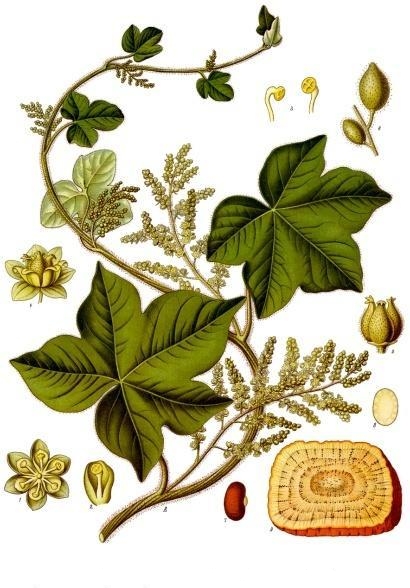
General Description
It contains isoquinoline alkaloids, including columbamine and is used mainly as a bitter tonic especially in cases of anorexia nervosa. It contains no tannins, hence it can be safely used in iron preparations for the treatment of anaemia without the fear of precipitation resulted from in vitro interaction.
Family Context
The Menispermaceae family is widely distributed. Notable medicinal members include:
- Butua — 60 documented uses
- Moonseed — 16 documented uses
- Indian Tape-Vine — 12 documented uses
- Levant Berry — 9 documented uses
Geographic Distribution
Calumba Root has been recorded in 10 countries and territories worldwide, including India, Kenya, Mauritius, Malawi, Mozambique, and others.
Traditional Uses
Calumba Root has been traditionally used for digestive health, skin and wound care, and immune system support.
Digestive health.
- Dysentery
- Diarrhea
- Dyspepsia
- Vermifuge
For digestive complaints, the herb is typically prepared as a tea or decoction taken before meals. The bitter compounds stimulate digestive secretions and improve nutrient absorption. Some traditions use the powdered root or leaves in small doses as a stomachic tonic.
Skin and wound care.
- Sore
For skin conditions, the fresh or dried plant is applied topically as a poultice, wash, or compress. A strong decoction can be used to clean wounds and sores. The antimicrobial properties help prevent infection while promoting tissue repair.
Immune system support.
- Antiseptic
Immune support involves taking the herb as a decoction or tincture over extended periods. The active compounds stimulate immune cell activity and provide antimicrobial protection.
Active Compounds
Phytochemical research has identified 21 compounds in this species, including a diverse array of phytochemical classes (see the Complete Chemical Inventory below for the full list).
The identified compounds include the following categories:
- Flavonoid: antioxidant compounds that protect cells from oxidative damage
- Alkaloid: nitrogenous compounds with diverse pharmacological activities
- Tannin: astringent compounds that tighten tissues and resist infection