Botanical Overview
Dyer’s Woad (Isatis tinctoria) belongs to the Brassicaceae family. While not among the most extensively documented medicinal plants, this species has recorded uses that warrant attention from researchers and practitioners. The mustard family (Brassicaceae) includes herbs with alternate leaves and four-petaled flowers arranged in cross-like clusters. The fruits are typically elongated capsules called siliques. Most species produce glucosinolates and isothiocyanates, pungent sulfur-containing compounds with anticancer and antimicrobial properties.
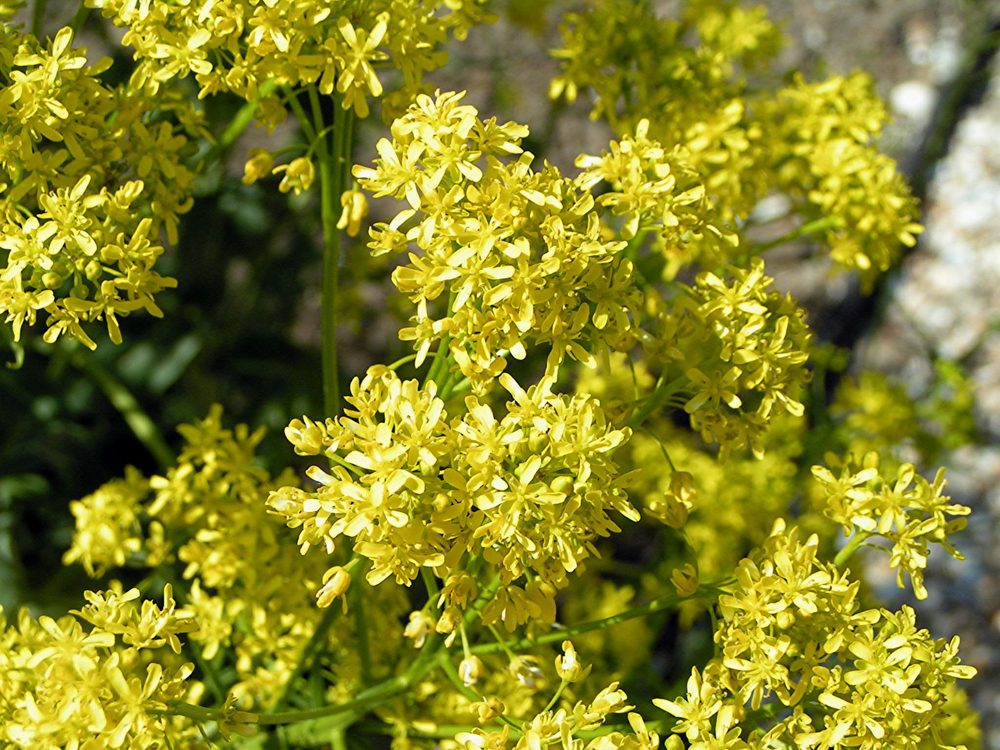
General Description
The double use of woad is seen in its name: the term Isatis is linked to its ancient use to treat wounds; the term tinctoria references its use as a dye. It is occasionally known as Asp of Jerusalem. Woad is also the name of a blue dye produced from the leaves of the plant. Woad is native to the steppe and desert zones of the Caucasus, Central Asia to Eastern Siberia and Western Asia but is now also found in South-Eastern and Central Europe and western North America. Woad was an important source of blue dye and was cultivated throughout Europe, especially in Western and Southern Europe. In medieval times, there were important woad-growing regions in England, Germany and France. Towns such as Toulouse became prosperous from the woad trade. Over time, woad’s cultivation spread across Europe, where it was an important trade good. From the 16th century, indigo (Indigofera tinctoria), a plant from the New World, started to replace it. In the early 20th century, both woad and Indigofera tinctoria were mostly replaced by synthetic blue dyes, though there has also been some revival of the use of woad for craft purposes.
Family Context
The Brassicaceae family is widely distributed in temperate regions. Notable medicinal members include:
- Radish — 63 documented uses
- Shepherd’s Purse — 49 documented uses
- Berro — 45 documented uses
- Garden Cress — 39 documented uses
Geographic Distribution
Dyer’s Woad has been recorded in 10 countries and territories worldwide, including Belgium, Switzerland, Germany, Spain, Finland, and others.
Traditional Uses
Dyer’s Woad has been traditionally used for skin and wound care, fever management, and immune system support.
Skin and wound care.
- Sore
- Rash
For skin conditions, the fresh or dried plant is applied topically as a poultice, wash, or compress. A strong decoction can be used to clean wounds and sores. The antimicrobial properties help prevent infection while promoting tissue repair.
Fever management.
- Fever
Febrifuge preparations are typically administered as hot teas to induce perspiration, which helps the body regulate temperature. The patient is kept warm and encouraged to rest while the herb promotes sweating.
Immune system support.
- Cancer
- Tumor
- Bactericide
Immune support involves taking the herb as a decoction or tincture over extended periods. The active compounds stimulate immune cell activity and provide antimicrobial protection.
Active Compounds
Phytochemical research has identified 30 compounds in this species, including a diverse array of phytochemical classes (see the Complete Chemical Inventory below for the full list).