Hyacinth

Botanical Overview

Hyacinth (Hyacinthus orientalis) belongs to the Liliaceae family. Limited but reliable traditional records indicate this plant has recognized medicinal applications in one or more healing traditions. The lily family (Liliaceae) includes bulbous herbs with erect stems, alternate leaves, and showy six-parted flowers with prominent stamens. The underground bulbs serve as storage organs rich in carbohydrates. Many species contain steroidal saponins and alkaloids with medicinal properties.
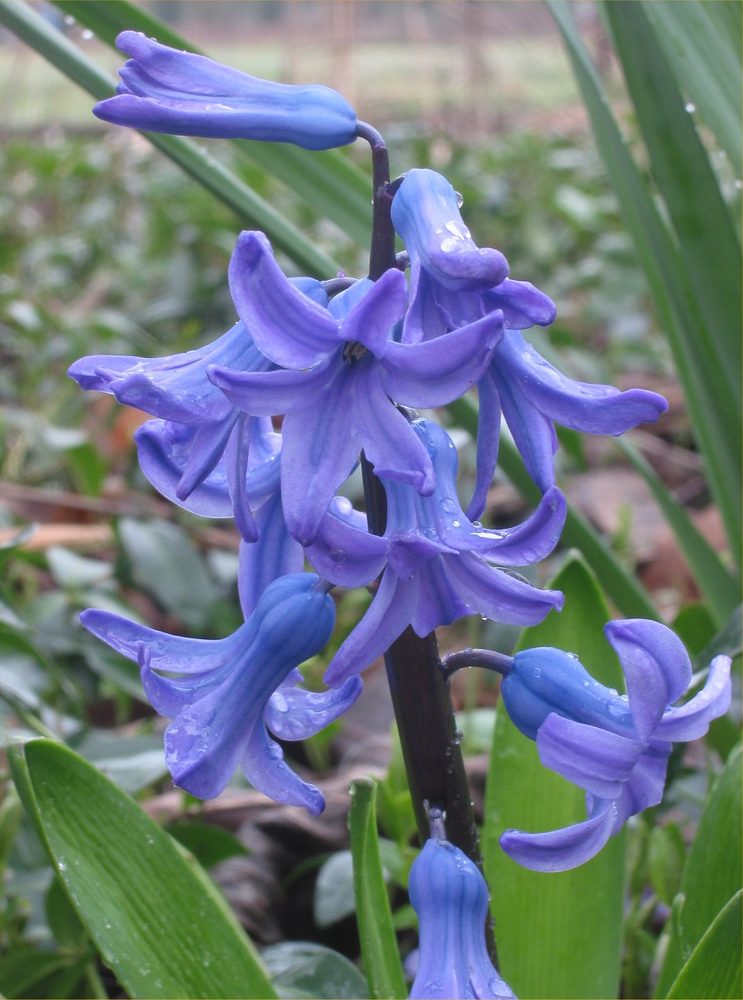
General Description

It is native to western Asia, from southern Turkey, through Syria and Lebanon to northern Israel. It was introduced to Europe in the 16th century. It is widely cultivated everywhere in the temperate world for its strongly fragrant flowers which appear exceptionally early in the season, and frequently forced to flower at Christmas time.

ⓘ Information
Description adapted from Wikipedia (CC BY-SA 4.0).

Family Context

The Liliaceae family is widely distributed in temperate regions. Notable medicinal members include:

Geographic Distribution

Hyacinth has been recorded in 10 countries and territories worldwide, including Belgium, Canada, Germany, France, United Kingdom, and others.

Active Compounds

Phytochemical research has identified 30 compounds in this species, including a diverse array of phytochemical classes (see the Complete Chemical Inventory below for the full list).

The identified compounds include the following categories:

  • Flavonoid: antioxidant compounds that protect cells from oxidative damage
ⓘ Information
Information on this page is compiled from Dr. Duke’s Phytochemical and Ethnobotanical Databases (USDA ARS), a public domain resource. Consult a healthcare professional before using any herbal preparation.
⚠ Caution
Traditional records: This plant has documented uses including Poison. Self-medication with herbs carries risks including allergic reactions, drug interactions, and toxicity. Only use under the supervision of a qualified healthcare professional.

Distribution and Conservation

Reported distribution: Belgium, Canada, Germany, France, United Kingdom, Israel, Italy, Netherlands, Sweden, United States.

Complete Use Records

CategoryCultural Context
Poison

Complete Chemical Inventory

CompoundFormulaMW
1,2,4-TRIMETHOXYBENZENEC₉H₁₂O₃168.19 Da
1,2-DIMETHOXY-BENZENEC₈H₁₀O₂138.16 Da
1,4-DIMETHOXY-BENZENEC₈H₁₀O₂138.16 Da
1-OCTEN-3-OLC₈H₁₆O128.21 Da
2-METHOXY-METHYL-BENZOATE
2-METHOXYBENZYL-ACETATE
2-METHOXYETHYL-ACETATEC₁₀H₂₀O₆236.26 Da
6,10,14-TRIMETHYL-PENTADECAN-2-ONEC₁₈H₃₆O268.5 Da
ALPHA-FARNESENEC₁₅H₂₄204.35 Da
BENZALDEHYDEC₇H₆O106.12 Da
BENZOIC-ACIDC₇H₆O₂122.12 Da
BENZYL-ACETATEC₉H₁₀O₂150.17 Da
BENZYL-ALCOHOLC₇H₈O108.14 Da
BENZYL-BENZOATEC₁₄H₁₂O₂212.24 Da
BENZYL-FORMATEC₈H₈O₂136.15 Da
BENZYL-SALICYLATEC₁₄H₁₂O₃228.24 Da
BENZYL-TIGLATEC₁₂H₁₄O₂190.24 Da
CINNAMALDEHYDEC₉H₈O132.16 Da
CINNAMYL-ACETATEC₁₁H₁₂O₂176.21 Da
CINNAMYL-ALCOHOLC₉H₁₀O134.17 Da
CIS-3-HEXENOLC₆H₁₂O100.16 Da
CIS-3-HEXENYL-ACETATEC₈H₁₄O₂142.20 Da
CIS-CINNAMYL-ALCOHOL
CIS-OCIMENEC₁₀H₁₆136.23 Da
CYANIDIN-3,5-GLUCOSIDE
DELPHINIDIN-3,5-GLUCOSIDE
DIMETHYL-ANTHRANILATEC₉H₁₁NO₂165.19 Da
ETHYL-BENZOATEC₉H₁₀O₂150.17 Da
ETHYL-SALICYLATEC₉H₁₀O₃166.17 Da
EUGENOLC₁₀H₁₂O₂164.20 Da

Data from PubChem (NIH/NLM, public domain).


References & Further Reading

External Research Links

Data Sources