Botanical Overview
Tellicherry Bark (Holarrhena pubescens) is a species in the Apocynaceae family. The dogbane family (Apocynaceae) includes herbs, shrubs, vines, and trees with milky sap containing alkaloids and cardiac glycosides. The flowers are typically five-petaled and often showy with a tubular corolla. Many species in this family are highly toxic but also source of important cardiac medications. Although comprehensive ethnobotanical records are limited, phytochemical studies have identified 30 compounds in this species, suggesting potential medicinal value.
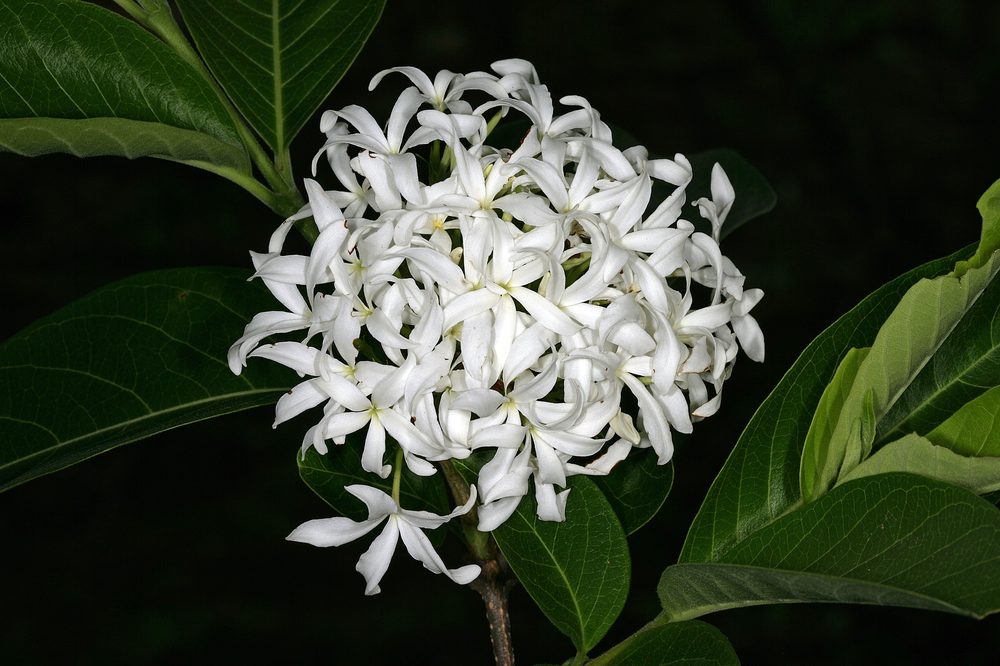
General Description
It is native to central and southern Africa, the Indian subcontinent, Indochina, and parts of China. Holarrhena pubescens is sometimes confused with the species Wrightia antidysenterica due to a second, taxonomically invalid publication of the name Holarrhena pubescens. In Cambodia, it is called /tɨk dɑh kʰlaː thɔm/ ទឹកដោះខ្លាធំ big tiger milk or /kʰlaɛɲ kŭəŋ/ ខ្លែងគង់ invulnerable kite. These seeds are sold as indraja (इनद्राजा) for Ayurvedic medicine in India.
Family Context
The Apocynaceae family is primarily tropical and subtropical. Notable medicinal members include:
- Alstonia scholaris — 42 documented uses
- Madagascar Periwinkle — 40 documented uses
- Oleander — 30 documented uses
- African Snakeroot — 28 documented uses
Geographic Distribution
Tellicherry Bark has been recorded in 10 countries and territories worldwide, including China, India, Myanmar, Malawi, Mozambique, and others.
Active Compounds
Phytochemical research has identified 30 compounds in this species, including a diverse array of phytochemical classes (see the Complete Chemical Inventory below for the full list).
The identified compounds include the following categories:
- Sterol: cholesterol-like compounds with anti-inflammatory properties
- Alkaloid: nitrogenous compounds with diverse pharmacological activities
Research Status
Although this species has documented phytochemical constituents, its ethnobotanical and clinical documentation remains incomplete. Systematic pharmacological studies are needed to validate the traditional uses attributed to this species.