Botanical Overview
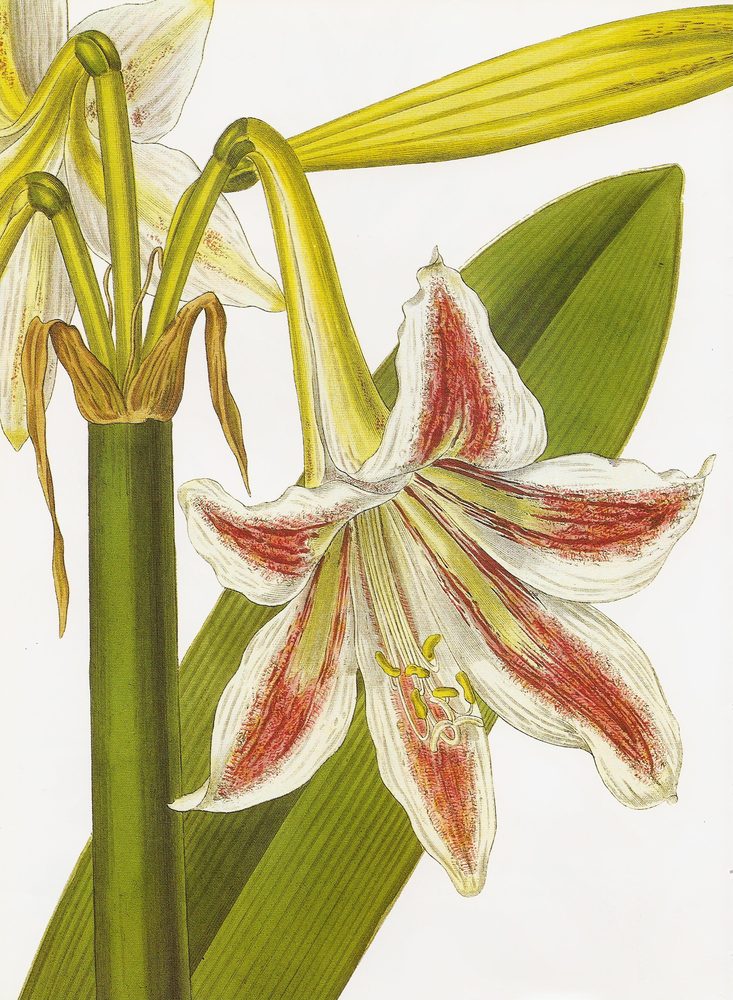
Barbados lily (Hippeastrum vittatum) is a species in the Liliaceae family. The lily family (Liliaceae) includes bulbous herbs with erect stems, alternate leaves, and showy six-parted flowers with prominent stamens. The underground bulbs serve as storage organs rich in carbohydrates. Many species contain steroidal saponins and alkaloids with medicinal properties. Although comprehensive ethnobotanical records are limited, phytochemical studies have identified 14 compounds in this species, suggesting potential medicinal value.
General Description
It is native to western Bolivia, southern Brazil, and Misiones Province, Argentina, and it has been introduced to a number of other locales around the world. A bulbous geophyte, it is typically found in the seasonally dry tropics. With Hippeastrum reginae it is a parent of Hippeastrum × johnsonii, an ornamental that gained the Royal Horticultural Society’s Award of Garden Merit in 2012.
Family Context
The Liliaceae family is widely distributed in temperate regions. Notable medicinal members include:
- Onion — 72 documented uses
- American Hellebore — 52 documented uses
- Glory Lily — 36 documented uses
- Asparagus — 31 documented uses
Geographic Distribution
Barbados lily has been recorded in 10 countries and territories worldwide, including Argentina, Bolivia, Brazil, China, Colombia, and others.
Active Compounds
Phytochemical research has identified 14 compounds in this species, including a diverse array of phytochemical classes (see the Complete Chemical Inventory below for the full list).
The identified compounds include the following categories:
- Flavonoid: antioxidant compounds that protect cells from oxidative damage
- Alkaloid: nitrogenous compounds with diverse pharmacological activities
Research Status
Although this species has documented phytochemical constituents, its ethnobotanical and clinical documentation remains incomplete. Further ethnobotanical and pharmacological research may reveal additional therapeutic applications for this species.