Botanical Overview
Hibiscus mutabilis is a flowering plant in the Malvaceae family. Traditional medicine systems have documented several valuable applications for this species, supported by its observed therapeutic effects. The mallow family (Malvaceae) includes herbs, shrubs, and trees with alternate leaves, often with stellate hairs. The flowers are typically showy with five petals and numerous stamens fused into a column. Many species produce mucilage and have demulcent and emollient properties.
General Description
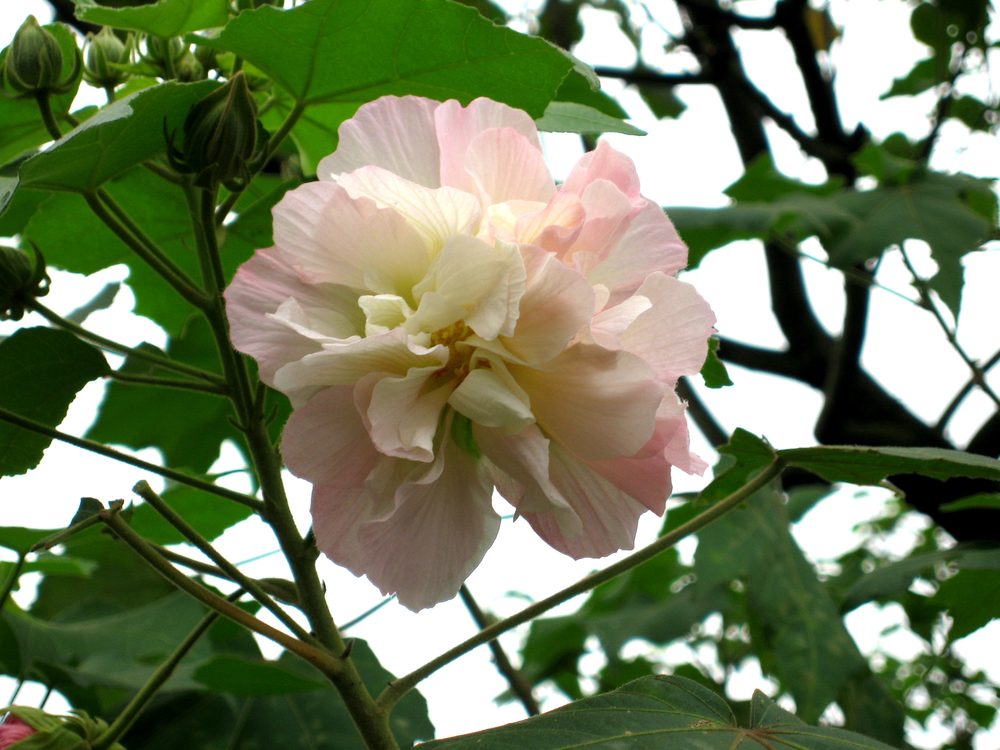
Originally native to southern China, where it is known as 木芙蓉, (“Mùfúróng”)[1]it is now found on all continents except Antarctica. It is a mallow (family Malvaceae) not a true rose (family Rosaceae). Alternative names in parts of the United States are Confederate rose and Dixie rosemallow.
Family Context
The Malvaceae family is widely distributed worldwide. Notable medicinal members include:
- Chinese hibiscus — 51 documented uses
- Broomweed — 49 documented uses
- Indian tulip tree — 49 documented uses
- Okra — 36 documented uses
Geographic Distribution
Hibiscus mutabilis has been recorded in 10 countries and territories worldwide, including Australia, Brazil, China, Hong Kong, India, and others.
Traditional Uses
Hibiscus mutabilis has been traditionally used for respiratory conditions, skin and wound care, and pain and inflammation, among other applications.
Respiratory conditions.
- Cough
- Expectorant
- Pectoral
Respiratory conditions are addressed through steam inhalation of the herb’s vapors or internal use as a warm tea. The hot infusion acts as an expectorant, helping to loosen phlegm and clear congestion. Some traditions combine it with honey for coughs.
Skin and wound care.
- Burn
- Abscess
- Sore
- Wound
For skin conditions, the fresh or dried plant is applied topically as a poultice, wash, or compress. A strong decoction can be used to clean wounds and sores. The antimicrobial properties help prevent infection while promoting tissue repair.
Pain and inflammation.
- Swelling
- Anodyne
- Inflammation
For pain and inflammation, preparations are applied both topically as compresses and taken internally. A warm poultice draws blood to the area and promotes healing, while internal preparations address systemic inflammation.
Active Compounds
Phytochemical research has identified 1 compound in this species: betulinic-acid.