Botanical Overview
Dame’s Rocket (Hesperis matronalis) belongs to the Brassicaceae family. Limited but reliable traditional records indicate this plant has recognized medicinal applications in one or more healing traditions. The mustard family (Brassicaceae) includes herbs with alternate leaves and four-petaled flowers arranged in cross-like clusters. The fruits are typically elongated capsules called siliques. Most species produce glucosinolates and isothiocyanates, pungent sulfur-containing compounds with anticancer and antimicrobial properties.
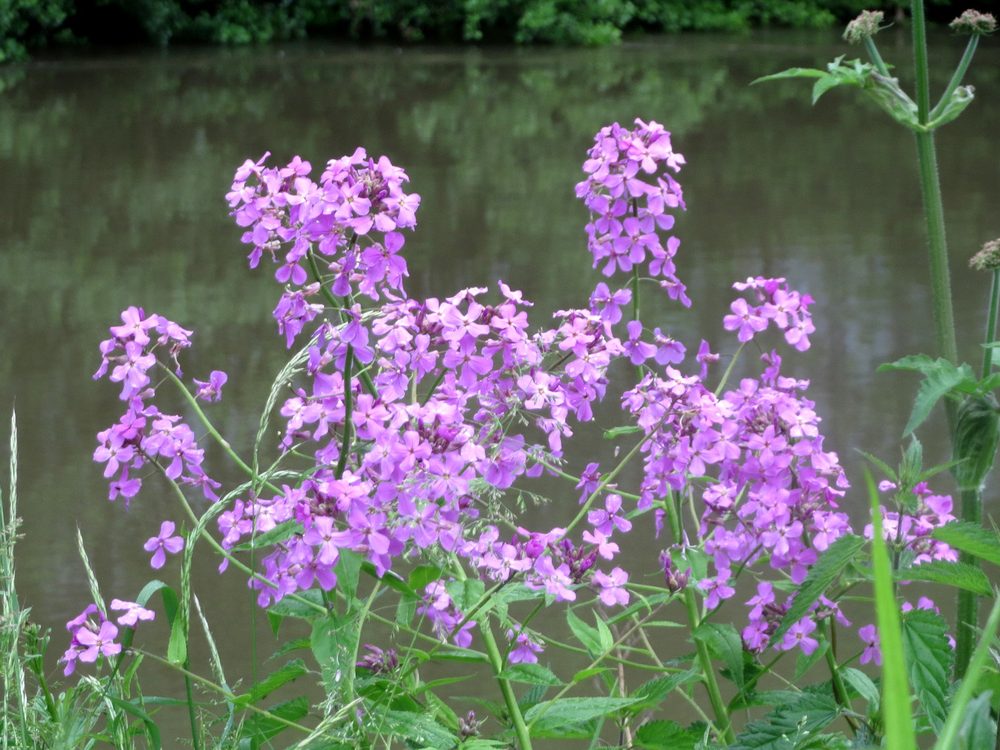
General Description
It has numerous common names, including dame’s rocket, damask-violet, dame’s-violet, dames-wort, dame’s gilliflower, night-scented gilliflower, queen’s gilliflower, rogue’s gilliflower, sweet rocket, and mother-of-the-evening. These plants are biennials or short-lived perennials, native to Eurasia and cultivated in many other areas of the world for their attractive, spring-blooming flowers. In some of those areas, it has escaped from cultivation and become a weed species. The genus name Hesperis was probably given because the scent of the flowers becomes more conspicuous towards evening (Hespera is the Greek word for evening).
Family Context
The Brassicaceae family is widely distributed in temperate regions. Notable medicinal members include:
- Radish — 63 documented uses
- Shepherd’s Purse — 49 documented uses
- Berro — 45 documented uses
- Garden Cress — 39 documented uses
Geographic Distribution
Dame’s Rocket has been recorded in 10 countries and territories worldwide, including Belgium, Canada, Germany, Finland, France, and others.
Traditional Uses
Dame’s Rocket has been traditionally used for respiratory conditions, urinary tract health, and reproductive health, among other applications.
Respiratory conditions.
- Expectorant
Respiratory conditions are addressed through steam inhalation of the herb’s vapors or internal use as a warm tea. The hot infusion acts as an expectorant, helping to loosen phlegm and clear congestion. Some traditions combine it with honey for coughs.
Urinary tract health.
- Diuretic
Urinary tract applications typically involve drinking the herb as a mild tea, which increases urine production and helps flush the urinary system. It may be combined with other demulcent herbs to soothe irritated tissues.
Reproductive health.
- Aphrodisiac
In traditional contexts, reproductive health applications typically involve internal preparations such as teas or decoctions. The herb may be taken at specific times during the menstrual cycle.
Active Compounds
Phytochemical research has identified 20 compounds in this species, including a diverse array of phytochemical classes (see the Complete Chemical Inventory below for the full list).
The identified compounds include the following categories:
- Alkaloid: nitrogenous compounds with diverse pharmacological activities