Botanical Overview
Drummond’s Pennyroyal (Hedeoma drummondii) is a species in the Lamiaceae family. The mint family (Lamiaceae) includes aromatic herbs and shrubs with square stems, opposite leaves, and two-lipped flowers. Many species produce essential oils in glandular trichomes on their leaves and stems. This family is one of the most important sources of culinary and medicinal herbs worldwide. Although comprehensive ethnobotanical records are limited, phytochemical studies have identified 21 compounds in this species, suggesting potential medicinal value.
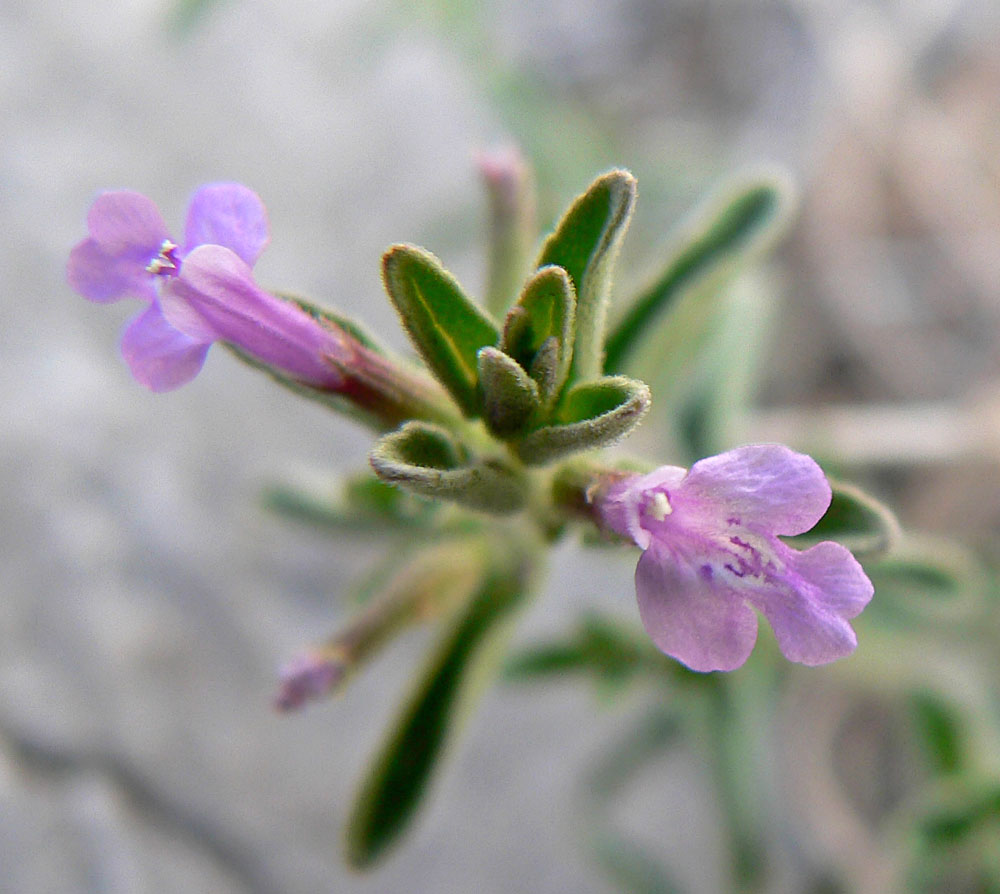
General Description
It is native to western North America, where it is distributed mainly in the United States west of the Mississippi River and adjacent Mexico. This is a hairy perennial herb with an erect mintlike form up to 45 centimeters tall. The oppositely arranged paired leaves are linear to narrowly oval in shape, pointed, and up to about a centimeter long. The leaves have a strong sweet mint scent when crushed. The herb tastes like peppermint and is used as a minty flavoring in parts of Mexico. The inflorescence arises from the axils of these leaf pairs, bearing three to seven flowers each between one and two centimeters in length on short pedicels. The flowers are generally light to deep lavender with some white markings. The fruit is a waxy, mucilaginous nutlet.
Family Context
The Lamiaceae family is large and widely distributed. Notable medicinal members include:
- Basil — 86 documented uses
- Rosemary — 60 documented uses
- Agbo — 54 documented uses
- Sage — 49 documented uses
Geographic Distribution
Drummond’s Pennyroyal has been recorded in Mexico, United States, and ZZ.
Active Compounds
Phytochemical research has identified 21 compounds in this species, including a diverse array of phytochemical classes (see the Complete Chemical Inventory below for the full list).
The identified compounds include the following categories:
- Alkaloid: nitrogenous compounds with diverse pharmacological activities
Research Status
Although this species has documented phytochemical constituents, its ethnobotanical and clinical documentation remains incomplete. Additional phytochemical investigation could identify novel bioactive compounds in this plant.