Botanical Overview
Scarlet Bush (Hamelia patens) belongs to the Rubiaceae family. Limited but reliable traditional records indicate this plant has recognized medicinal applications in one or more healing traditions. The coffee family (Rubiaceae) includes trees, shrubs, and herbs with opposite leaves and interpetiolar stipules. The flowers are typically tubular with four or five petals. The family includes coffee (Coffea), quinine-producing Cinchona, and numerous other medicinal species with alkaloid constituents.
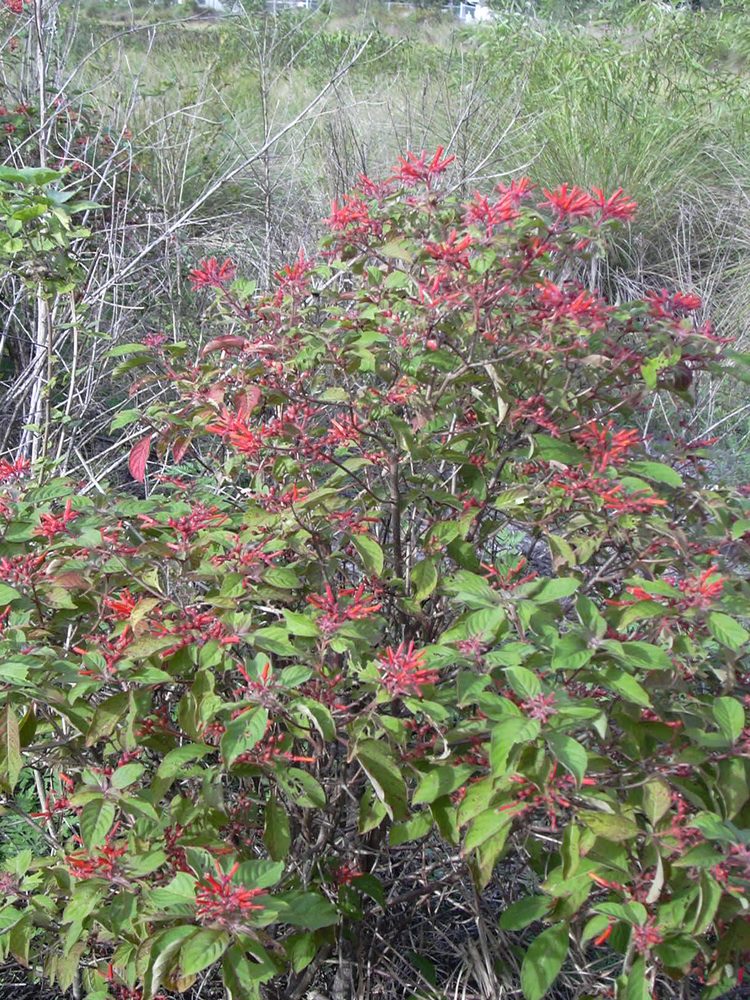
General Description
Its range extends from Florida in the southern United States to as far south as Argentina. Common names include firebush, hummingbird bush, scarlet bush, and redhead. In Belize, this plant’s Mayan name is Ix Canaan and is also known as “Guardian of the Forest”.
Family Context
The Rubiaceae family is large and primarily tropical. Notable medicinal members include:
- Indian Mulberry — 56 documented uses
- Madder — 41 documented uses
- Gardenia — 34 documented uses
- Lojabark — 32 documented uses
Geographic Distribution
Scarlet Bush has been recorded in 10 countries and territories worldwide, including Brazil, Colombia, Costa Rica, Dominican Republic, Ecuador, and others.
Traditional Uses
Scarlet Bush has been traditionally used for digestive health, skin and wound care, and pain and inflammation, among other applications.
Digestive health.
- Diarrhea
- Dysentery
- Purgative
For digestive complaints, the herb is typically prepared as a tea or decoction taken before meals. The bitter compounds stimulate digestive secretions and improve nutrient absorption. Some traditions use the powdered root or leaves in small doses as a stomachic tonic.
Skin and wound care.
- Sore
- Skin
For skin conditions, the fresh or dried plant is applied topically as a poultice, wash, or compress. A strong decoction can be used to clean wounds and sores. The antimicrobial properties help prevent infection while promoting tissue repair.
Pain and inflammation.
- Ache(Head)
For pain and inflammation, preparations are applied both topically as compresses and taken internally. A warm poultice draws blood to the area and promotes healing, while internal preparations address systemic inflammation.
Active Compounds
Phytochemical research has identified 9 compounds in this species, including a diverse array of phytochemical classes (see the Complete Chemical Inventory below for the full list).
The identified compounds include the following categories:
- Sterol: cholesterol-like compounds with anti-inflammatory properties
- Alkaloid: nitrogenous compounds with diverse pharmacological activities
- Tannin: astringent compounds that tighten tissues and resist infection