Botanical Overview
Genista hispanica is a species in the Fabaceae family. The legume family (Fabaceae) includes trees, shrubs, and herbs that produce pods (legumes) and form nitrogen-fixing root nodules through symbiosis with bacteria. The flowers are typically pea-shaped with five petals. This large family provides food staples, timber, and numerous medicinal species. Phytochemical data for this species are limited at present.
General Description
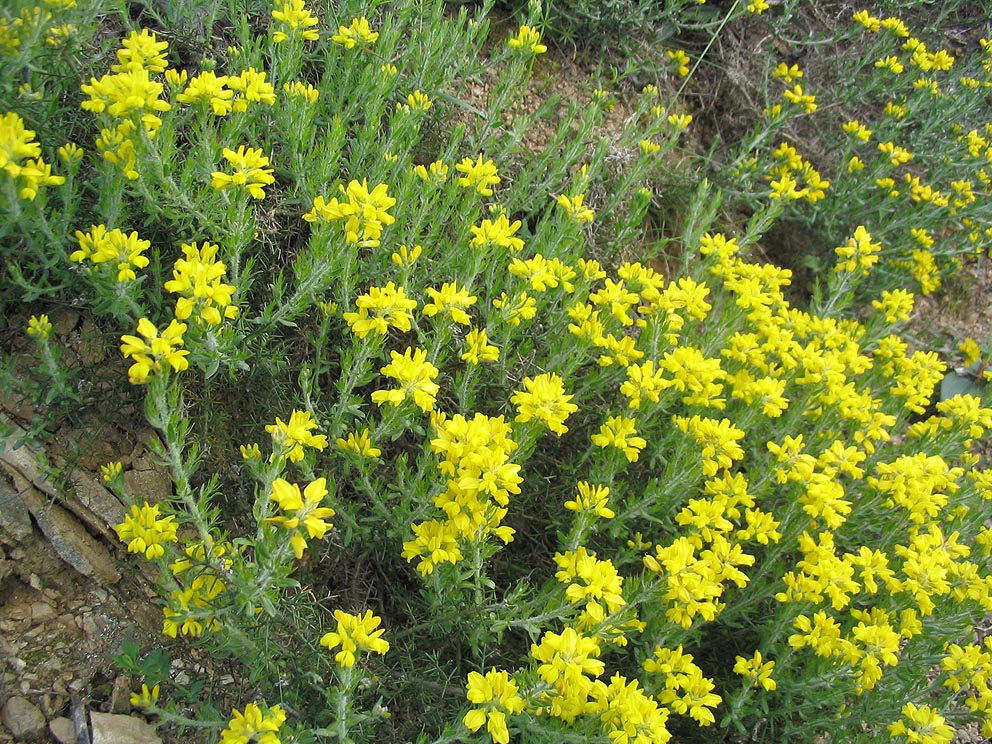
It is a dense, low, cushion-like deciduous shrub growing to 0. 7 metres high, with very spiny shoots. The flowers are bright yellow, in terminal clusters on the outside surface of the shrub; the flowers are typical peaflower structure, with 8–11 mm standard and wing petals.
Family Context
The Fabaceae family is large and globally distributed. Notable medicinal members include:
- Soybean — 76 documented uses
- Crab’s Eye — 73 documented uses
- Tamarind — 59 documented uses
- Common Indigo — 51 documented uses
Geographic Distribution
Genista hispanica has been recorded in 10 countries and territories worldwide, including Chile, Spain, France, United Kingdom, Italy, and others.
Active Compounds
Phytochemical research has identified 1 compound in this species: 5-0-methylgenistein.
Research Status
Although this species has documented phytochemical constituents, its ethnobotanical and clinical documentation remains incomplete. Systematic pharmacological studies are needed to validate the traditional uses attributed to this species.