Botanical Overview
Brindleberry (Garcinia cambogia) belongs to the Clusiaceae family. While not among the most extensively documented medicinal plants, this species has recorded uses that warrant attention from researchers and practitioners. The garcinia family (Clusiaceae) includes trees and shrubs with opposite, leathery leaves and resinous sap that is often yellow. The flowers are typically showy with numerous stamens, and the fruits are often fleshy capsules. Many species produce xanthones and polycyclic polyprenylated acylphloroglucinols (PPAPs) with significant biological activity.
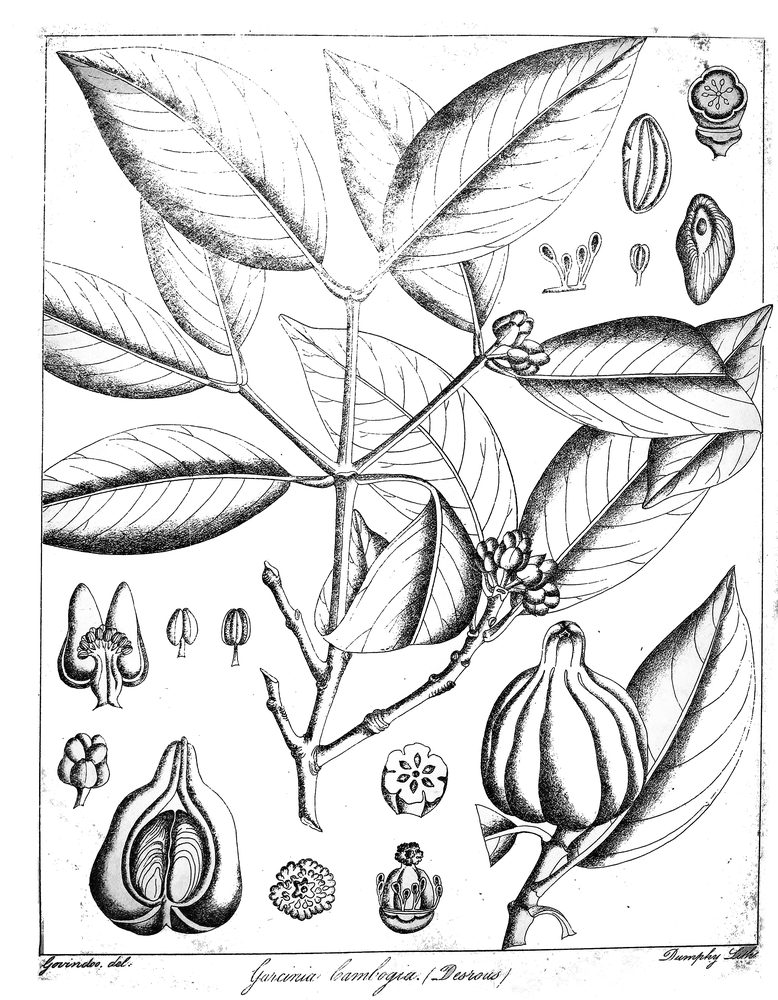
General Description
Common names include Garcinia cambogia, as well as brindle berry, and Malabar tamarind. It is a tree which grows up to 20 metres tall. The fruit looks like a small pumpkin and is green to pale yellow in color. The species is native to the central and southern Western Ghats of Goa, Karnataka, Kerala, Maharashtra, and Tamil Nadu states in southwestern India. It grows in lowland and montane moist evergreen forest, generally as an understorey tree along stream banks, up to 1,800 metres (5,910 ft) elevation. It has been introduced or is in cultivation elsewhere in India and Southeast Asia.
Family Context
The Clusiaceae family is primarily tropical. Notable medicinal members include:
- Common St. Johnswort — 36 documented uses
- Mamey — 23 documented uses
- Mesua ferrea — 16 documented uses
- Mangosteen — 13 documented uses
Traditional Uses
Brindleberry has been traditionally used for digestive health, pain and inflammation, and immune system support.
Digestive health.
- Purgative
For digestive complaints, the herb is typically prepared as a tea or decoction taken before meals. The bitter compounds stimulate digestive secretions and improve nutrient absorption. Some traditions use the powdered root or leaves in small doses as a stomachic tonic.
Pain and inflammation.
- Rheumatism
For pain and inflammation, preparations are applied both topically as compresses and taken internally. A warm poultice draws blood to the area and promotes healing, while internal preparations address systemic inflammation.
Immune system support.
- Antiseptic
Immune support involves taking the herb as a decoction or tincture over extended periods. The active compounds stimulate immune cell activity and provide antimicrobial protection.
Active Compounds
Phytochemical research has identified 11 compounds in this species, including a diverse array of phytochemical classes (see the Complete Chemical Inventory below for the full list).