Botanical Overview
Waldmeister (Galium odoratum) belongs to the Rubiaceae family. Limited but reliable traditional records indicate this plant has recognized medicinal applications in one or more healing traditions. The coffee family (Rubiaceae) includes trees, shrubs, and herbs with opposite leaves and interpetiolar stipules. The flowers are typically tubular with four or five petals. The family includes coffee (Coffea), quinine-producing Cinchona, and numerous other medicinal species with alkaloid constituents.
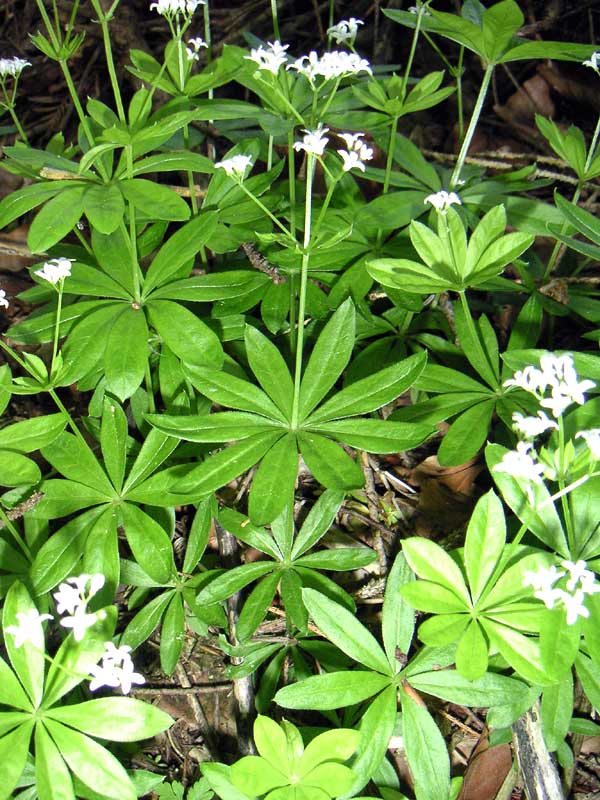
General Description
It is widely cultivated for its flowers and its sweet-smelling foliage.
Family Context
The Rubiaceae family is large and primarily tropical. Notable medicinal members include:
- Indian Mulberry — 56 documented uses
- Madder — 41 documented uses
- Gardenia — 34 documented uses
- Lojabark — 32 documented uses
Geographic Distribution
Waldmeister has been recorded in 10 countries and territories worldwide, including Austria, Switzerland, Germany, Denmark, France, and others.
Traditional Uses
Waldmeister has been traditionally used for urinary tract health.
Urinary tract health.
- Diuretic
Urinary tract applications typically involve drinking the herb as a mild tea, which increases urine production and helps flush the urinary system. It may be combined with other demulcent herbs to soothe irritated tissues.
Active Compounds
Phytochemical research has identified 14 compounds in this species, including a diverse array of phytochemical classes (see the Complete Chemical Inventory below for the full list).
The identified compounds include the following categories:
- Flavonoid: antioxidant compounds that protect cells from oxidative damage
- Coumarin: aromatic compounds with anticoagulant and anti-inflammatory effects
- Tannin: astringent compounds that tighten tissues and resist infection