Bladderwrack

Also known as: Kelp

Botanical Overview

Bladderwrack (Fucus vesiculosus) belongs to the family. Limited but reliable traditional records indicate this plant has recognized medicinal applications in one or more healing traditions. This species belongs to the family, a group of flowering plants.
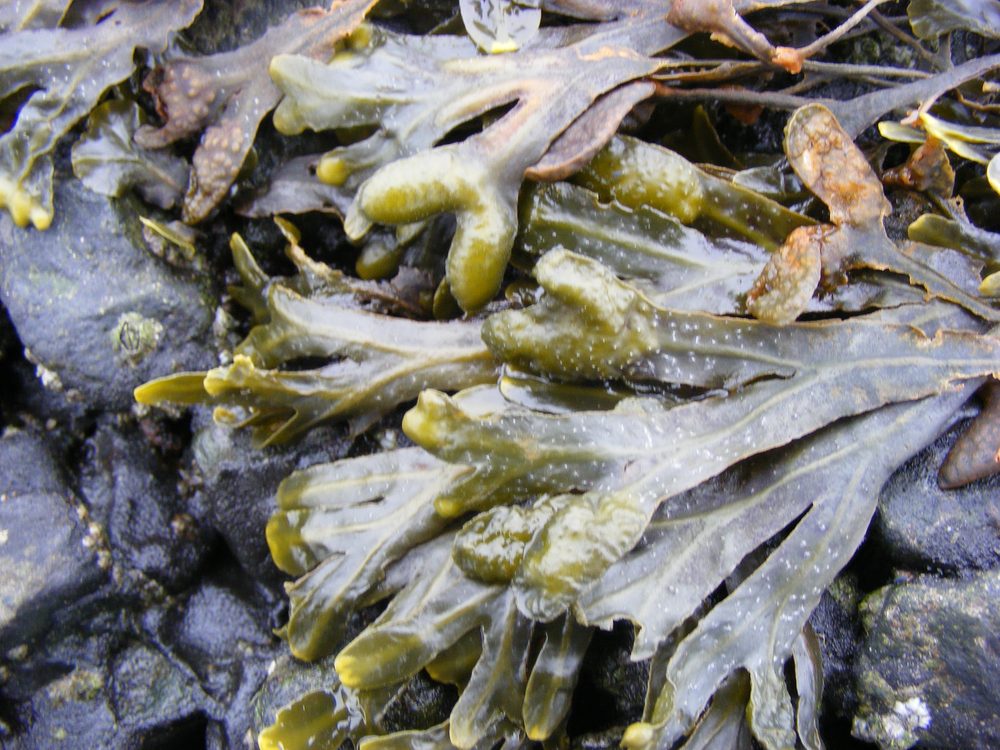
General Description

It was the original source of iodine, discovered in 1811, and was used extensively to treat goitre.

ⓘ Information
Description adapted from Wikipedia (CC BY-SA 4.0).

Geographic Distribution

Bladderwrack has been recorded in 10 countries and territories worldwide, including Canada, Estonia, Finland, France, United Kingdom, and others.

Traditional Uses

Bladderwrack has been traditionally used for metabolic and nutritional health.

Metabolic and nutritional health.

  • Alterative
  • Obesity

Metabolic applications include consuming the plant as a food, fresh juice, or herbal infusion. Regular use supports the body’s natural metabolic processes and nutritional status.

Active Compounds

Phytochemical research has identified 30 compounds in this species, including a diverse array of phytochemical classes (see the Complete Chemical Inventory below for the full list).

The identified compounds include the following categories:

  • Sterol: cholesterol-like compounds with anti-inflammatory properties
  • Alkaloid: nitrogenous compounds with diverse pharmacological activities
ⓘ Information
Information on this page is compiled from Dr. Duke’s Phytochemical and Ethnobotanical Databases (USDA ARS), a public domain resource. Consult a healthcare professional before using any herbal preparation.

Distribution and Conservation

Reported distribution: Canada, Estonia, Finland, France, United Kingdom, Ireland, Netherlands, Norway, Sweden, United States.

Complete Use Records

CategoryCultural Context
AlterativeElsewhere
AntiscorbuticElsewhere
GoiterElsewhere
ObesityElsewhere

Complete Chemical Inventory

CompoundFormulaMW
4-(2',4',6'-TRIHYDROXYPHENOXY)-2,2',4',6,6'-PENTAHYDROXYBIPHENYL
4-(2',4',6'-TRIHYDROXYPHENYL)-4',6'DIHYDROXYPHENOXY-2,2',4',6,6'-PENTAHYDROXYBIPHENYL
ABSCISIC-ACIDC₁₅H₂₀O₄264.32 Da
ALDOBIURONIC-ACID
ALGIN
ALGINIC-ACID
ALUMINUMAl26.981538 Da
ARACHIDONATES
ARACHIDONIC-AICD
ARSENICAs74.92159 Da
ASCORBIC-ACIDC₆H₈O₆176.12 Da
ASH
BETA-CAROTENEC₄₀H₅₆536.9 Da
BETA-SITOSTEROLC₂₉H₅₀O414.7 Da
BROMINEBr₂159.81 Da
CALCIUMCa40.08 Da
CARBOHYDRATES
CHLOROPHYLLC₅₅H₇₄MgN₄O₅+₂895.5 Da
CHOLESTEROLC₂₇H₄₆O386.7 Da
CHROMIUMCr51.996 Da
COBALTCo58.93319 Da
D-MANNITOLC₆H₁₄O₆182.17 Da
DI-IODOTYROSINE
EICOSAPENTAENOATES
FATC₁₆H₃₂O₂256.42 Da
FIBER
FIBER(CRUDE)
FIBER(DIETARY)
FUCINIC-ACID
FUCOIDIN

Data from PubChem (NIH/NLM, public domain).


References & Further Reading

External Research Links

Data Sources