Botanical Overview
Cascara Sagrada (Frangula purshiana) is a species in the Rhamnaceae family. The buckthorn family (Rhamnaceae) includes shrubs and trees with simple, alternate leaves and small, inconspicuous flowers with four or five petals. The fruits are typically drupes or capsules. Many species contain anthraquinone glycosides with strong purgative activity. Although comprehensive ethnobotanical records are limited, phytochemical studies have identified 30 compounds in this species, suggesting potential medicinal value.
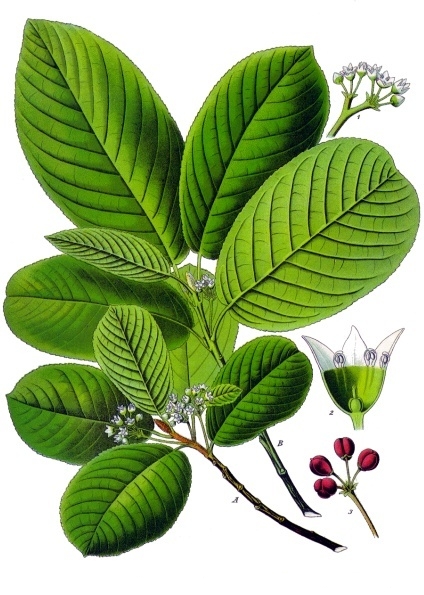
General Description
Rhamnus purshiana) is a species of plant in the family Rhamnaceae. It is native to western North America from southern British Columbia south to central California, and eastward to northwestern Montana. The dried bark of cascara was used as a laxative in folk medicine by the indigenous peoples of the Pacific Northwest, and later worldwide in conventional medicines until 2002.
Family Context
The Rhamnaceae family is widely distributed. Notable medicinal members include:
- Ceanothus americanus — 21 documented uses
- Buckthorn — 8 documented uses
- Cascara Sagrada — 6 documented uses
- Mabi — 5 documented uses
Geographic Distribution
Cascara Sagrada has been recorded in Canada, New Zealand, Russia, and United States.
Active Compounds
Phytochemical research has identified 30 compounds in this species, including a diverse array of phytochemical classes (see the Complete Chemical Inventory below for the full list).
The identified compounds include the following categories:
- Flavonoid: antioxidant compounds that protect cells from oxidative damage
Research Status
Although this species has documented phytochemical constituents, its ethnobotanical and clinical documentation remains incomplete. The limited documentation available for this species represents an opportunity for ethnobotanical research.