Botanical Overview
Buckthorn (Frangula alnus) belongs to the Rhamnaceae family. Limited but reliable traditional records indicate this plant has recognized medicinal applications in one or more healing traditions. The buckthorn family (Rhamnaceae) includes shrubs and trees with simple, alternate leaves and small, inconspicuous flowers with four or five petals. The fruits are typically drupes or capsules. Many species contain anthraquinone glycosides with strong purgative activity.
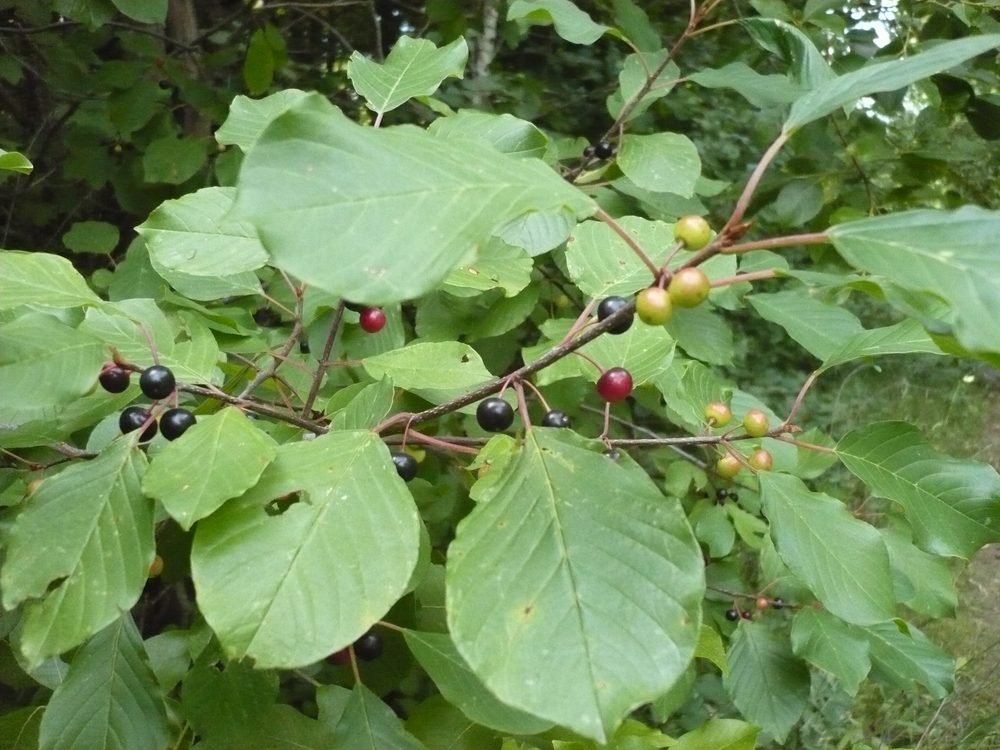
General Description
Unlike other “buckthorns”, alder buckthorn does not have thorns. It is native to Europe, northernmost Africa, and western Asia, from Ireland and Great Britain north to the 68th parallel in Scandinavia, east to central Siberia and Xinjiang in western China, and south to northern Morocco, Turkey, and the Alborz in Iran and the Caucasus Mountains; in the northwest of its range (Ireland, Scotland), it is rare and scattered. It is also introduced and naturalised in eastern North America.
Family Context
The Rhamnaceae family is widely distributed. Notable medicinal members include:
- Ceanothus americanus — 21 documented uses
- Cascara Sagrada — 6 documented uses
- Mabi — 5 documented uses
- Buckthorn — 5 documented uses
Geographic Distribution
Buckthorn has been recorded in 10 countries and territories worldwide, including Austria, Belgium, Germany, Denmark, Finland, and others.
Traditional Uses
Buckthorn has been traditionally used for digestive health, reproductive health, and metabolic and nutritional health.
Digestive health.
- Purgative
- Laxative
For digestive complaints, the herb is typically prepared as a tea or decoction taken before meals. The bitter compounds stimulate digestive secretions and improve nutrient absorption. Some traditions use the powdered root or leaves in small doses as a stomachic tonic.
Reproductive health.
- Emmenagogue
In traditional contexts, reproductive health applications typically involve internal preparations such as teas or decoctions. The herb may be taken at specific times during the menstrual cycle.
Metabolic and nutritional health.
- Depurative
- Tonic
Metabolic applications include consuming the plant as a food, fresh juice, or herbal infusion. Regular use supports the body’s natural metabolic processes and nutritional status.
Active Compounds
Phytochemical research has identified 30 compounds in this species, including a diverse array of phytochemical classes (see the Complete Chemical Inventory below for the full list).
The identified compounds include the following categories:
- Flavonoid: antioxidant compounds that protect cells from oxidative damage
- Phenolic: antioxidant compounds that neutralize free radicals
- Alkaloid: nitrogenous compounds with diverse pharmacological activities