Botanical Overview
Poinsettia (Euphorbia pulcherrima) belongs to the Euphorbiaceae family. Limited but reliable traditional records indicate this plant has recognized medicinal applications in one or more healing traditions. The spurge family (Euphorbiaceae) includes an extremely diverse group of plants ranging from small herbs to large trees, many with milky sap that can be irritating or toxic. The flowers are typically small and unisexual, often arranged in distinctive inflorescences. Many species contain diterpene esters and other bioactive compounds.
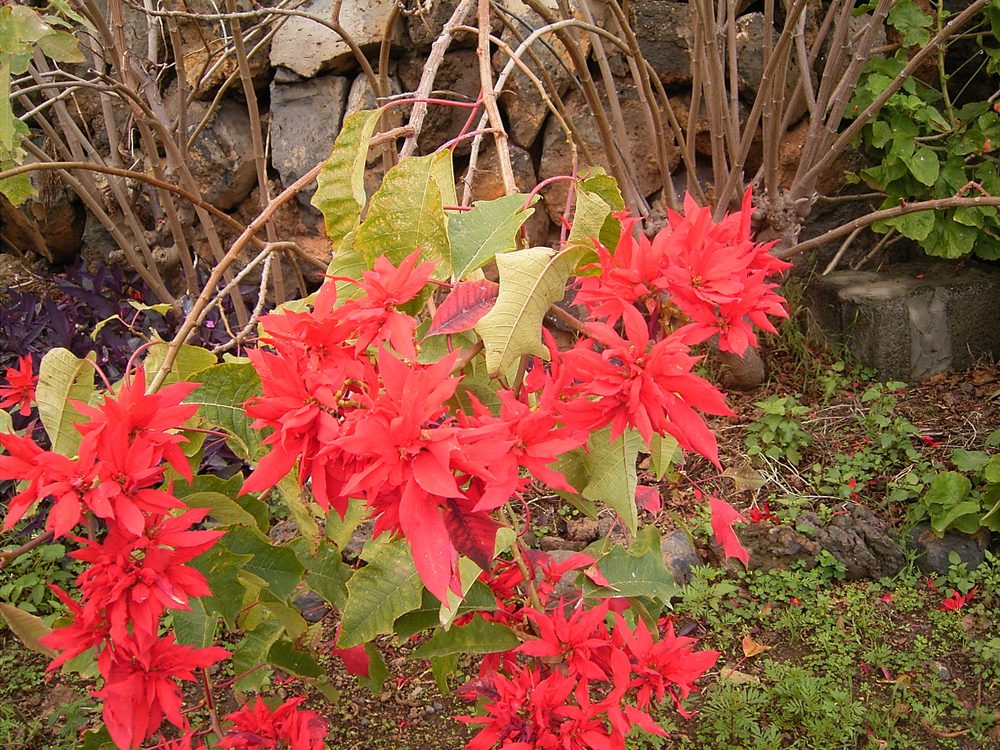
General Description
Indigenous to Mexico and Central America, the poinsettia was first described by Europeans in 1834. It is particularly well known for its red and green foliage and is widely used in Christmas floral displays. It derives its common English name from Joel Roberts Poinsett, the first United States minister to Mexico, who is credited with introducing the plant to the US in the 1820s; however, there have been recent efforts to rename the flower to its Nahuatl name, “cuetlaxōchitl”, due to Poinsett’s involvement in slavery and the Trail of Tears. Poinsettias are shrubs or small trees, with heights of 0. 6 to 4 m. Though often stated to be highly toxic, the poinsettia is not dangerous to pets or children. Exposure to the plant, even consumption, most often results in no effect, though it can cause nausea, vomiting, or diarrhea.
Family Context
The Euphorbiaceae family is large and globally distributed. Notable medicinal members include:
- Castorbean — 105 documented uses
- Physic Nut — 95 documented uses
- Queensland Asthma Herb — 53 documented uses
- Spanish Physic Nut — 45 documented uses
Geographic Distribution
Poinsettia has been recorded in 10 countries and territories worldwide, including Australia, Brazil, Colombia, Costa Rica, Ecuador, and others.
Traditional Uses
Poinsettia has been traditionally used for skin and wound care, pain and inflammation, and immune system support.
Skin and wound care.
- Skin
For skin conditions, the fresh or dried plant is applied topically as a poultice, wash, or compress. A strong decoction can be used to clean wounds and sores. The antimicrobial properties help prevent infection while promoting tissue repair.
Pain and inflammation.
- Anodyne
For pain and inflammation, preparations are applied both topically as compresses and taken internally. A warm poultice draws blood to the area and promotes healing, while internal preparations address systemic inflammation.
Immune system support.
- Bactericide
Immune support involves taking the herb as a decoction or tincture over extended periods. The active compounds stimulate immune cell activity and provide antimicrobial protection.
Active Compounds
Phytochemical research has identified 30 compounds in this species, including a diverse array of phytochemical classes (see the Complete Chemical Inventory below for the full list).
The identified compounds include the following categories:
- Flavonoid: antioxidant compounds that protect cells from oxidative damage
- Sterol: cholesterol-like compounds with anti-inflammatory properties
- Alkaloid: nitrogenous compounds with diverse pharmacological activities