Botanical Overview
Euphorbia paralias belongs to the Euphorbiaceae family. While not among the most extensively documented medicinal plants, this species has recorded uses that warrant attention from researchers and practitioners. The spurge family (Euphorbiaceae) includes an extremely diverse group of plants ranging from small herbs to large trees, many with milky sap that can be irritating or toxic. The flowers are typically small and unisexual, often arranged in distinctive inflorescences. Many species contain diterpene esters and other bioactive compounds.
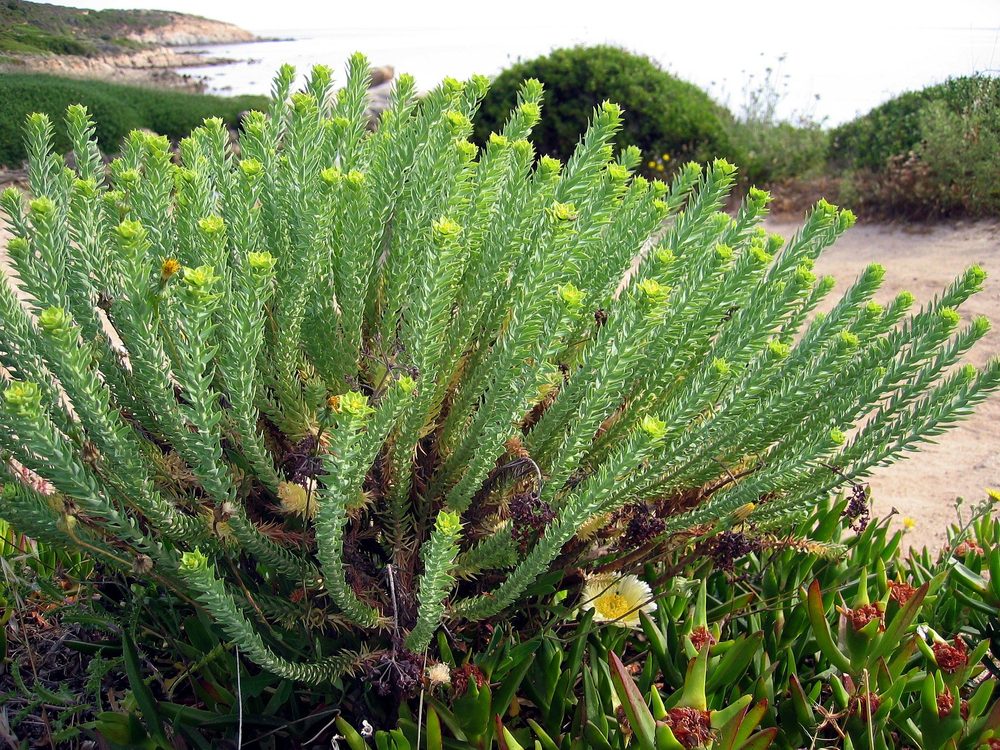
General Description
The species is widely naturalised in Australia. It invades coastal areas, displacing local species and colonising open sand areas favoured by certain nesting birds. Major eradication programs have been undertaken in some areas, for example by Sea Spurge Remote Area Teams in Tasmania, with great success. A small colony of over 50 plants was discovered at a location on Ninety Mile Beach, Northland in New Zealand in July 2025 where it has believed to have came from sea currents coming from Australia. 7 other locations in Northland have also had colonies or plants found in the past 12 months prior to the discovery in July though the species has been recorded being present since 2012.
Family Context
The Euphorbiaceae family is large and globally distributed. Notable medicinal members include:
- Castorbean — 105 documented uses
- Physic Nut — 95 documented uses
- Queensland Asthma Herb — 53 documented uses
- Spanish Physic Nut — 45 documented uses
Geographic Distribution
Euphorbia paralias has been recorded in 10 countries and territories worldwide, including Australia, Belgium, Spain, France, United Kingdom, and others.
Active Compounds
Phytochemical research has identified 1 compound in this species: betulin.