Botanical Overview
Pitanga (Eugenia uniflora) belongs to the Myrtaceae family. While not among the most extensively documented medicinal plants, this species has recorded uses that warrant attention from researchers and practitioners. The myrtle family (Myrtaceae) includes trees and shrubs with opposite leaves that contain aromatic oil glands. The flowers are showy with numerous stamens, and the fruits are often fleshy berries or capsules. Many species produce essential oils with antiseptic and antimicrobial properties.
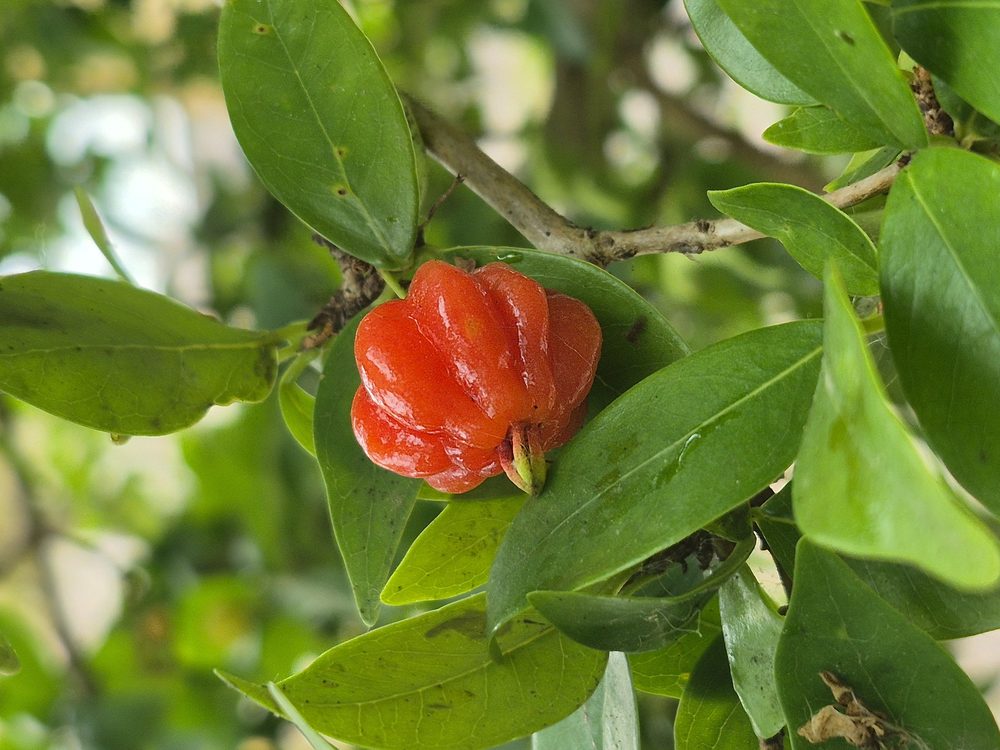
General Description
It is also known as Brazilian cherry, Cayenne cherry, cerisier carré, monkimonki kersie, ñangapirí, pitanga, shimarucu, and Suriname cherry. It is often used in gardens as a hedge or screen. It produces small, ribbed fruits (2 to 4 centimetres or 3⁄4 to 1+1⁄2 in), starting as green, then ranging through orange, scarlet, and maroon as they ripen. The tree was introduced to Bermuda for ornamental purposes, but is now out of control and listed as an invasive species. The tree has also been introduced to Florida.
Family Context
The Myrtaceae family is primarily tropical and subtropical. Notable medicinal members include:
- Guava — 57 documented uses
- Melaleuca leucadendron — 49 documented uses
- Clove — 45 documented uses
- Blue Gum — 44 documented uses
Geographic Distribution
Pitanga has been recorded in 10 countries and territories worldwide, including Argentina, Australia, Bolivia, Brazil, Colombia, and others.
Active Compounds
Phytochemical research has identified 20 compounds in this species, including a diverse array of phytochemical classes (see the Complete Chemical Inventory below for the full list).
The identified compounds include the following categories:
- Alkaloid: nitrogenous compounds with diverse pharmacological activities